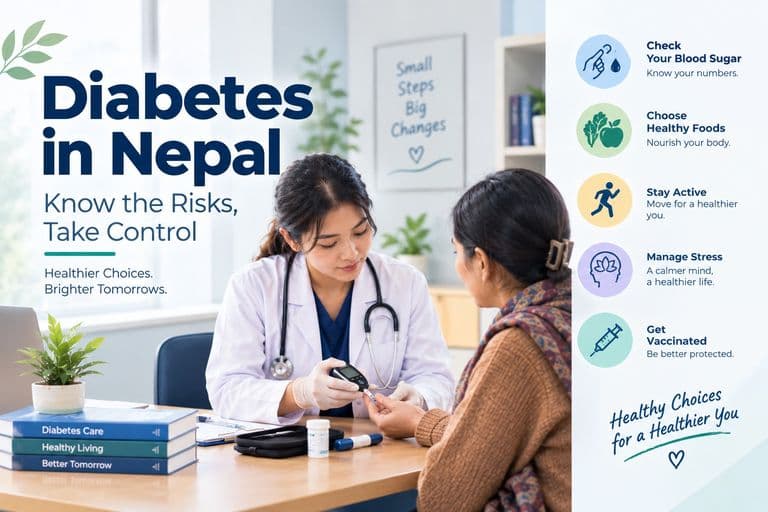
Women’s Health in Nepal encompasses a wide area of women’s health from reproductive health, maternal health, mental health, breast and cervical cancer, nutritional health, cardiovascular health, and general wellness. Women go through many physiological and psychological changes in their lifetime, and hence it is essential to keep track of their health status through regular check-ups and get professional help if required.
A woman’s health in Nepal goes beyond sexual and reproductive health to include cardiac, nutritional, psychological, skeletal, breast, cervical, blood pressure, diabetic, and many other aspects. Unfortunately, a lot of women tend to skip annual health checkups due to lack of symptoms, time, financial and geographical constraints, or lack of clarity on the necessary tests.
A health check-up is not always a symptomatic treatment. Most of the time, these tests are done to prevent diseases or detect them at an early stage. Testing options will be recommended depending on a woman’s age, medical and family history, symptoms, hormonal status, pregnancy, and risk factors.
Here we will cover vital health checkups for women in Nepal and promotes the importance of routine health check-ups.
Why Regular Health Checkups Matter for Women?
A woman can feel perfectly healthy but have a condition that requires treatment. High blood pressure, anemia, diabetes, or even cancer can occur without causing noticeable symptoms.
Health care visits provide an opportunity for a woman to review her health concerns with a professional. A professional determines what tests are needed instead of testing all women for everything.
A regular checkup can assist doctors in:
- keeping track of the overall health status,
- checking blood pressure and other vital signs,
- assessing nutritional status,
- looking for signs of anemia,
- checking blood sugar levels and the risk for diabetes,
- reviewing sexual history and discussing menstrual cycle irregularities,
- looking for signs of cancer of the cervix,
- checking the breasts,
- reviewing contraception options and planning a pregnancy,
- addressing mental health concerns,
- monitoring health during pregnancy and menopause.
The objective of screening is to detect specific conditions at an early stage before symptoms develop. However, not all recommended screening tests are appropriate for every woman. Decisions on screenings depend on a woman’s age, risk of developing certain conditions, and available screening methods.
Women's Health in Nepal Important Checkup
There is no universal health-checkup package appropriate for all women. A teenage girl, a woman planning to become pregnant, and a menopausal woman have different healthcare needs.
The following checkups are considered essential for a woman to discuss with a healthcare professional.
1. General Health Checkup
A general health checkup is an excellent opportunity to obtain an overall perspective on one’s health.
During a general examination, a healthcare professional may ask about one’s medical history, medications, lifestyle, diet, sleeping patterns, amount of physical activity, menstrual cycle, family history, and current concerns. Depending on a woman’s age and health needs, a medical professional will perform tests to estimate the following:
• Blood pressure
• Weight and other relevant measurements
• Heart rate
• General physical appearance
• Family history
• Lifestyle
• Symptoms
A healthcare professional may order additional tests.
Why Are General Health Exams Necessary?
Some medical conditions do not present noticeable symptoms in the early stages. Therefore, health checkups are critical in identifying potential concerns. For a woman who has not had a general health exam in a long time, a general consultation will help estimate the appropriate screening and tests needed.
2. Blood Pressure Check
Blood pressure is among the easiest and quickest procedures to determine a person’s health indicators. Even though the test is straightforward, it is critically important.
Namely, high blood pressure increases the risks of cardiovascular diseases, stroke, kidney problems, and other conditions. Moreover, pregnant women must be especially careful about their blood pressure, as it requires special treatment.
The procedure itself is usually quick and hardly incurs any difficulties.
Who Should Undergo Blood Pressure Tests?
It is better for women to consult their doctor about the frequency of blood pressure tests, as it depends on many factors, including age, results of the previous tests, state of one’s womb, genetic predispositions, and other risks. A woman’s health state should be carefully examined by a healthcare professional if she has persistent high readings to prevent serious conditions.
3. Blood Sugar and Diabetes Check
The hormone diabetes can affect women at different stages in their lives.
Women with a higher risk profile should consider getting their blood glucose tested. Risk factors for diabetes can include a family history of the disease, being overweight or obese, having had gestational diabetes previously, or other factors that could place one at higher risk.
Women should also get tested for gestational diabetes when pregnant since they run a higher chance of developing it during this period than at other times.
Why is it important to get blood sugar tested?
Diabetes often does not exhibit any symptoms during its early stages.
A qualified medical professional can determine whether blood glucose testing is necessary depending on the patient's age and health, as well as whether she is pregnant or not, along with an assessment of her risk factors.
Women should not presume they will need to get diabetes tests at the same frequency as another person because one's needs can be different from others'.
4. Anemia Check
Anemia is an important health issue for women, specifically during the reproductive years.
Anemia is a condition in which the blood is deficient in red blood cells or hemoglobin.
The symptoms of anemia are as follows:
- Fatigue
- Weakness
- Dizziness
- Headache
- Shortness of breath
- Loss of concentration
It is also possible that you have anemia but do not have any symptoms.
When Should Women Check for Anemia?
A blood test may be advised if you have symptoms or heavy periods or are pregnant or malnourished or in other circumstances mentioned by a medical professional.
Do not take large amounts of iron supplements without talking to a doctor first.
5. Cervical Cancer Screening
Cervical cancer is a women’s health priority worldwide. It is a serious threat to women’s health as it often occurs at a young age and can have severe consequences if not detected and treated at an early stage.
According to WHO, it is most commonly caused by persistent infections with certain types of human papillomavirus (HPV).
WHO further notes that it is preventable through HPV vaccination and cervical screening programs.
Cervical screening aims to detect HPV infections or abnormalities of the cervix that may be precursors to cervical cancer or cancer itself.
When Should Cervical Screening Start?
The timing of screening initiation depends on the type of test and individual circumstances”. WHO recommends “that screening should start at age 30 years in the general population… with different considerations for those living with HIV.
Due to potential variations in screening methodology and national programs, women in Nepal should consult a specialist to determine the most appropriate type and timing of testing.
Why Is Cervical Screening Important?
The importance of cervical screening. Many precancerous abnormalities do not cause symptoms.
Therefore, women may feel perfectly fine even with precancerous changes present.
In such cases, appropriate screening can help stop the development of cervical cancer.
6. Breast Health Checkup
Breast health is another important aspect of women's health in Nepal.
Women should be able to recognize normal breast conditions and be able to talk to a health professional about a possible abnormal condition.
Some examples of abnormal conditions are:
- development of a new lump
- unusual changes in the size or shape of the breast
- unusual skin changes
- nipple changes
- unusual discharge from the nipple
- persistent breast pain or any other unusual change
A breast symptom does not necessarily indicate cancer, since there are many possible causes for such a symptom, but it should be evaluated by a health professional.
Do all women need a mammogram?
No, a mammography is a method of screening for breast cancer, but screening recommendations can vary depending on factors such as age, risk, healthcare resources, and country-specific guidelines.
According to the WHO breast cancer guidelines, in settings where organized mammography screening programs are feasible, population-based mammography screening programmes can be considered for specific age groups, while in low-resource settings, the focus may be on improving diagnostic capabilities and ensuring early diagnosis and treatment for symptomatic women.
As such women should discuss the appropriateness of mammography and other breast examinations with a health professional.
7. Reproductive and Menstrual Health Checkup
It is important to understand that a woman’s menstrual system is a vital part of her overall health.
A woman should see a doctor if her menstrual cycle becomes irregular or absent for a long time.
If she experiences any of the following symptoms, an appointment with a medical professional is necessary:
- heavy menstrual bleeding
- very irregular periods
- severe menstrual pain
- vaginal bleeding between periods
- menstrual bleeding after sexual intercourse
- periods stopping suddenly
- new symptoms that occur during the reproductive years
There could be several reasons for such symptoms as hormonal imbalances, fibroids, thyroid problems, pregnancy, or other issues.
A qualified doctor will be able to determine the cause of the irregularities and recommend the appropriate tests and treatment if needed.
Why Should Women Not Ignore Menstrual Changes?
Many women think that having painful or heavy periods is normal and do not seek medical help.
But severe pain or irregular cycles should not be ignored.
Icing, heat, or pain relievers may help with mild discomfort, but if the pain is intense, the underlying cause must be determined and treated.
8. Sexual and Reproductive Health Checkup
Sexual and reproductive health is another vital component of healthcare.
A healthcare professional can offer confidential, developmentally appropriate advice and support related to a person’s reproductive health, contraception, pregnancy planning, sexually transmitted infections, and other issues.
Individuals experiencing unusual vaginal discharge, pelvic pain, soreness, itching, or abnormal bleeding should consult a healthcare professional.
The specific tests that a person may need will depend on their symptoms and medical history.
9. Pregnancy and prenatal checkups
Pregnancy necessitates regular health care and treatment to ensure that both the mother and the fetus are healthy.
Prenatal or antenatal care may involve the following:
- blood pressure monitoring
- blood and urine tests
- advice on nutritious diet
- monitoring the progress of the fetus
- issuance of recommended supplements
- advice on vaccination
- screening for complications of pregnancy
- planning for delivery
- information on warning signs and symptoms
WHO recommends that women have regular antenatal visits during pregnancy to promote preventive care, screening, diagnosis, and management of complications. Women should start antenatal care early in pregnancy and continue throughout pregnancy according to the recommended dates by their health professional.
10. Postpartum Health Checkup
Women’s healthcare should not end at the birth of a child. The postpartum period is an important time for the mother’s physical and emotional recovery.
A postpartum checkup can be a good opportunity to talk to the doctor about:
- Bleeding after childbirth
- Pain or recovery
- Breastfeeding
- Nutrition
- Contraception
- Sleep
- Emotional wellbeing
- Blood pressure
- Recovery from delivery
- Plans for future pregnancies
Women who experience pregnancy complications may need additional follow-ups depending on their individual care needs.
11. Mental Health Checkup
Women’s mental health in Nepal is a serious matter that has not received enough attention. Women often face various challenges and stresses throughout their lives, and they are especially vulnerable to mental health issues during pregnancy, childbirth, and after childbirth. The following symptoms can be a sign that intervention is needed:
- Persistent feelings of sadness
- Worrying uncontrollably
- Losing interest in regular activities
- Sleeping too much or too little
- Eating too much or too little
- The inability to cope with everyday tasks
- Feeling emotionally drained for a long time
Women With a Family History of Disease May Need Additional Care
Family history can play an important role in health risks. For instance, a family history of breast or ovarian cancer may be an issue in assessing a woman’s cancer risk. A different family history may affect screening choices for heart disease, diabetes, or high blood pressure.
Women should tell their doctor about close family members who have been diagnosed with diseases and, if possible, at what age the diagnosis was made.
When Should a Woman See a Doctor?
A routine checkup is always a good idea, but women should not wait for an annual appointment if they have troubling symptoms.
Medical advice should be sought if there is:
- unexplained bleeding
- a new lump in the breast
- persistent pelvic pain,
- severe or unusual menstrual bleeding,
- unusual tiredness,
- unexplained weight changes
- new bowel or bladder habits,
- unusual vaginal discharge,
- new mental health symptoms,
The cause of some symptoms can't be guessed at and should be evaluated by a medical professional.
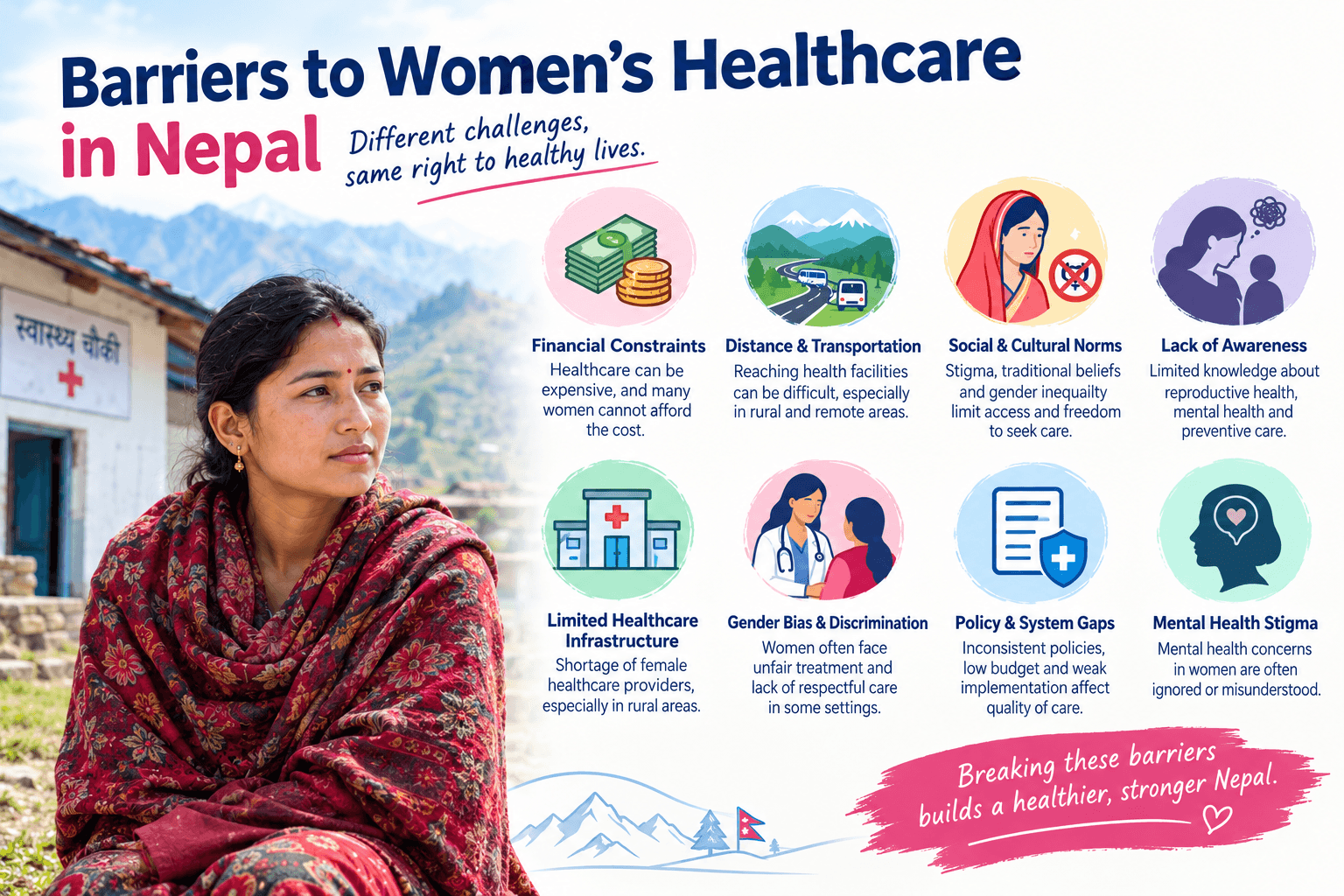
Barriers to Women's Healthcare in Nepal
Access to health care can be influenced by various factors for women, depending on the country they live in and their individual circumstances.
An isolated or rural community is a factor affecting health care because of the distance and availability in terms of transport. Transportation costs, cultural barriers, possible privacy issues, the opportunity cost of women’s time, and perceived health risk are some of the contributing factors.
Virtual health care options offer an alternative to in-person exams and consultations, but some examinations require in-person medical attention.
Alleviating the health care inequities for women can be achieved not only by encouraging women to seek health care but also by ensuring the accessibility of adequate, affordable, appropriate, and respectful services.
How Technology Can Support Women's Healthcare?
Technology is becoming an increasingly valuable part of healthcare.
Online services can help women to:
- find doctors,
- set up appointments,
- ask general health questions,
- get general health information,
- follow up on specific health issues.
However, it is important to remember that virtual services cannot replace necessary physical examinations, laboratory work, diagnostic testing, or emergency services.
Women should follow the directions of a qualified healthcare professional and seek the care of a healthcare facility when a physical examination is needed.
How Women Can Prepare for a Health Checkup?
A little preparation can make a healthcare appointment more efficient.
Beforehand, try writing down the following:
- Current symptoms
- When the symptoms began
- What medications or supplements you are taking currently
- Any past medical conditions
- Any prior surgeries
- Your menstrual cycle
- Your past pregnancies
- A family history of major diseases
- Your questions for the doctor
Women must be able to voice their healthcare concerns without fear of being judged by their healthcare provider.
Common Myths About Women's Health Checkups
Myth 1: “I Feel Healthy, So I Don't Need Checkups”
Being healthy does not mean one is free from all diseases and health problems.
Myth 2: “Every Woman Needs the Same Tests”
Screening is personalized depending on several factors, including age, risk factors, and current health problems.
Myth 3: “Only Older Women Need Health Checkups”
Healthy people of all ages need checkups because the focus of health care changes throughout life.
Myth 4: “A Health Checkup Is Only About Physical Health”
A comprehensive women’s health checkup considers a person’s physical, reproductive, mental, and emotional health.
Myth 5: “Online Consultation Can Replace Every Checkup”
In some case and depending on the patient’s needs, online consultation can be a suitable alternative to an in-person medical examination, but there are health concerns that require more tests.
A Simple Women's Health Checklist
Women can use the following checklist to help them talk with their doctor:
- General health discussion
- Blood pressure test
- Diabetes screening
- Anemia screening
- Cervical cancer screening
- Breast health discussion
- Menstrual and reproductive health discussion
- Pregnancy and prenatal care
- Postpartum care
- Mental health discussion
- Thyroid screening
- Bone health screening
- Cholesterol and cardiovascular health screening
- Dental and vision care
- Vaccination review
- Family health history review
This is not a complete list of items that every woman should have tested for. A medical professional can recommend the tests that are most appropriate for a given individual.
Conclusion
Women’s health in Nepal encompasses diverse issues such as reproductive health, maternal health, mental health, nutritional health, cardiovascular health, breast health, cervical health, skeletal health, and overall wellness.
Routine screenings do not necessarily indicate illness but instead enable an individual to understand their risks, detect specific illnesses at earlier stages, prevent certain conditions, and obtain recommendations from a qualified medical professional.
The appropriate screenings vary depending on a woman’s age, family history, pregnancy status, symptoms, previous medical history, and additional risk factors; instead, a personalized approach to the healthcare needs, designed by a qualified professional, is more productive.
Prioritizing and addressing women’s health concerns at all ages enables females to make educated decisions about their healthcare and facilitates timely treatment and screening. Regular health checkups enable women to talk about symptoms and screening with a qualified medical professional. Those who need assistance can easily find out how to book a doctor appointment in Nepal online and set up a consultation.
Frequently Asked Questions
What are the primary health checkups that women should consider?
Primary health assessments may involve measuring blood pressure, determining anemia and diabetes status, conducting cervical cancer screening, assessing breast health, addressing reproductive health concerns, discussing mental health and conducting age-appropriate screening for other conditions.
What is the recommended frequency for health checkups for women?
The frequency varies depending upon age, medical history, health risks, symptoms, pregnancy status and prior test results. There is not a single recommended schedule that applies to all women.
What is the recommended age to start cervical cancer screening?
The World Health Organization recommends regular cervical cancer screening for all women beginning at age 30, with alternative recommendations for women living with HIV. The type of test and recommended re-testing interval should be determined by a qualified healthcare provider.
Is mammography screening recommended for all women?
Not necessarily. The appropriateness of mammography screening depends upon age, risk factors and screening guidelines. A qualified healthcare provider can help determine if and when a mammogram is right for you.
Is it necessary for women to get tested for anemia?
Women at risk or with symptoms should consider anemia screening. Anemia is common in Nepal; according to the 2022 Nepal Demographic and Health Survey, 34% of women ages 15-49 are anemic.
Are regular checkups necessary even for women who do not have any symptoms?
Many types of screening are designed specifically for use in seemingly healthy individuals. That being said, not all screening methods are right for every person. A healthcare professional can recommend age- and risk-appropriate screening.
Is it possible to book a women’s health checkup online?
It depends. In some cases, users may book a women’s health video consultation using an online portal. However, diagnostic testing and a physical examination may be required, which usually necessitates an in-clinic visit.