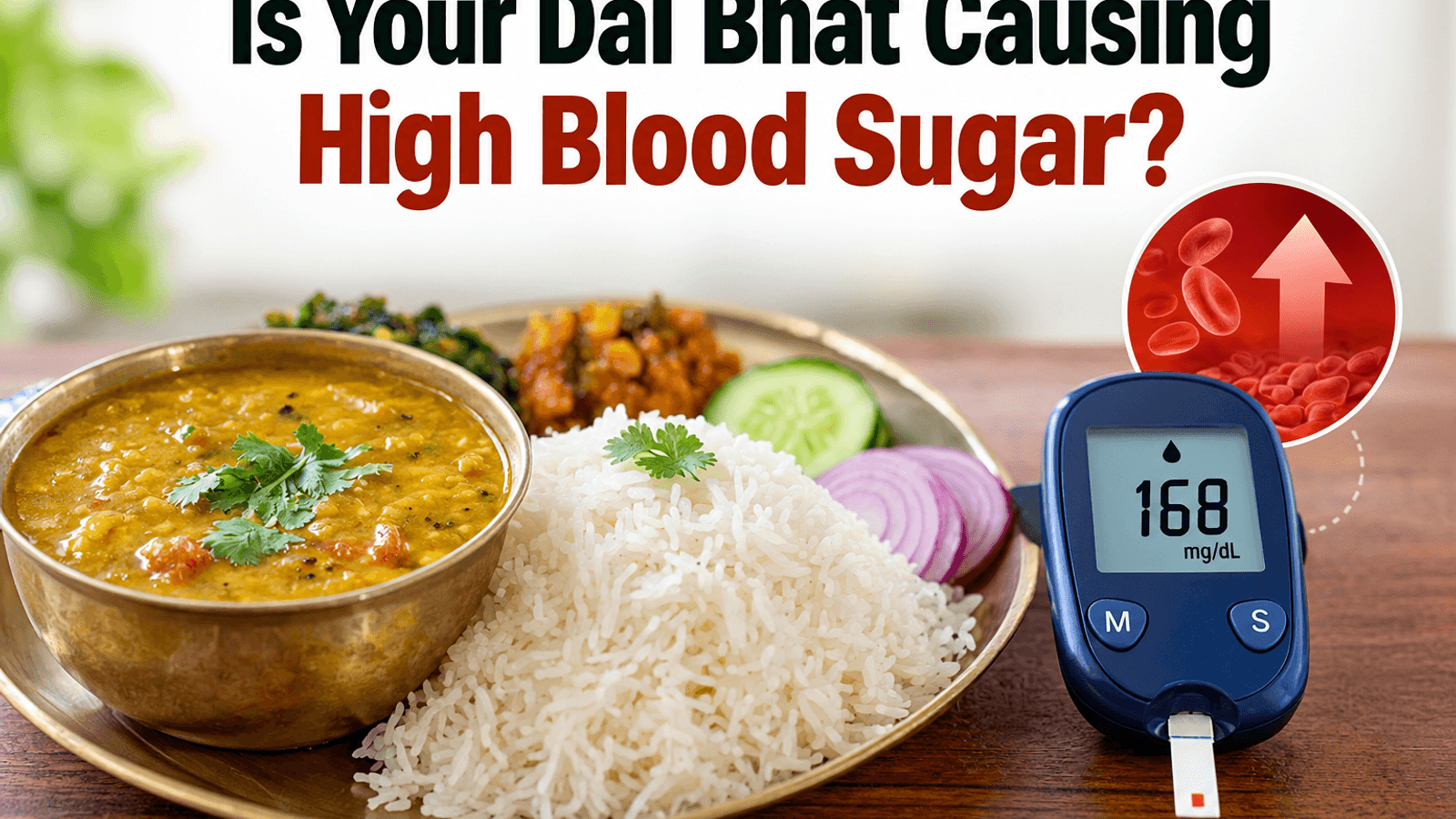
Dalbhat is the staple of Nepali meals, served in most of the homes in this land twice a day. It is comforting, familiar and holds a special place in the hearts of the people of Nepal. But a disturbing question is being asked today by many Nepalis: Is this staple responsible for the diabetes epidemic that is silently spreading across the country? One out of every five Nepalis over the age of forty suffers from type two diabetes, and a significant portion of this statistic is believed to be due to the excessive consumption of carbohydrate-rich rice that is a fundamental element of dalbhat.
The good news is that you do not have to give up tasty dalbhat to control your blood sugar. Learning how different components of your meal affect your body, portion control and appropriate substitutions can help you to continue enjoying this beloved snack while keeping your blood sugar within normal limits. This article will provide you with the information you need to make informed decisions and adjustments regarding your daily meals.
Everything You Need to Know about Blood Sugar and Why It Matters
Blood sugar is another name for blood glucose, which is the sugar found in the bloodstream of humans and other animals. It provides energy to cells and organs by fueling them with glucose, which is extracted from carbohydrates such as rice during digestion. After you eat rice or other foods containing carbohydrates, your digestive system breaks them down into glucose and sugars, which are then absorbed by the bloodstream. The hormone insulin is secreted from the pancreas and facilitates the transfer of glucose into cells by encouraging receptors on the cell membranes to open up so that they can admit glucose.
Diabetes and prediabetes occur when the body is unable to form enough insulin or when the body's cells do not respond adequately to the hormone insulin and allow glucose to enter. As a result, excess glucose remains in the bloodstream, increasing blood sugar levels beyond normal limits and endangering health.
It is important to understand how different foods affect blood sugar levels in the body. Carbohydrates, especially refined carbohydrates, increase blood sugar levels rapidly after consumption. Fibers, proteins and healthy fats increase blood sugar levels gradually after consumption. The key to diabetes prevention and management is knowledge about the foods that raise blood sugar and how often you consume them.
The Glycemic Index: Understanding the Speedometer of Blood Sugar
Scientists have classified carbohydrates based on how they raise blood sugar and have created what is called the glycemic index or GI. Think of the GI as a speedometer that indicates how much blood sugar levels rise after consuming different types of foods. Pure glucose has been assigned a value of 100, and all other foods are measured in relation to this number.
Foods with high GI (70 and above) cause blood sugar levels to rise rapidly after you eat them. White rice, which has a GI of 70-73, falls into this category. Other high GI foods include white bread, potatoes and sugary beverages.
Medium GI foods (56-69) moderately raise blood sugar. These foods include brown rice, whole wheat and some fruits.
Low GI foods (55 and below) slowly raise blood sugar. These foods include lentils, most vegetables, nuts and whole grains such as millet and barley.
The glycemic index is important for managing diabetes and prediabetes because frequent consumption of high GI foods increases stress on the pancreas, reduces its ability to secrete insulin, increases resistance to the action of insulin and increases the risk of developing diabetes and its complications. In addition, combining high GI foods with protein, fiber, and healthy fats reduces the speed of digestion and the rate at which blood sugar rises after a meal.
Why White Rice in Dalbhat Raises Blood Sugar
White rice is the main culprit in the dalbhat meal that raises blood sugar. White rice contains more carbohydrates than brown rice, and its processing removes most of its fibers, vitamins and minerals. As a result, it is rapidly digested, raising blood sugar levels sharply immediately after a meal.
Eating four hundred fifty grams or more of rice per day compared to less than one hundred fifty grams increases the risk of diabetes by 20%. The typical Nepali dalbhat meal consists of two to four cups of cooked white rice per serving, and this is done twice a day, raising blood sugar levels substantially.
The amount of rice you consume in your daily meals should be reduced if you have diabetes or prediabetes. An appropriate portion size of rice for a diabetic person should be about one third to one half of a cup of cooked rice or fifteen to thirty grams of carbohydrates per serving.
Another problem with white rice is that it has a relatively high GI score. This means that it raises blood sugar levels more rapidly than other types of carbohydrates. Research conducted in Nepal has identified heavy consumption of carbohydrate-rich rice as one of the major causes of type two diabetes in the country. This finding does not imply that rice is unhealthy, but rather that the amount and frequency of its consumption should be adjusted in people with diabetes.
The Other Components: Dal, Tarkari and Their Effects
While rice plays the biggest role in increasing blood sugar, the other components of dalbhat also contribute to this effect, although to a lesser extent. Dal, or lentils, actually helps to lower blood sugar since it is a good source of protein and fiber. Lentils have a low glycemic index of twenty five to thirty, which means they are digested slowly and raise blood sugar gradually after a meal. In addition, they contain protein, which slows down the digestion process and reduces the rate at which blood sugar increases.
The protein in the dal slows down the digestion process of the entire meal as a whole, resulting in a slower release of glucose into the bloodstream. It also stimulates the secretion of insulin, which helps to transfer glucose from the bloodstream into cells.
The fibers in the dal also slow down the digestion process. They create a physical barrier in the digestive tract that prevents the absorption of carbohydrates from rice. Think of it as a traffic jam in your intestines that prevents glucose from rushing into your bloodstream too rapidly. This is why eating dal with rice causes blood sugar spikes similar to those caused by eating rice alone but with a lesser intensity.
Tarkari, or vegetable curry, is relatively low in carbohydrates, which means that it raises blood sugar levels minimally. However, eating large portions of cooked vegetables along with your meal will reduce the overall glycemic impact of the meal because the fibers in the vegetables will slow down the digestion and absorption of carbohydrates from rice.
Some preparations of tarkari, however, can actually be detrimental to blood sugar control. Vegetables are boiled with oil, which adds extra calories to the meal and increases the risk of obesity and insulin resistance. Potatoes, pumpkin and other root vegetables contain more carbohydrates and should be consumed in moderation.
How Much Rice Is Too Much?
Proper portion size is one of the most important factors that determine the effect of rice consumption on blood sugar levels. Studies and clinical experience suggest that people with diabetes should limit their daily rice consumption to about one cup (two hundred grams) rather than the three to four cups most Nepalis are accustomed to. For better blood sugar control, however, it is advisable to aim for even smaller portions of one third to one half of a cup of cooked rice per meal.
The size of a portion of rice can be estimated using common visual cues. A portion of rice should be about the size of your fist or one third of a standard dinner plate. Compare this to the giant mountain of rice most Nepalis serve themselves and you will understand why their post-meal blood sugar levels are so high.
Another important consideration is the frequency of rice consumption. Eating large portions of rice twice a day means that your blood sugar is being spiked two times every day, every day. This puts tremendous stress on your body and contributes to diabetes and its complications. Consider limiting rice consumption to once a day or replacing one of your daily dalbhat meals with roti made from whole grains, dhido made from millet or buckwheat, or increasing the portions of dal and vegetables while reducing the amount of rice you normally eat.
The effect of rice consumption on blood sugar levels varies from person to person, and some can tolerate larger portions of rice without experiencing significant increases in blood sugar. In order to understand how much rice you can eat without causing large blood sugar spikes, it is a good idea to measure your blood sugar before and two hours after eating a meal to see how much it has changed. If your blood sugar reading is consistently above one hundred and eighty mg/dL two hours after eating, it is a sign that your rice portion is too big for your body.
Smart Strategies for Enjoying Dalbhat Meals
You do not have to give up dalbhat to control your blood sugar. Several tactics can help you to enjoy your meals while keeping your blood sugar within normal limits. The order in which you consume the components of your meal is important. Eating the tarkari and a portion of the dal first and finishing the rice toward the end of the meal significantly reduces blood sugar spikes compared to mixing everything together from the start.
Increase the amount of the dal in your meals and make it thicker and heartier by adding lentils, chickpeas or kidney beans with a lower glycemic index than regular lentils. Make sure that the portion size of the dal occupies about a quarter of your plate, with another quarter occupied by rice and the other half filled with vegetables.
Choose low glycemic index varieties of rice such as brown rice with a GI score of fifty. Parboiled rice with a GI score of thirty eight or Basmati rice with a GI score of fifty eight are also good options. Millet (kodo), khaudo (finger millet), foxtail millet, makai (corn) dhido and buckwheat are traditional staples of the Nepali hill communities that are much healthier than white rice and should be considered as an alternative to it.
Make sure to add healthy fats such as ghee, mustard oil or sesame oil to your meals to slow down the digestion process and blunt blood sugar spikes. Fat causes food to stay in the stomach for a longer period of time and slows down the rate at which it leaves the stomach and enters the intestines where it is broken down and absorbed.
Cool your rice before eating it in the evening. Cooking it in the morning and then reheating it in the evening will increase the amount of resistant starch in it, which will have less of an effect on your blood sugar.
Finally, try to get some form of physical activity after your meals. A ten to fifteen minute walk after your dalbhat meal will help to lower blood sugar levels by helping your muscles to utilize some of the glucose in the bloodstream.
Warning Signs That Your Dalbhat Needs Adjustments
How will you know if your dalbhat meals are negatively affecting your blood sugar levels? Frequent tiredness or sleepiness after eating is an indication that you might be experiencing large blood sugar spikes followed by sharp declines. While feeling slightly relaxed after a meal is normal, becoming excessively tired is a sign that something is not right.
Increased thirst and frequent urination are also warning signs that your blood sugar might be too high. If you find yourself constantly needing to drink water and urinate, especially after eating, it is a sign that something is wrong.
Unexpected weight gain or obesity, especially around the abdominal area, is also a sign that your blood sugar might be too high. If your cells are not able to absorb glucose from the bloodstream, it will be stored as fat, especially around the vital organs.
Large meals that cause large blood sugar spikes result in persistent feelings of hunger soon after eating. This is the body's way of saying that it needs more fuel because the large amount of glucose that has just entered the bloodstream will soon be dumped back out resulting in low blood sugar levels.
Darkening of the skin in areas such as the neck, armpits and groin are also a sign that something is wrong. This condition, known as acanthosis nigricans, is often associated with prediabetes and insulin resistance.
The only reliable way to know for sure if your blood sugar is too high is to get your blood tested. Fasting blood sugar above one hundred and twenty five mg/dL and random blood sugar above two hundred mg/dL indicate diabetes. HbA1c above six point five percent is also diagnostic of diabetes. Prediabetes is indicated by fasting blood sugar between one hundred and one hundred and twenty five mg/dL and HbA1c between five point seven percent and six point four percent. If you have not had your blood tested recently, it is a good idea to do so, especially if you are over forty or if there is a history of diabetes in your family.
Alternatives and Modifications to Improve Blood Sugar Control
If you are concerned about your blood sugar levels but do not want to give up your beloved dalbhat, there are a few things that you can do to make adjustments. You can try gradually reducing the amount of rice you eat rather than eliminating it all together. This will give your body an opportunity to adjust without sudden changes that can cause discomfort. You can also reduce your rice consumption by one quarter or half for a period of time until your body gets used to the idea.
Mixing your white rice with other grains such as brown rice, barley, quinoa or millet can also help to lower your blood sugar levels. You can also significantly increase the amount of non-starchy vegetables you eat as the main component of your plate rather than a side dish. Fill half your plate with non-starchy vegetables such as saag (leafy green vegetables), cauliflower, beans, radish, tomatoes, and other low-carbohydrate vegetables.
Traditional alternatives to rice such as dhido made from millet, buckwheat or corn are also good options that provide much-needed variety to the otherwise monotonous diet of dalbhat. Eating roti made from whole wheat, barley or multigrain flour is also an option. Eating more varied meals is not only beneficial for your blood sugar, but it also diversifies your diet, which is important for your health.
Eating your main portion of rice at lunch rather than in the evening can also help. This is because you are more physically active during the day and your body will be able to utilize the glucose more efficiently. Lighter evening meals or meals that substitute rice with healthier alternatives such as dhido can also improve overnight and fasting blood sugar levels.
Final Thought
Dalbhat is not inherently bad for blood sugar, but the large portion sizes of rice and the high frequency of consumption are detrimental to blood sugar control. Learning how different components of your meal affect your blood sugar and making informed adjustments can help you to continue enjoying this Nepali staple while keeping your blood sugar within healthy limits.