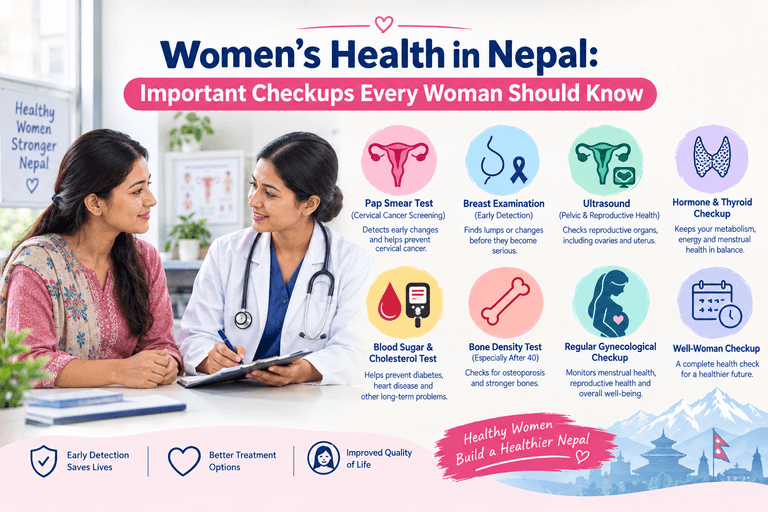
Knowing your family health history can help you in determining potential health risks and make informed choices regarding your health. Your family medical history is a record of diseases and conditions that run in your family. It includes information on the various health problems affecting your parents, grandparents, siblings, and other close family members. The information on disease and health issues in the family provides the doctor with pointers of possible conditions that you might also be at risk of developing.
A family history of a certain disease does not necessarily mean that you will definitely develop the condition. A lot of conditions are prompted by a combination of environmental, genetic, and age factors among others. However, your doctor can advise you on which conditions to look out for depending on your family history. In the meantime, having knowledge of your family health history can help you to know what to ask your doctor during your appointment.
The information provided on this page is for educational purposes only. It cannot substitute for the advice of your own doctor who knows your individual medical needs and condition.
For most Nepalese people, family health history is passed down verbally from one generation to another. Although the information provided on health issues is vital, it cannot be relied on due to its lack of organization. Recording your family health history can help you keep track of your family’s health and create a complete record that can help the doctor during your examination, if the need arises.
What Is Family Health History?
Family health history is a record of health information of a person’s biological relatives. It may include a list of diseases, an age when the condition was diagnosed, a list of surgeries, chronic illnesses, and the causes and ages of deaths if applicable.
The records can include information about the following biological relatives:
• Parents
• Siblings
• Children
• Grandparents
• Aunts and uncles
• Other close members of the family.
For instance, a detailed description of cases of hypertension, diabetes, cardiovascular disease, and some forms of cancer that occurred in the family history are relevant for the physician’s assessment.
Family health history differs from a medical history because it does not record a person’s medical and health-related records but a relative’s history of health problems. The CDC offers Family Health History resources which will assist you and your doctor.
Why Is Family Health History Important?
Family history can give you information about health problems that are more likely to occur within your family. Family history can give your doctor insight about your chances for developing a condition. However, you cannot predict your future based on your family tree.
For instance, having a parent with diabetes partially increases your chances of getting diabetes, but you might never get diabetes. Family history along with your diet, workout schedule, body structure, age, other medical conditions, and much more can affect your chances of getting certain diseases.
One of the most important benefits of being able to know your own family health history is, that it can highlight possible risks.
A condition that frequently occurs among your close family members will make the doctors double-check that particular issue. Based on your age, symptoms and situation, it can be decided whether you need any specific screening or preventive drug treatment.
The following examples can benefit from a screening based on a family history:
- Diabetes
- Hypertension
- Heart disease
- Some cancers
- Inherited diseases
- High cholesterol
- Some neurological conditions
Just because there is a condition that runs in the family, does not mean that you have to go and get specialized tests. This is where a health professional can help you decide what is right for you.
Family Health History and Genetics
Genes are biological information units that are handed down from parents to their children. Since biological relatives share some genes, certain health problems can be more prevalent within a family.
There are diseases that are significantly determined by a particular genetic mutation and other diseases that are influenced by multiple genes as well as lifestyle and environmental causes.
This means that family health history may give insight into potential genetic risks.
Having a family history of a disease does not necessarily mean that you will develop the disease. Just as having a family history of a disease does not mean that you cannot develop the disease.
For example, a person could have multiple family members who have diabetes but never develop it themselves. Whereas another person could develop diabetes even without a family history of it.
This is why family history is just a small, singular part of a much bigger picture.
Your doctor would take into account things such as:
- Your age
- Your medical history
- Your symptoms
- Your lifestyle
- Your family history
- Your overall health
What Information Should You Collect?
When constructing your family health history, it is not necessary to record every minor illness or medical detail. The most critical aspect of compiling this information is that it must contain vital health-related data about your close relatives that could be relevant to you. Even the most seemingly irrelevant detail can provide the medical professional with significant information if a hereditary disease or health problem runs in your family.
1. Basic Family Information
Create a list of your close blood relatives. They can include your parents, siblings, children, grandparents, aunts and uncles. Record the person’s relationship to you and their age or the year of their birth if it is known.
This will help you understand how distant the relative you are considering is to you genetically and consequently how critical they might be to your health risk assessment.
2. Major Diseases and Medical Conditions
Be sure to note any major diseases or medical conditions that may have plagued your family members. Things like diabetes, high blood pressure, heart problems, stroke, cancer, kidney disease, asthma, and other major illnesses.
Make sure to note any recurring problems, for instance if both your mother and grandmother on your mother's side have diabetes, that might be important to your doctor.
3. Age of Diagnosis
Try to note an approximate age of diagnosis if you can. Meaning, how old was your family member when they were diagnosed with whatever ailment they had?
Sometimes a relative getting a condition at an older age versus a younger one can be important to note to your doctor.
4. History of Cancer
If there is a hereditary cancer in your family, indicate what cancer it was and which relative was affected. If possible, also indicate at what age the person was diagnosed with cancer.
Information about different relatives suffering from cancer might be of great importance to a healthcare professional, especially if they had the same or similar cancer.
5. Heart Disease and Stroke
Include in your history any significant cardiovascular disease – heart disease, heart attack, stroke, or any other major heart problem.
If a close relative of yours suffered from a severe heart condition at a relatively young age, note it down. Also, make sure to include whether it was your parents, grandparents, siblings, or another relative.
6. Diabetes and Other Common Conditions
These are conditions such as diabetes and high blood pressure which can be common in some families.
You can note down if your parents, grand parents or siblings have been diagnosed with these diseases. You can also note other chronic diseases which may need constant medication or periodic check-ups.
Having a condition in the family does not necessarily mean that you will also develop it. Your doctor will take into account your personal situation, including your family medical history, lifestyle, age, and other factors before deciding on a course of action.
7. Known Genetic or Inherited Conditions
If anyone in your family has been diagnosed with a genetic or inherited condition, note it down.
You might not know the medical term for a condition and so if possible, ask your relative or their doctor to note down the correct medical term. Do not try and diagnose anyone based on family medical history.
It can be useful to note this information especially if there seem to be recurring uncommon conditions in the family.
8. Major Surgeries or Medical Procedures
Major surgeries can also be a part of your family health history, if any of your close relatives had serious or hereditary health problems.
You may want to include in your family health history such things as a heart surgery of your parent or a surgery of another family member who had to undergo it because of a specific illness. However, you should not include minor operations and surgical interventions that do not have a significant meaning.
9. Age and Cause of Death
In case of a close relative’s death, it is essential to include the approximate age and the cause of it if known.
10. Information From Both Sides of the Family
Don't forget to gather information from both sides of the family! Sometimes people tend to forget about one side of the family while they concentrate on the other side of the family.
Make sure to separate your maternal and paternal relatives if you can. It will make it much easier to discern any patterns, and it will help you provide better information to a health care provider.
11. Keep Track of Uncertain Information
Sometimes relatives don't give out all of the information that you need. You might be told conflicting things by different relatives.
Remember than an accurate piece of information is better than a piece of information that sounds more complete but is based on assumptions.
12. Update Your Family Health History
Your family health history is something that keeps changing over time. A relative may get a new diagnosis, or you may learn new information about a relative that you never knew before.
Update your family health history every once in a while to make sure important information isn't lost or forgotten. It will provide you with a valuable resource to help you when talking to a health care provider.
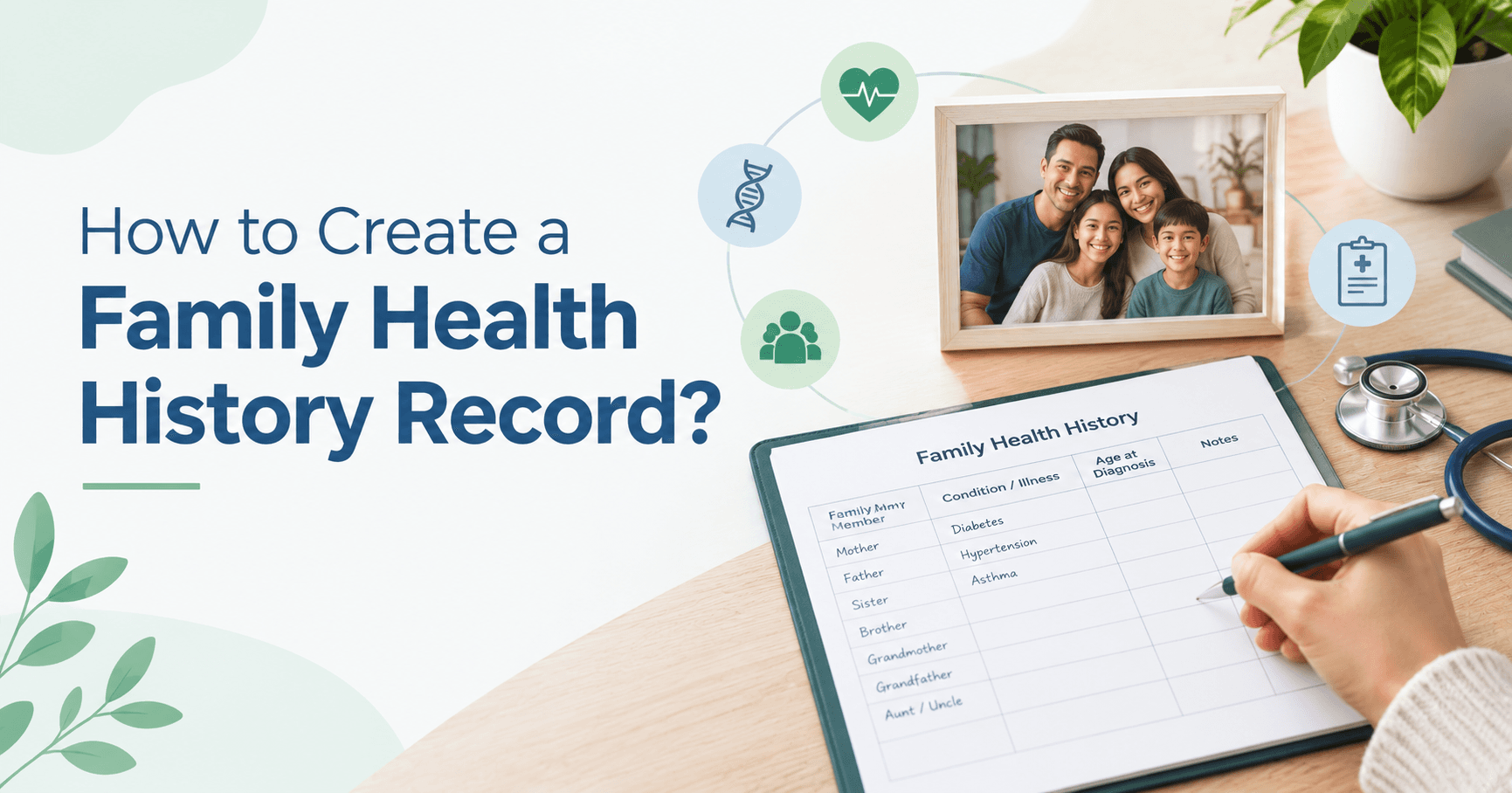
How to Create a Family Health History Record?
Creating a family health record might be easy for anybody. You may use any record you want: a notebook, computer file, or a secure site.
It is necessary to start filling the record with data about yourself and your closest relatives like parents, siblings, grandparents, aunts, and uncles.
The information about each member should contain the following details:
Name or relationship: Mother
Diagnosis: Diabetes
Age: 50s
Additional info: Complications (if any)
It is not required to write down all minor health problems. You should pay more attention to significant and chronic diseases.
It is essential to update the information you filled about your relatives because the family health history may change over time. A family member may develop a new illness, or you may learn something new about your relative’s health conditions. That is why you need to refresh the records periodically. It may also be helpful to you when interacting with healthcare professionals.
How to Talk to Your Family About Health History?
It may be easy or difficult for some families to discuss health issues.
You can ask simple questions to begin with. For instance, you can ask your parents or older relatives if there are any significant health problems that run in the family. You should tell them that you are collecting this information to research your family health history.
Health information can be private, so your relatives may not want to share everything. You should respect their privacy and only record what they are comfortable sharing. You should never disclose your family health information publicly; however, you can use your records to help you communicate with healthcare professionals about your medical needs.
Family Health History and Common Conditions
Many common health conditions can affect people for a number of reasons.
Diabetes
Type 2 diabetes can be genetic and having a close relative or two with the disease can raise the chances of developing it too. However, there are other causes that could contribute to the onset of the condition. If it runs in your family, make sure to talk with your doctor about any potential risks and if you should be screening for it.
High Blood Pressure
High blood pressure can also be something that is genetic and occurs more within families.
Because high blood pressure can be symptomless, it is important to make sure you are getting your blood pressure tested regularly. If multiple close members of your family have been diagnosed with high blood pressure make sure to bring it up to your doctor during your regular checkups.
Heart Disease
Heart disease can be genetic and a family history of it can raise your risk for it substantially.
If any close family members have had heart disease and were diagnosed at an early age, make sure and bring this up with your doctor. Aside from being genetic, there are other causes of heart disease such as tobacco use, cholesterol, high blood pressure, diabetes, exercising, eating, and much more.
Cancer
Genetics can raise the risk for many diseases and conditions including multiple forms of cancer. However, most cases of cancer are not directly caused by a single inherited gene. If many close members of your family have had the same or similar cancers or if they have been diagnosed at unusually young ages, make sure and bring this up to a professional. They will be able to decide if there is anything else you need to do.
Family Health History Can Support Preventive Healthcare
Preventive healthcare is about taking steps to protect one’s health and detecting possible problems at an early stage. Understanding one’s own family health history can aid in discussing with a healthcare professional about the most relevant preventive healthcare options.
For instance, if the family history is positive for a specific disease, the healthcare professional can advise on lifestyle changes or if some screening tests are necessary in a particular person’s case.
Health checkups on a regular basis can help track the health status in many essential ways.
Depending on age and personal needs, a healthcare professional may recommend blood pressure, blood sugar, cholesterol tests, or other examinations.
The family history might contribute to this discussion. However, the healthcare professional will determine the battery of tests and the schedule of regular health checkups rather than relying solely on family history.
Family Health History Can Help With Better Health Decisions
Health decisions can sometimes be difficult to navigate. You may wonder if you need a check-up, if something is something to be concerned about, or even how to change your lifestyle for the better
Family health history can help provide insight on these concerns to you and your doctor.
It Can Help You Discuss Risk With Your Doctor
Give your doctor more information to help him/her determine the right kind of care for you. This can help your doctor take into account more information when thinking about your health and determining what needs to be done.
It Can Encourage Healthy Habits
Now that you know that there are things that could potentially run in your family, you may want to take extra precaution and be as healthy as possible
Depending on your situation, this could mean:
- eating healthy
- getting enough exercise
- getting sleep
- not smoking
- not abusing harmful substances
- going to the doctor regularly
Family health history should not scare you or make you paranoid. It should empower you to make smart decisions.
What If You Do Not Know Your Family Health History?
Not everyone can provide detailed information about their family medical history.
You may not know your grandparents’ medical histories or that of other family members. Some people may be raised away from their biological family members, or may not know their medical histories due to the deaths of family members or a lack of available information.
Having an incomplete family medical history does not mean that you cannot control other aspects of your health
You can focus on:
• Your personal medical history
• Your current symptoms
• Maintaining regular doctor’s visits
• A healthy diet and exercise
• Preventative screening and treatment
• The advice of your doctor and/or nurses
Make sure to inform your doctor about your incomplete family medical history. Your doctor can take into account your other information when discussing your health or any concerns you may have.
Conclusion
Your family health history can be used as a guide to making smart healthcare choices, understanding possible health risks, engaging in more meaningful discussions with your doctor, and choosing appropriate preventive care.
Genetics, along with one's lifestyle, environment, age, and many other factors can predispose a person to certain conditions. To start using your family history, collect and organize any pertinent health information from your blood relatives, and consult a healthcare professional about what steps you should take to reduce the chance of developing any diseases they may have had.
Having a general idea of what conditions might run in your family can help you make better healthcare decisions. It's important to remember that having a certain genetic makeup isn't necessarily a death sentence, people live healthy lives every day with proper prevention and treatment.
For an easily accessible start, residents of Nepal can carry around a basic medical family tree record to help them stay on top of preventative healthcare and be more informed about their health. If you have questions about diseases that run in your family, speak with an NMC-Verified Doctor in Nepal about your medical and family history to understand your health and what preventive care you may need. You can search UpcharSewa to learn more about health care and services and talk to doctors about medical advice.