Childhood is a wonderful period of growth, development, and learning. Children need more calories, protein, vitamins, minerals, and other nutrients to support their growth and brain maturation. Childhood nutrition in Nepal is a significant concern because different nutritional problems can occur depending on the child’s age, socio-economic status, locality, food insecurity, and access to healthcare services.
Good nutrition does not necessarily mean healthy and expensive food. There is a wide range of local foods in Nepal, such as rice, lentils, beans, green leafy vegetables, fruits, eggs, milk, dairy products, meat, fish, nuts, seeds, etc. It is essential to develop a healthy and balanced diet that includes a variety of foods.
According to the Nepal Demographic and Health Survey (NDHS) 2022, about 25 percent of children under five years of age were stunted, 8 percent were wasted, and 19 percent were underweighted in Nepal. Hence, it is time to give much attention to childhood nutrition.
This article discusses breastfeeding, complementary feeding, and essential nutrients for children in Nepal, healthy and local foods, food safety, childhood nutritional issues, and when to consult a professional.
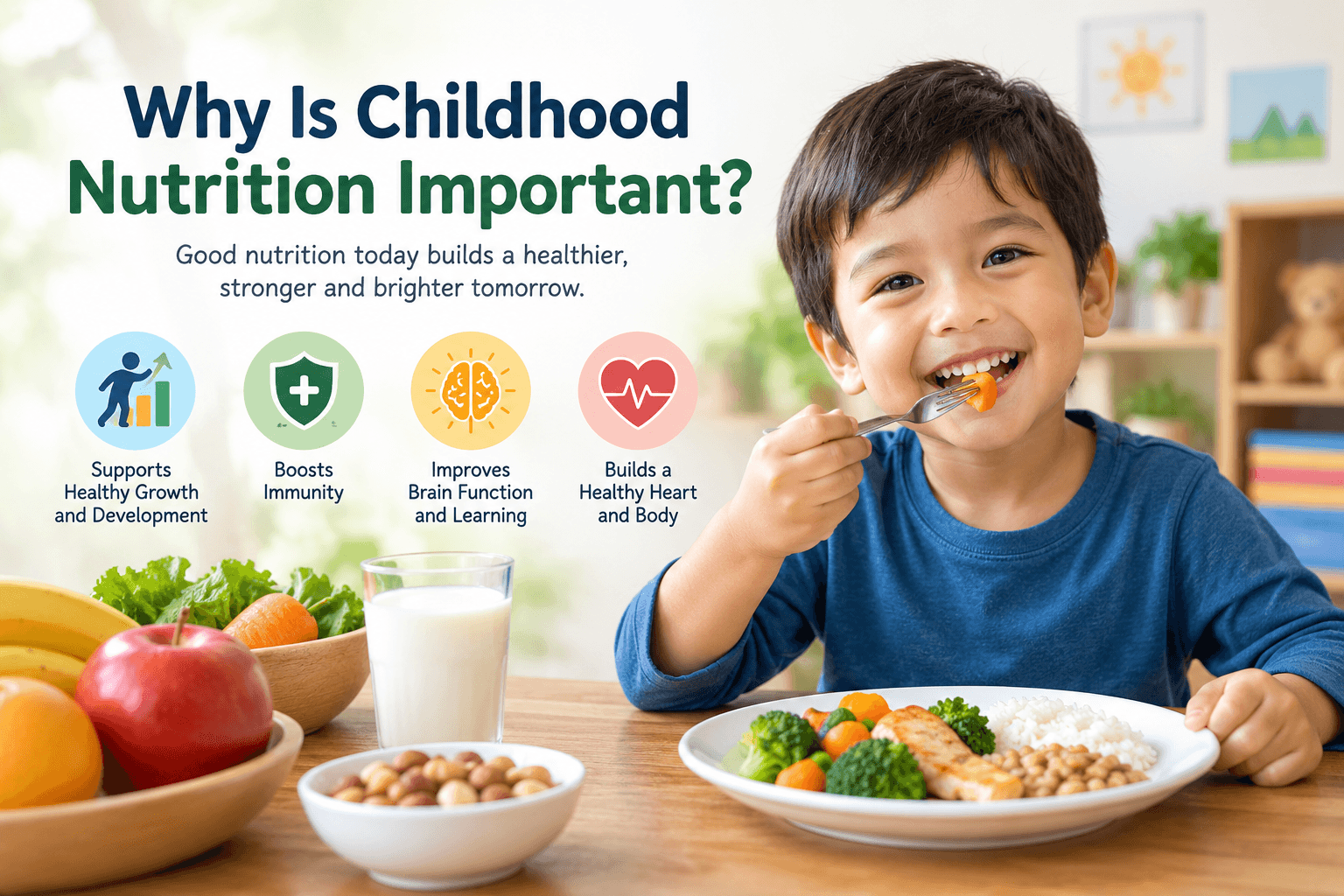
Why Is Childhood Nutrition Important?
Nutrition gives children the energy and building materials they need to grow and develop. In general, a child who gets enough nutritious food will have better physical growth, brain development, immunity, and overall well-being.
The first few years are critical. According to the World Health Organization (WHO), the period of early childhood is vital for healthy dietary habits and the prevention of nutrient deficiencies.
Proper nutrition contributes to:
- Normal growth and development
- Healthy brain development and learning capacity
- Muscle strength and healthy bones
- Normal functioning of the immune system
- Appropriate physical activity
- Building healthy dietary habits
- Recovery from illness
Nutrition plays an important role in the life of every person. However, children may suffer from nutrient deficiencies and develop unhealthy eating habits if they consume foods and beverages with added sugars, excessive salt, and unhealthy fats.
Therefore, parents should pay attention to the caloric content, balance, food safety, and appropriateness of the diet for each child’s age.
Understanding Childhood Nutrition in Nepal
Nepal has a rich variety of traditional foods; however, the availability and consumption of the foods that are commonly consumed can vary from family to family and from one region to the other.
For instance, some families can regularly consume rice, dal, vegetables, and achar. While the ingredients can provide a balanced meal, a child would still require more food groups to meet his or her nutritional needs.
A combination of different food groups in a balanced way ensures that a child’s nutritional needs are met as opposed to relying on a single food
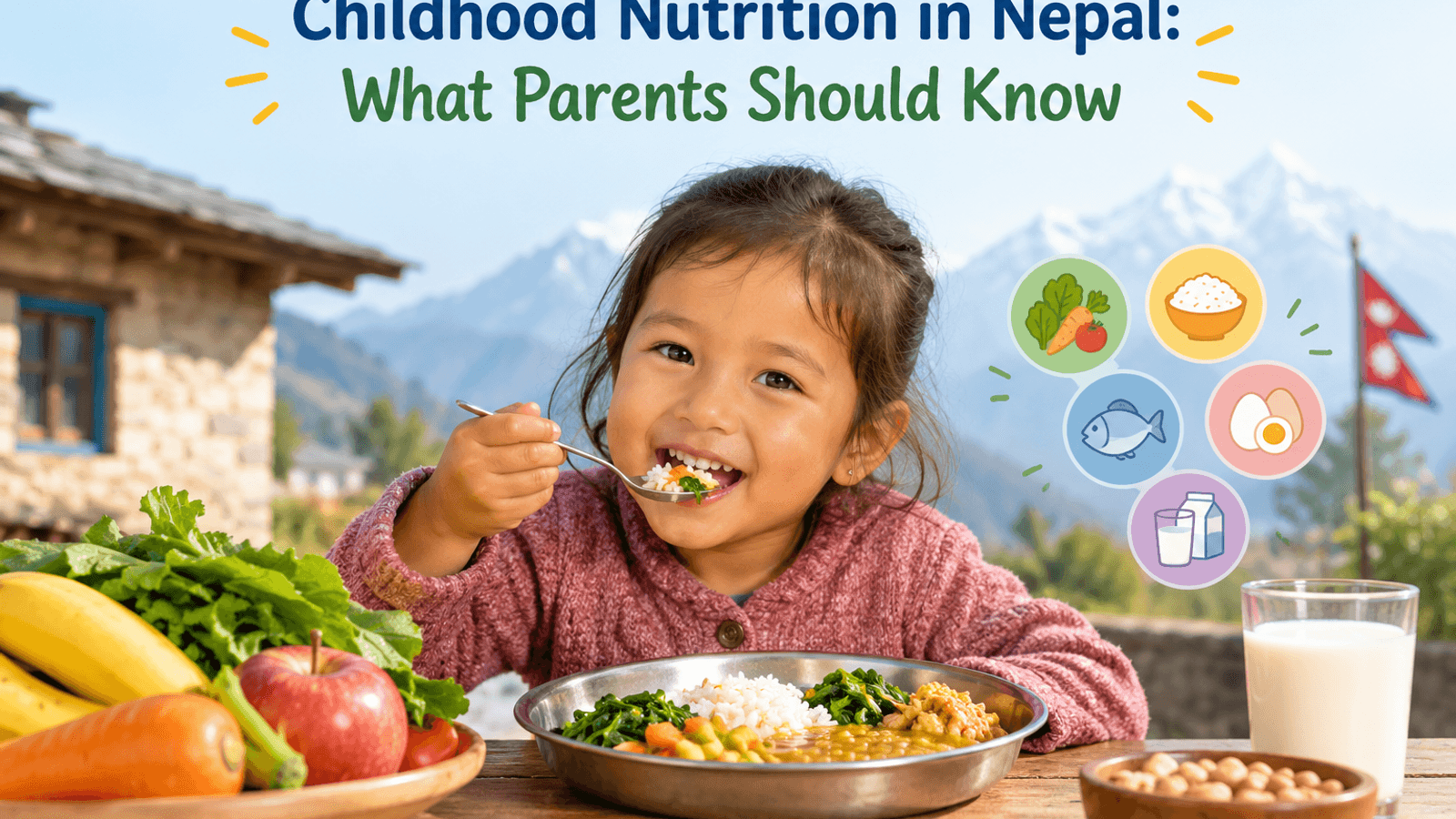
Parents can consider the following five major food groups when making decisions for their children’s meals:
1. Cereals and Staple Foods
These are foods made from cereals and include rice, wheat, maize, millet, barley, oats, and others. The food group can help in providing carbohydrates and energy to the body. Traditional foods like dhido, roti, rice, and others can be used to make a balanced meal.
2. Pulses and legumes
Dal, lentils, chickpeas, kidney beans, peas, soybeans, and other pulses, and legumes provide protein and other nutrients.
Hence, dal-bhat can be used as a basis for a family meal with vegetables and another food item high in protein.
3. Vegetables and fruits
Green leafy vegetables, carrot, pumpkin, tomato, cauliflower, beans, banana, orange, apple, papaya, guava, and other seasonal fruits and vegetables provide vitamins, minerals, and fibre.
Parents should aim at providing different colored fruits and vegetables and not just one vegetable daily.
4. Animal-source foods
Eggs, milk, yogurt, meat, chicken, fish, and other animal-source foods provide nutrients, including proteins and a variety of vitamins and minerals.
Those who include animal-source foods in their diet can include them on a regular basis depending on their budget, culture, and the age of the child.
5. Nuts and healthy foods
Nuts provide energy, protein, and healthy fats. Parents should provide different forms suitable for the child’s age to avoid choking, especially for younger children.
However, it is not necessary that every meal should have all the food groups. The above principles should be used as a guide in managing a child’s diet. Children should be fed with a variety of foods in each meal as much as possible throughout the week.
Breastfeeding and Nutrition During Infancy
Breastfeeding plays a critical role in the infant’s nutrition.
World Health Organization and UNICEF recommend exclusive breastfeeding during the first six months after birth. Exclusive breastfeeding refers to giving the infant only breast milk without any other food or liquids, including water, unless there is a medical indication for additional fluids or nutrients, such as oral rehydration solution, vitamins, minerals, or other medications.
At around six months, infants require more dietary nutrients than breastfeeding can provide. At this point, children should start receiving complementary foods while breastfeeding is continued until two years of age or beyond.
The parents should consult a qualified healthcare professional or counselor on breastfeeding if they have any concerns or questions about breastfeeding.
Important Nutrients Children Need
Kids need various nutrients for proper growth. A balanced diet contains all nutrients that are required by the body.
Proteins
Protein is utilized for growth and repairs. It is an important component in building muscles, bones, and other tissues.
Products rich in proteins include:
- Dal
- Beans
- Lentils
- Eggs
- Milk
- Yogurt
- Meat
- Fish
- Soy products
- Nuts and seeds
Proteins in kids diets can be achieved by utilizing locally available foods. Children do not necessarily require costly foods to get proteins.
Iron
Iron aids the production of hemoglobin in the body. The recommended iron-rich foods are eggs, meat, lentils, beans, green leaf vegetables, and iron-fortified foods.
If a kid lacks iron, he or she may display signs of anaemia. However, it is not advisable to conclude that lack of energy, motivation, hunger, or other related symptoms is due to iron deficiency. Instead, consult a doctor and confirm the real cause.
Calcium
Calcium is necessary for the normal growth of bodily tissues, especially bones and teeth.
Sources of calcium are:
- Milk
- Yogurt
- Other dairy products
- Some leafy vegetables
- Other beans and fortified foods
A child requires adequate calcium for proper growth. However, the amount varies with age and the overall diet. Therefore, it is essential to consult a nutritionist to monitor the progress.
Vitamin A
It is necessary for the good functioning of the body. For instance, it is required for proper vision. Vitamin A is found in carrots, pumpkin, green leafy vegetables, sweet potatoes, mangoes, eggs, and dairy products.
Vitamin C
It is found in most fruits and vegetables. Oranges, guavas, tomatoes, papaya, lemons, and other seasonal fruits are excellent sources of vitamin C. Moreover, eating more vegetables and fruits is essential for good health.
Healthy fats
A kid requires fats for energy and overall growth. Healthy fats may be obtained from eggs, yogurt, nuts and seeds, fish, and cooking oils.
For instance, nuts and seeds are good sources of fats, fiber, vitamins, and minerals. However, it is advisable to avoid giving whole nuts to a kid in case they trigger choking.
Why Food Variety Matters?
Children require a variety of nutrients for proper growth and development, including healthy brain function, strong bones and muscles, and a robust immune system. However, a single food item cannot provide the nutrients needed by a growing child. Hence, food variety is an essential component of the childhood nutrition in Nepal.
Parents can add variety to children’s diets by using different food groups throughout the week, such as using rice or other cereals, dal and beans, vegetables, fruits, eggs, milk and dairy products, and meat, fish, nuts, and seeds. For instance, a combination of rice, dal, vegetable, and egg is more nutritious than having meals made from a single food group. In addition, a variety of foods can expose children to different flavors and textures.
Some children may refuse to eat a certain food item, especially if it is not palatable or has a unique texture. Hence, it is advisable for parents to introduce a new food to a child more than once. Parents can do this by including it in different meals or dishes.
A varied diet can help kids:
- To get a wider range of vitamins and minerals
- Proteins and calories
- Develop healthy food habits
- Be exposed to a variety of foods
- Have more healthy, nutritious meals
The aim is not to make every meal perfect. Parents can focus on providing different nutritious foods across the day and week.
Food Safety Is Part of Childhood Nutrition
To ensure that nutritious food is beneficial, it should also be well prepared and served.
Infants and young children can get sick from contaminated food and water. Safe handling and preparation of food are, therefore, an important component of healthy eating in young children in Nepal.
The following are important things that parents should do:
Wash Hands
Wash hands with clean water and soap before preparing food and before feeding the child. Wash hands after using toilet or after changing the child's diaper.
Keep the cooking areas clean
Make sure to wash and sterilize the cutting tools, plates, cutting boards, and other cooking utensils. Use safe water for cooking.
Properly cook the food
Make sure to cook eggs, meat, chicken, and fish properly.Do not keep the cooked food at unsafe temperatures
Store them properly and reheat if needed.
Wash vegetables and fruits
Before giving the food to the child, make sure to wash vegetables and fruits.
WHO considers proper hand washing and safe food preparation and storage as one of the key elements of complementary feeding.
Avoid highly processed and very sweet foods
Although children may like biscuits, sweets, sugar-sweetened drinks, highly processed, and packaged foods, these should not replace more healthy foods.
Parents should be cautious with sweet drinks because children can consume a lot of sucrose with little nutritional value. Instead of sweet drinks, offer the children water and milk, fresh fruits, home-cooked meals and dishes, vegetables, dal and lentils, and eggs. A balanced diet is healthier for the child than occasional sweets and highly processed meals.
Childhood Nutrition Problems in Nepal
Although Nepal has made remarkable progress in reducing the number of undernourished children, the nation still has significant issues with childhood malnutrition.
According to the 2022 Nepal Demographic and Health Survey report, 25 percent of the country’s children are stunted, 8 percent are wasted, and 19 percent are underweight.
What is Stunting?
Stunting happens when a child’s height is below the expected level for a child their age. It usually indicates that they have had chronic or recurrent undernourishment and/or various other environmental factors.
What is Wasting?
A child is wasted when their weight is much below the standard for their height. It implies that the youngster is undernourished or has lost a lot of weight rapidly and/or become ill. A qualified medical practitioner should examine a wasted infant.
What is an Underweight Child?
An underweight child has a lower weight for height or weight for age than a healthy child of the same age. They may be wasted, stunted, or both. A medical expert must evaluate a child’s height and weight using standard growth charts. It would be hazardous to guess if a child is wasted, stunted, or underweight without the proper tools and training
Why Regular Growth Monitoring Matters?
Parents may sometimes compare the growth of their child with that of his siblings, peers, or other children.
This is not a good way to assess healthy growth since children may grow at different rates.
Health workers can monitor:
- Weight
- Length or height
- Overall growth and development
- Growth patterns
- Feeding practices
- Signs of malnourishment
Parents should go for regular checkups and talk to a trained health worker about any concerns regarding their child's growth or feeding.
Nutrition During Childhood Illness
Children may have reduced appetite during illness.
During the sickness, parents ought to seek advice from a qualified healthcare professional and focus on managing their fluid intake and diet.
Who recommends continuation of breastfeeding during illness while increasing fluids, for example, more frequent breastfeeding if appropriate. Children can also be persuaded to consume soft foods that they usually enjoy. After being ill, children should be fed more to help them recuperate.
Parents should seek medical attention if the child cannot feed or drink, persistent vomiting, signs of dehydration, breathing problems, unusual drowsiness, or any other serious or strange symptoms.
Common Feeding Mistakes Parents Should Avoid
Even though parents have good motives, some feeding practices are dangerous to children.
Forcing Children to Eat
Forcing a child to eat may lead to negative eating experiences.
Instead, encouraging them to eat healthy foods is essential, and allowing them to be responsible for deciding when they are full.
Giving Many Packaged Foods as Snacks
Giving children many packaged foods as snacks may prevent them from having healthy meals.
Offering Children the Same Meals
Offering the same meals may not provide children with adequate nutrients.
Delaying the Introduction of Complementary Foods
Children need more nutrients than breast milk can supply after six months.
Therefore, parents should not wait until children are six months old to start introducing complementary foods to their infants’ diets.
Comparing Children
It is dangerous to compare children because their growth rates are different.
If parents are concerned about their child’s growth, they can consult a health professional to determine if there is a problem.
Childhood Nutrition in Rural and Urban Nepal
Nutrition issues in communities can sometimes be unique.
As the 2022 Nepal Demographic and Health Survey found that rates of stunting in children under five were higher in rural areas than urban areas: 31% versus 22%.
There might also be differences in fresh food, healthcare accessibility, clean water, sanitation, education, and nutrition knowledge depending on which region a family lives in Nepal
However, healthy eating does not always mean following a specific diet.
Households can use available and affordable healthy foods found in their community. Traditional dishes can also be used in moderation as part of a healthy diet, as long as meals are nutritious and prepared hygienically.
How Parents Can Build Healthy Eating Habits?
Healthy eating habits begin at home. Parents can help their children learn healthy eating habits like:
- eating meals at regular times
- trying different kinds of fruits and vegetables,
- drinking plenty of safe water,
- eating healthy homemade meals,
- eating breakfast when appropriate,
- eating slowly,
- to know when they are hungry and when they are full,
- washing hands before eating,
- eating with the family.
In addition, parents serve as role models for their children. Parents can influence their children's eating habits by what they do themselves. Children often copy what they see their parents and other adults in the family doing.
Therefore, setting up healthy eating habits in the home is a more effective way to change children's eating habits than telling them what they should eat.
When Should Parents Talk to a Health Professional?
Parents should seek medical advice from a doctor, nutritionist, or health professional if a child:
- Is not gaining weight as a result of expectations
- Is constantly losing weight
- Has poor appetite
- Has recurring diarrhea or vomiting
- Frequently becomes ill
- Seems to be consistently weak or tired
- Has trouble feeding or swallowing
- Has a very limited diet
- Experiences symptoms of nutrient deficiency
- Demonstrates signs of developmental or growth problems
A medical professional may evaluate the child's growth, diet, medical history, and other relevant factors before proposing any kind of supplement, drug, or treatment.
Parents should not give their children unproven or untested remedies, treatments, or supplements that promise to help them grow or gain weight just because they think their child needs them. Nutritional supplements should only be used when there is a deficiency, and they should be taken according to the instructions given by a health professional.
Conclusion
It is important to consider dietary education for children in Nepal. The aspect of childhood nutrition involves a number of areas that need to be developed for proper health support. First, children need a well-balanced diet that includes a variety of foods. Second, community members should be informed about the importance of safe food and water. Third, proper feeding practices need to be developed. Fourth, regular assessments of growth and health status should be undertaken. Finally, it is essential to ensure access to the proper health care.
Parents and caregivers do not have to seek exotic food items. A variety of local products like rice, dal, beans, vegetables, fruits, eggs, milk, meat, and other nutritional items can be included in a child’s diet. Healthy dietary habits need to be formed during early childhood to ensure proper growth and development. Proper feeding practices, combined with an appropriate diet, will help the child develop a healthy lifestyle. Parents should also be informed about the importance of seeking professional medical advice in case of health issues.
For more advice on how to keep your child healthy, parents can also read our guide on Regular Health Checkups to learn about why regular visits to the doctor can help your child's growth.
Frequently Asked Questions
What is the most important part of childhood nutrition?
A diverse diet that is well-balanced is essential to childhood nutrition because children require a wide range of nutrients, and therefore meals should involve multiple food sources instead of just one.
What should babies eat during the first six months?
According to the World Health Organization and UNICEF, babies should be exclusively breastfed during the first six months of their lives. Parents who experience any breastfeeding issues should consult a qualified healthcare provider or a trained professional.
When should complementary foods be introduced?
Complementary foods should generally be introduced at around six months while breastfeeding continues. The foods provided should be appropriate, nutritious, and wholesome while gradually increasing in diversity and quantity.
Is dal-bhat healthy for children?
Yes, but it is important to add vegetables, fruits, eggs, dairy products, meat, fish, beans, or other nutrient-dense foods to the diet to provide the child with a variety of nutrients.
Does a child need expensive food to grow well?
No, a well-balanced diet can be created from a variety of locally accessible foods. The most important aspects of a child’s diet are wholesome nutrition, variety, quantity, and food safety.
How can parents know whether their child is growing properly?
Proper child growth should be assessed by a qualified healthcare provider by measuring the child’s weight, length, or height. Parents should not compare their children to others, as all children grow at different rates.
Should parents force children to finish their food?
No, the parents should not force children to eat. Instead, they should try to encourage the child to develop a nutritious diet and a positive attitude toward eating.