Taking care of your health is not only about seeking medical attention when you feel unwell. Routine health checkups are essential to evaluate your health status, detect potential irregularities at an early stage, and help you stay healthy in the long term. The benefits of regular health checkups for better health include early detection of diseases, monitoring current health problems and helping people make healthier lifestyle choices.
Therefore, a standard health checkup offers you an array of opportunities to assess your current health state. Aside from screening and identifying various conditions, preventive medicine is also concerned with making recommendations about diet, exercising, and making other lifestyle choices. Apart from general screening, a routine health checkup is also an opportunity to discuss your concerns and worries with a healthcare professional. You can also ask for advice regarding medications, family history, vaccination schedules, and screening recommendations. A comprehensive screening is a necessary part of a primary healthcare program since it covers all aspects of health maintenance and makes it possible to conduct a proper assessment.
However, it is important to keep in mind that not all asymptomatic individuals should undergo the same screening tests at the same frequency. A wide variety of factors should be taken into account when deciding which tests are needed, and how often they should be performed. In most cases, age, sex, ethnicity, family history, current health status, and lifestyle habits are used as reference points. By speaking with a medical professional about your unique health indicators, you will be able to devise the most sensible course of action.
What Is a Regular Health Checkup?
A routine health checkup refers to a scheduled examination with a healthcare professional that assesses an individual’s overall health status, even when there are no particular symptoms that need to be addressed.
During a routine examination, a healthcare professional can go over a patient’s medical history, lifestyle and medication use, vaccination records, genetic disposition, and other relevant matters. A doctor can also take measurements such as blood pressure or body weight, depending on the patient’s needs and age. Apart from medical checkups, a routine visit can entail screening and health education, depending on the individual’s needs.
A health checkup is different from a visit to a healthcare professional due to a specific illness or injury. The primary objective of a routine examination is the promotion of health maintenance and risk identification as well as earlier diagnosis and intervention for some diseases.
Why Are Regular Health Checkups Important?
Many people visit a doctor only when they feel ill. However, many diseases have few or no early warning signs. Healthcare visits allow patients to address their concerns and learn about potential risks and complications.
Primary healthcare refers to the World Health Organization’s definition, which includes health promotion, disease prevention, treatment, rehabilitation, and other curative and supportive services. Therefore, it is evident that the concept includes disease prevention and control. Regular checkups promote early detection and prevention of diseases.
Regular health checkups can also help you establish a reliable doctor-patient relationship. You will receive professional healthcare advice and guidance based on your medical needs. A comprehensive understanding of your health status can be achieved by analyzing the collected information.
Benefits of Regular Health Checkups
There are many benefits to maintaining a healthy lifestyle because of prevention. Here are some of the perks of scheduling those doctor’s visits and cleanings.
1. Helps Detect Health Problems Early
Another big benefit of health maintenance is detecting any health issues as early as possible.
Some health issues can start slowly and show no symptoms. Your doctor or nurse practitioner may suggest specific screenings and measurements based on your age or family history. Catching a health issue early can give you time for an accurate diagnosis and proper care.
For example, a regular maintenance visit could include a screening for blood pressure or a discussion about whether screenings for diabetes or some types of cancer are right for you. Screening is used to find people who may have a condition, even when they don’t show any symptoms. But, not all screening tests are right for everyone
Finding a health issue early doesn’t always mean that it can be prevented or cured. But knowing about a developing issue can help both you and your doctors make healthier decisions.
2. Helps Monitor Your Overall Health
Health can change over time. What may be normal for you this year, could change in the next.
With regular check-ups, you and your healthcare professional can keep track of certain measurements related to your health. For some people this may include blood pressure, weight, cholesterol, blood sugar, medications, and more.
Being able to track these things can help you learn about your body and allow you to ask more specific questions to your personal healthcare professional.
Instead of focusing on just one number or portion, try looking at the bigger picture and how everything ties together.
3. Supports Prevention of Chronic Diseases
Chronic diseases are often long-term conditions that persist over time and require continued management. These diseases include diabetes, cardiovascular diseases, and cancer.
Regular preventive screening can help identify the risk factors and give an opportunity to talk about ways to improve them. The CDC emphasizes that preventive care in combination with healthy habits can reduce the risks of developing chronic diseases.
A medical checkup can help discuss such issues as:
- Physical activity
- Diet
- Sleep
- Tobacco use
- Alcohol consumption
- Obesity
- Family medical history
- Mental health and stress
- Current medications and supplements
Making small adjustments can have a lasting positive effect on health and quality of life.
4. Helps You Understand Your Family Health History
Your family history can be really helpful.
If your close family members have had illnesses, your doctor can use this information to figure out what's best for you. The CDC even says that your family history can affect screenings and other things they might do to prevent you from getting sick.
So, it's important that you know the major health issues of your parents, siblings, grandparents, and any other close blood relatives.
Just because your family has a history of something doesn't mean you'll get it, but it's still good to know so your doctor knows too.
5. Maintains Vaccinations and Preventive Care Up to Date
Another component of preventive healthcare is vaccination.
Depending on the individual’s age, health status, occupation, travel, and other factors, a person may require certain vaccinations or boosters. A healthcare visit may also be used to remind patients about vaccines and assess their due dates.
Preventive healthcare can also involve other services, such as dental care and health education. Updating preventive health care can also help people to stay up to date with their healthcare needs.
6. Helps identify health risks associated with lifestyle
The way we live our daily life can have an effect on our health. Our diet, level of physical activity, amount of sleep, tobacco use, alcohol consumption, and stress are all examples of things that can affect our health.
A routine medical checkup can allow you to openly discuss these issues with a healthcare professional.
For instance, if you aren't being physically active, a healthcare professional can help come up with some solutions for increasing your activity level. If your diet is lacking, they can help you come up with a diet plan that suits you or refer you to someone who can. The point is that gradual changes can be made to reduce risks to your health, rather than making sudden and drastic changes at once.
7. Helps You to Know Recommended Screening Tests
A screening test is not the same as a diagnostic test.
Screening is a test done to identify if a person has a certain health condition, even if they do not show any symptoms related to it. When the result of a screening test is abnormal, more tests are required to diagnose it.
Different screening tests are recommended for different people depending on their age, sex, and other risk factors like family history or previous screening results. For instance, certain cancer screening programmes can help in diagnosing a few types of cancer. According to WHO, the main aim of screening is to recognize persons who may benefit from being tested for a specific disease.
However, just because a test recommends more evaluation, does not mean that it should be taken. Many screening tests have limitations and drawbacks, such as false-positive results, extra testing, and overreaction to results. That is why it should be done under the correct medical guidance instead of randomly getting every screening test you can find.
8. Helps Review Medicines
If you are regularly taking medicines, a routine healthcare visit can provide an opportunity to review these.
You can talk to your doctor about:
- The medicines you are currently taking
- How and when you take them
- Possible side effects
- Questions about your treatment
- Medicines that have been prescribed by different healthcare professionals
- Allergies or previous reactions
9. Encourages Better Health Awareness
Regular health checkups promote wellness by increasing people’s awareness of their health.
Instead of only being conscious of health issues during a crisis, having preventive measures encourages individuals to be knowledgeable about risk factors, symptoms, and lifestyles. This awareness promotes active participation in medical decision-making.
According to WHO, people-centered primary care is about engaging people in an active role in promoting their health and wellbeing.
10. Builds a Long-Term Relationship With Your Healthcare Provider
Having a regular healthcare provider can help you talk about your health concerns.
As time goes on, your healthcare provider will likely know your medical history, medications, family history, and other concerns. Being able to have continuity of care is an important aspect of primary care.
Long-term healthcare can also help you in discussing sensitive or private health concerns if you feel comfortable.
What Is Usually Checked During a Health Checkup?
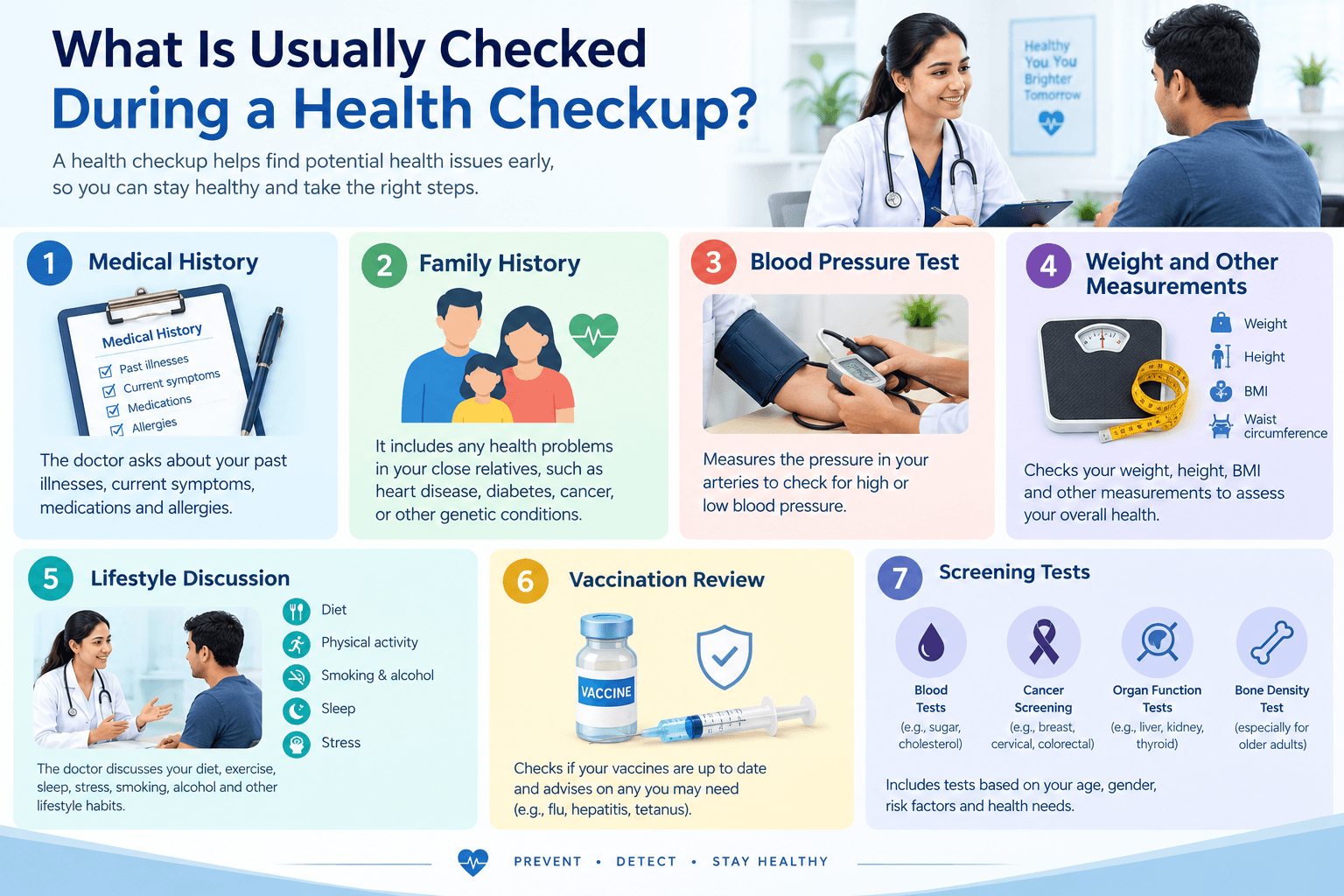
There is not a single health checkup that is the same for everyone. The services included will vary depending on your age, health, medical history, and individual risk factors.
A routine visit may consist of the following:
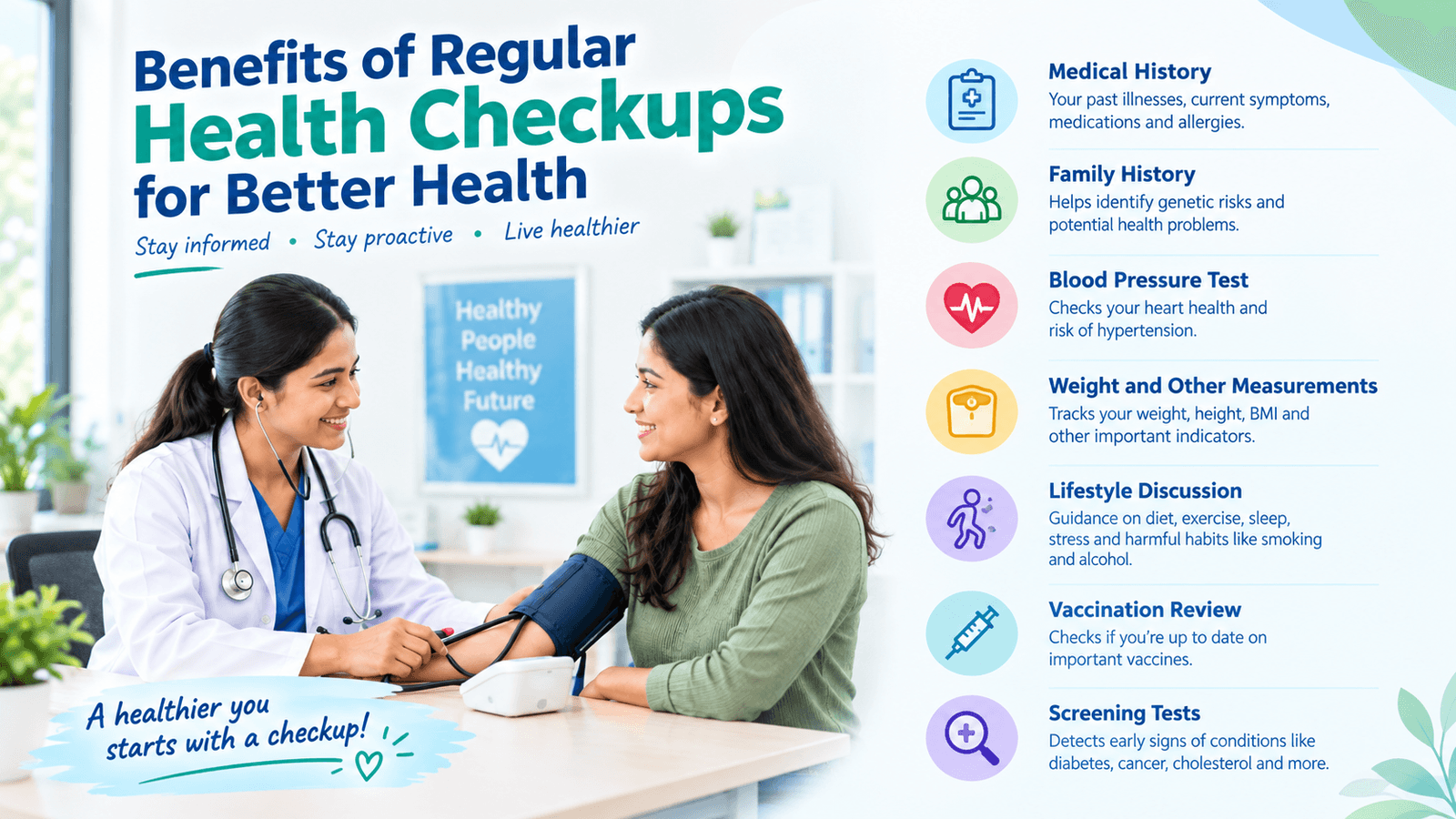
Medical History
Your healthcare professional may ask you questions about past illnesses, surgeries, allergies, medications, and other health related topics.
Family History
Your healthcare professional may ask you about any diseases that occur in your family to help identify any risks you may have.
Blood Pressure Test
Your blood pressure may be taken because high blood pressure often has no symptoms.
Weight and Other Measurements
Your weight along with other basic measurements may be taken based on your personal needs and reason for your visit.
Lifestyle Discussion
You may be asked about your level of physical activity, diet, sleep, tobacco use, alcohol consumption, stress levels, and/or other lifestyle or personal questions.
Vaccination Review
Your healthcare provider may review your vaccination record to make sure you are up-to-date with shots you may need.
Screening Tests
Based on your age and risk factors, your healthcare provider may recommend certain screening tests.
Dental and Other Preventive Care Services
Preventive healthcare services may also include dental and other services based on your individual needs.
How Often Should You Get a Health Checkup?
There is no single schedule that is optimal for everyone. The right frequency depends on your own circumstances, such as:
- age
- existing health issues
- family medical history
- lifestyle
- medications
- previous test results
- personal risk factors
- pregnancy or other personal factors.
You may need to come more often if you have certain health conditions or risk factors or you may need to come on a regular basis for preventative care, based on your age or other factors.
Don’t use a general online search to decide your own healthcare needs. Instead, consult with an appropriate medical professional about your personal situation.
Health Checkups for Children and Adolescents
Children and adolescents' health checkups are different from those of adults. Routine appointments allow healthcare providers to observe their overall development, nutritional status, vaccination coverage, and wellness.
The World Health Organization (WHO) recommends regular well-care visits for children and adolescents to promote healthy growth, development, and general wellness.
Parents and caregivers must adhere to the recommended schedules by their pediatrician and local authorities.
Health Checkups for Adults
Adults can benefit from having a preventive healthcare visit throughout their lives. The type of screening and instructions given depend on the individual's particular case. A doctor may give advice on how to lower blood pressure, ask about exercise and diet, review immunization records, screen for diseases common in the patient's family, and perform other required tests.
Adults should bring up any concerns with a healthcare professional instead of waiting for the next routine examination.
Health Checkups for Older Adults
As people age, their health care needs often change. Older people may need more help with chronic conditions, medications, mobility, vision, hearing, nutrition, mental health, and many other issues.
A healthcare professional can help come up with a plan for you based on your needs.
How to prepare for a regular health checkup
A little preparation can make your appointment more productive.
Make a List of Your Concerns
Write down any symptoms, questions, or health concerns you want to discuss with your provider. You might even forget about questions during an appointment.
Bring Your Medicine Information
Bring a list of medicines you take i.e. prescribed medicines and other products used on a day-to-day basis. Your healthcare provider may need this information while discussing your care needs.
Know Your Family Health History
In case if possible, try finding out if your close family members have had any major health issues. Make sure to inform your health professional about the significant health concerns in your family.
Bring Previous Reports
In case you have any reports or tests done beforehand that may be helpful for your case, remember to bring them along or make sure they are available for your health professional.
Be Honest About Your Lifestyle
Since your health professional will be guiding you in terms of your health better, it is essential that you are 100% honest about your lifestyle and habits.
What If Your Checkup Shows an Abnormal Result?
An abnormal test doesn't necessarily mean that you have a serious disease.
Some types of screening and lab tests can have abnormal results for various reasons, one of which might need additional testing. Your doctor might suggest repeating a test, another test, watching the result, or another appropriate step.
It's important not to panic about an abnormal result on a test, but rather to talk to your healthcare provider about what it could mean for you specifically.
Similarly, a normal checkup can't ensure you won't ever have a health problem, because health changes over time-which is why prevention and attention to new symptoms are still important.
Regular Checkups and Healthy Lifestyle Habits
Health checkups need to combine with healthy habits in everyday life in order to achieve the best results.
Regular physical activity, healthy eating, sufficient sleep, tobacco use, and other measures are considered to be an essential pillar of healthy lifestyle. The CDC lists tobacco use, poor nutrition, physical inactivity, and excessive alcohol consumption as leading factors that contribute to the development of chronic diseases.
Therefore, it is evident that checkups cannot be used as a substitute for a healthy lifestyle. In turn, preventive healthcare can be regarded as a vital aspect of maintaining the best possible health condition. A regular health checkup in combination with a healthy lifestyle and timely treatment can be regarded as an optimal strategy for improving health.
When Should You See a Doctor Outside Your Routine Checkup?
While regular check-ups are an important part of healthcare, you should not wait for your next scheduled visit if a new or serious health issue arises
Contact a healthcare professional if you are concerned about certain symptoms, have chronic or worsening symptoms, or have a preexisting condition.
If you are experiencing severe symptoms, seek appropriate care rather than waiting for your next check-up.
Check-ups are meant for prevention,and should not replace medical care if you are experiencing symptoms that need to be addressed.
Common Myths About Regular Health Checkups
Common myths about regular health checkups often surround the importance and necessity of these checkups. Many myths can deter people from getting the medical attention they need and taking care of themselves, so let's review some of these myths and the truths behind them.
Myth 1: "I feel healthy, so I do not need a checkup.”
While it may be true that you feel well, it does not necessarily mean that you are not at risk for developing any given disease or illness. Preventative healthcare can aid in determining if any given risk factor applies to you and if any screening is required.
Myth 2: "Everyone should get the same tests."
Every individual's health needs are unique to them, so preventative healthcare and screen should be decided on an individual, case by case basis.
Myth 3: "Testing more thoroughly means getting more care."
Testing more can sometimes lead to getting less care. Certain screening programmes can require additional, often unwanted, treatment and or screening as a result of the initial test. WHO stresses the importance of creating screening programmes that create the best outcome for the patient, rather than doing too many tests that can cause more harm than good.
Myth 4: "Having a checkup means that I cannot get sick."
No checkup can guarantee a life time of good health. Preventative healthcare includes things such regular health checkups, as well as a healthy diet and catching illnesses early enough for treatment.
How UpcharSewa Can Help You with Healthcare Services
In general, getting the right healthcare service may occasionally be challenging, as well as knowing which healthcare professional to turn to for assistance.
UpcharSewa can assist individuals in connecting with healthcare services and help take the first step toward a professional medical experience.
Whether you have a problem that needs to be discussed, you require expert assistance, or you just want to learn more about your existing healthcare options, a reliable healthcare platform can help you through the process. However, online-based healthcare services should not be used in place of emergency medical care or in-person examination if such services are required.
Conclusion
The benefits of routine health checkups go far beyond illness detection and treatment. Preventive health care can help you learn about your health, check on health indicators, speak about lifestyle issues, review medications and immunizations, think about appropriate screening tests, and even help detect certain health problems.
Routine checkups are not about getting every possible test you can think of but rather getting the preventive care that's right for you, based on such things as your age, health history, family history, lifestyle, and other factors.
While a healthy lifestyle is a crucial element in disease prevention, making routine doctor visits a priority can give you the information and assistance you need to make smart health choices
If you haven't done it lately, make an appointment to see a qualified medical professional to talk about the kinds of preventive exams and tests that are right for you. People are regularly checked for health to find out about health problems early and get proper medical advice. Consulting an NMC Verified Doctor in Nepal can also help the patients in getting access to the care from a registered medical professional.
What are the main benefits of regular health checkups?
The main benefits of regular health checkups include monitoring one’s health, detecting certain issues on time, reviewing preventive care, discussing risk factors, screening appropriateness, and maintaining vaccinations and medications.
Do healthy people need regular health checkups?
A person who leads a healthy lifestyle still benefits from a regular examination to assess the risks and address them by recommending preventive services or screenings.
Can checkups prevent diseases?
Checkups prevent diseases in themselves, although there are certain risks involved. Preventive healthcare can help in recognizing the risk factors, maintaining healthy habits, getting vaccinated, and undergoing screening tests.
What are the tests done during a health checkup?
There are no particular set of screening tests for everyone. Based on a person’s age, health history, symptoms, and risk factors, the healthcare provider may perform a series of measurements, laboratory tests, immunizations, or screening tests.
How often should one get a checkup?
It depends on various factors; therefore, it is best to consult with a healthcare professional in order to develop a schedule for preventive care in accordance with age and health history.
Is a health checkup necessary even if I do not have any symptoms?
Yes, you should go for a preventive healthcare checkup even if you are feeling perfectly fine because many diseases do not show symptoms in the early stages. Moreover, only your healthcare professional can guide you about the necessary precautionary healthcare services.
Can my family history impact my health checkup?
Yes, your family's medical history helps your healthcare professional understand and assess your risks of developing certain diseases and also know whether a specific precautionary healthcare service is necessary for you or not.
Does a normal health checkup assure that I do not have any disease?
No, it cannot assure you that you do not have any disease because only a routine health checkup cannot confirm your body's overall wellness. To stay one step ahead of diseases, it is essential to adopt a healthy lifestyle and get regular health screening done. And if you have any unusual or new symptoms, getting them diagnosed earlier is always better.
Should I wait until my next routine checkup if I have new symptoms?
No, if you have new symptoms that are not going away, getting yourself assessed by a healthcare professional right away is always better rather than waiting until your next regularly scheduled exam.
Where can I get healthcare services in Nepal?
For healthcare services in Nepal, you can go through UpcharSewa and look after the available healthcare services and consult with your desired healthcare professional.