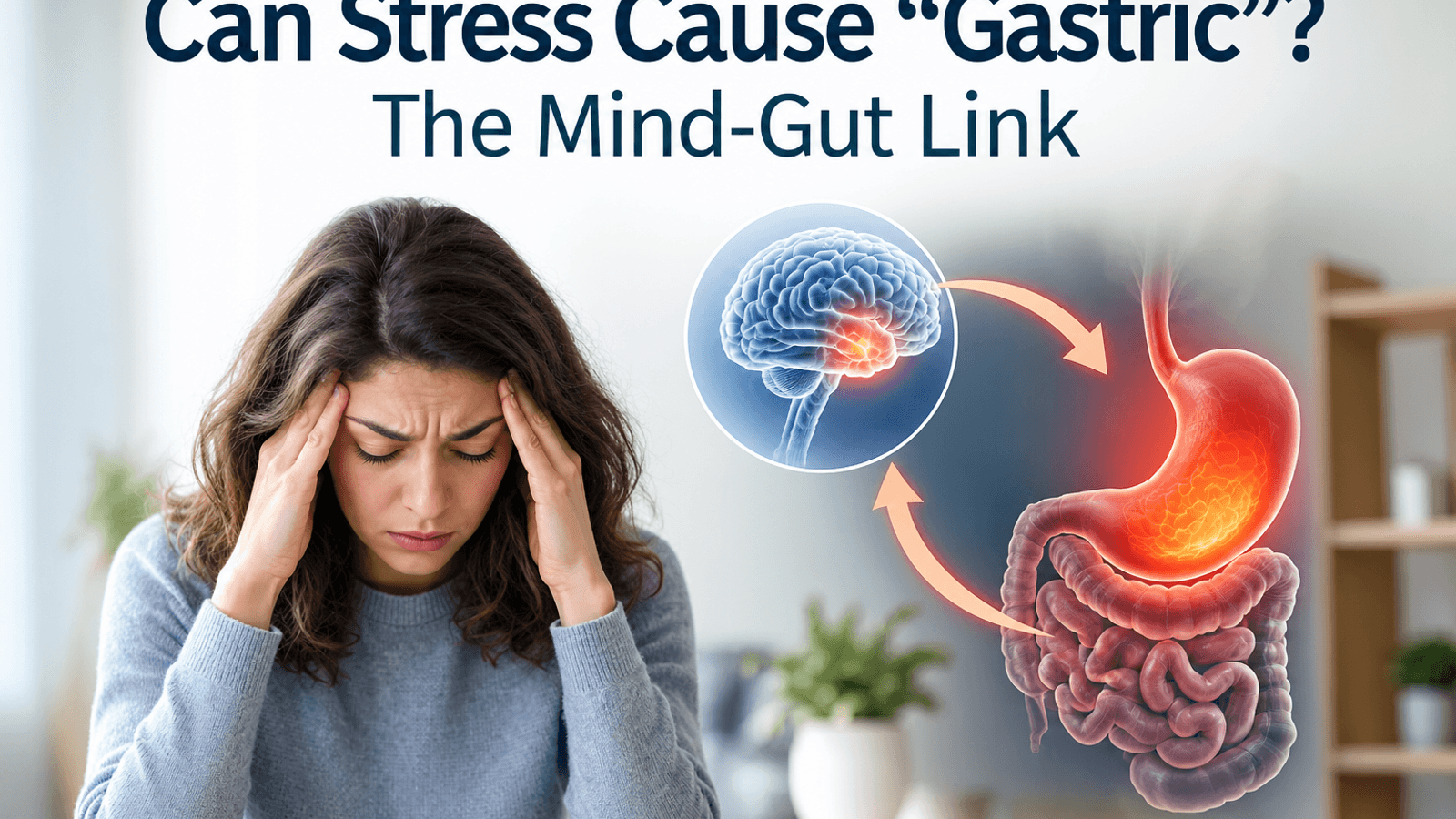
Have you ever had butterflies in your stomach before an important presentation or exam? Or have you ever experienced stomach pain, acidity, or loose motions during a particularly stressful time period? If you answered yes to any of these questions, then you have already experienced the mind-gut connection. In Nepal, many people complain of 'gas' or 'gastric' issues, especially during times of stress: exam season, work pressures, and family dramas, to name a few. But can stress really cause or aggravate gastric symptoms? Read on to find out!
Yes, not only can stress cause or aggravate gastric symptoms, but there is an intimate scientific link between the two. Your brain and your gut are connected in ways you may not have realized, and recognizing this link is the key to managing both your stress levels and your gastric symptoms.
The Connection Between Your Brain and Stomach: What do we mean by 'gastric'?
When your friends or relatives in Nepal complain of 'gas' or 'gastric' symptoms, they typically mean bloating or feeling too full quickly after a meal, belching or burping excessively, acidity or heartburn (a burning sensation in the chest or throat), stomach pain or discomfort, nausea or vomiting, and/or loose motions or constipation. Severe cases of these symptoms can impair your day-to-day function and decrease your overall quality of life.
In medical terms, these symptoms may fall under the category of functional dyspepsia, irritable bowel syndrome, gastroesophageal reflux disease, or simply indigestion. Regardless of the label, these symptoms are very real and can have a large negative impact on your life: you cannot simply 'ignore' a stomach ache or stop a bout of vomiting. The pain and discomfort are real, physical sensations.
Your 'Second Brain': The Enteric Nervous System
Many people are not aware that your gut has its own independent nervous system called the enteric nervous system. This system comprises over one hundred million neurons (nerve cells) that line your esophagus to your rectum. Because this number is almost equal to the number of neurons in your spinal cord, some scientists refer to it as your 'second brain'.
Your enteric nervous system communicates constantly with your brain through the brain-gut axis. This connection is important: when your brain feels stress, your gut feels the effects (and vice versa). Your brain sends out stress hormones like cortisol and adrenaline, which can slow down your digestion and impair gut motility (movement) and sensation. At the same time, your gut sends out chemical messengers to your brain, which can make you feel anxious or depressed.
Think of the brain-gut axis as a telephone line connecting your brain and your stomach. When you are stressed, the calls made over this line change drastically (they are not as 'peaceful' as compared to when you are relaxed). The two main players in this conversation are your brain and your stomach. By understanding this connection, you can take steps to reduce stress and its effects on your gut, and/or reduce your gastric symptoms to reduce stress.
How does stress affect your stomach?
When you experience stress, whether it be excitement or disappointment, your body releases stress hormones to prepare your body to 'fight' or 'flee'.
This is known as the fight-or-flight response and is controlled by your sympathetic nervous system. This response is appropriate in dangerous situations where you need to protect yourself.
However, in modern-day life, we often experience stress from non-life-threatening situations like office politics. Your brain interprets these situations as 'dangers' and initiates the fight-or-flight response anyway, unnecessarily stressing your body. Your brain directs your adrenal glands (located on your kidneys) to release stress hormones like adrenaline and cortisol.
These stress hormones have far-reaching effects in your body, but for our purposes, let us focus on their effects on your gut: adrenaline can slow down or stop digestion completely to conserve energy, cause heartburn or acid reflux, and affect gut motility (movement) and sensation (pain). Your gut microbiota (the good bacteria which live in your gut) can also be affected by stress, leading to gas and bloating. Finally, stress can also make you 'tense', which can increase your perception of pain and discomfort in your gut.
Stress-induced changes in gut motility can cause abdominal pain and cramping, especially if the muscles of your intestines are contracting abnormally (either too forcefully or not at all). These abnormal contractions can either be spasms (sudden, forceful contractions that cause pain) or a reduction in normal contractions (leading to pain or discomfort).
Acidity and heartburn are also caused by stress, as stress increases acid production in your stomach. The acid can either stay in your stomach, coming out with burps and causing bloating and discomfort, or it can flow back up into your food pipe (esophagus), causing heartburn. Acid reflux (heartburn) is often worsened by bending over or lying down after a meal.
Stress can also affect the bacteria which normally live in your gut (microbiome). Microbiota are very important for digestion, immunity, and overall health. When your gut microbiota are disrupted, indigestion, bloating, gas, and diarrhea can ensue.
Stress can also increase sensitivity to gas, leading you to feel bloated and uncomfortable even without excessive bloating. Gas itself can be caused by abnormal food fermentation in your gut due to slowed digestion caused by stress.
Finally, stress can also impair your ability to have normal bowel movements (stool). Stress can either cause diarrhea or constipation, depending on the person. Some people with severe stress may experience alternating episodes of diarrhea and constipation, which is seen in a condition called IBS (irritable bowel syndrome). Stress can also worsen existing symptoms of IBS, and IBS is often linked to anxiety and depression.
Symptoms of stress-induced gastric problems
Acidity and heartburn often worsen with stress. You will feel a burning sensation in your upper abdomen or food pipe (heartburn), especially after meals. Some people will also feel bloated or uncomfortable after meals, with gas or burping.
Abdominal pain and cramping are also common symptoms, as stress can impair gut motility (movement) and sensation (pain). You may have cramps or pain anywhere in your abdomen, typically worsening during or after a stressful event.
Bloating is a common symptom when you are stressed due to slowed digestion. You may also experience excessive gas and burping. The degree of bloating and gas can vary from person to person.
Changes in bowel movements (diarrhea or constipation) may also occur with stress. Some people experience more frequent bowel movements or a feeling of urgency, whereas others experience the opposite. Constipation and gas are often due to slowed digestion due to stress.
Nausea (feeling sick) and reduced appetite can also occur with stress, although some people may develop 'stress eating' as a coping mechanism. In some cases, the stress can worsen the symptoms of these conditions.
A Vicious Cycle: Stress Causes Gastric Symptoms, Which Causes More Stress
The mind-gut connection can also work in reverse. The stress and anxiety that you are feeling can also worsen your gastric symptoms, creating a 'vicious cycle'. For example, stress causes bloating and abdominal pain. This makes you more anxious about your health. The more you think about it, the more anxious you become. This worsened anxiety can worsen your abdominal pain, bloating, and gas. You may also worry about losing control and having a bowel movement in an inappropriate situation (e.g. during a meeting). The anxiety can worsen your symptoms. If you are experiencing heartburn, you may also worry about its effects on your heart and general health. This, again, can worsen your symptoms. It is a never-ending cycle that can only be broken by breaking the link between stress and your gut.
When To Consult a Doctor? Stress vs Other Causes of Gastric Problems
If you are experiencing stress-induced gastric symptoms, then it is important to know when to consult a doctor. In general, you should consult a doctor if you have unexplained weight loss, difficulty or pain when swallowing or feeling like food is stuck, vomiting, vomiting blood or black, tarry stools, severe pain, symptoms that wake you up at night, anemia (low hemoglobin), or symptoms that persist after age 45.
These symptoms could be due to a wide variety of causes, some of which may require specialized treatments. Once these causes have been ruled out, the underlying stress can be managed to relieve your symptoms.
However, if your symptoms clearly coincide with stressful events and improve with stress reduction and do not have any of the warning signs above, stress is likely a major contributor to your symptoms. Nevertheless, it is always a good idea to consult a doctor for an examination and to determine the exact cause of your symptoms. You can consult NMC-verified doctors on Upachar Sewa to get treatment. Many people with stress-induced gastric problems find that the symptoms improve significantly when their stress is appropriately managed.
Reducing Stress to Reduce Gastric Symptoms
Lucky for you, there are many ways in which you can reduce your stress levels to reduce your gastric symptoms.
Exercise regularly: Exercise is an excellent way to relieve stress and improve your overall health. Any form of exercise can be beneficial, including walking, jogging, or even dancing. Exercise also has beneficial effects on digestion and heartburn. Aim for at least 30 minutes of moderate exercise most days of the week.
Practice breathing exercises and meditation: Breathing exercises and meditation can be very effective in reducing stress. Certain types of meditation can also improve gastric symptoms by improving the brain-gut connection. All you need to do is breathe in slowly and deeply for 5-10 minutes. You can also download a meditation app to help you.
Get enough sleep: Lack of sleep increases stress and worsens gastric symptoms. On the other hand, sufficient sleep helps you feel rested and reduces your stress levels. Aim for 7-8 hours of sleep each night.
Eat healthy foods: Eating healthy foods is essential for maintaining good health. Avoiding unhealthy foods and eating regular meals can help reduce stress and improve your gastric symptoms. Never skip meals, especially breakfast.
Avoid stress: The obvious solution is to avoid stress-inducing situations as much as possible. However, this is not always possible. If you must be in a stressful situation, try to remain as calm as possible. You will find it much easier to deal with stress if you have other coping mechanisms (see below).
Seek professional help: If your stress levels are very high and self-help measures are not sufficient, you may wish to seek professional help. There are many different types of therapies and counseling that can help you manage your stress more effectively. Talking to a trusted friend or family member can also be beneficial. Some people find that gut-directed hypnotherapy can be very effective in reducing stress and improving gastric symptoms by improving the brain-gut connection.
Dietary Changes for Stress-Induced Gastric Symptoms
Along with reducing stress, you may also find that making certain dietary changes can help reduce your gastric symptoms.
Limit trigger foods: Certain foods are more likely to worsen gastric symptoms than others. These include spicy foods, greasy or fried foods, tea or coffee, sodas, and gas-producing foods. Everyone's triggers are slightly different, so it is a good idea to keep a food diary to identify your personal triggers.
Eat smaller meals: Eating smaller meals can help reduce acidity, especially if you are prone to heartburn. Do not lie down after eating large meals, as this can cause acid reflux.
Drink plenty of water: Staying hydrated is essential for good digestion. However, do not drink too much water during meals, as this can dilute stomach acids.
Limit alcohol and smoking: Alcohol and smoking can worsen gastric symptoms and are generally unhealthy. It is best to limit alcohol consumption and quit smoking if you smoke.
Take probiotics: Probiotics can help reduce gas and bloating and improve your digestion. You can find probiotics in some dairy products or take them as a supplement. It is important to speak with a doctor before taking any probiotics or supplements, however.
Eat fiber-rich foods: Eating foods that are high in fiber can help promote healthy digestion and reduce the risk of constipation. Some good sources of fiber include fruits, vegetables, and whole grains. However, it is important to get enough fiber without overdoing it, as too much fiber can lead to bloating and gas.
Summary: The Mind-Gut Connection
Stress can have a significant impact on your gastric symptoms. Your brain and your gut are constantly communicating with each other, so when your brain is stressed, your gut is likely to be affected as well (and vice versa). Managing your stress is key to reducing your gastric symptoms, but it is important to recognize when to see a doctor for other causes of your symptoms. By making some lifestyle changes, you can significantly reduce your stress levels and, subsequently, your gastric symptoms. Remember that your mind and gut are powerfully connected!