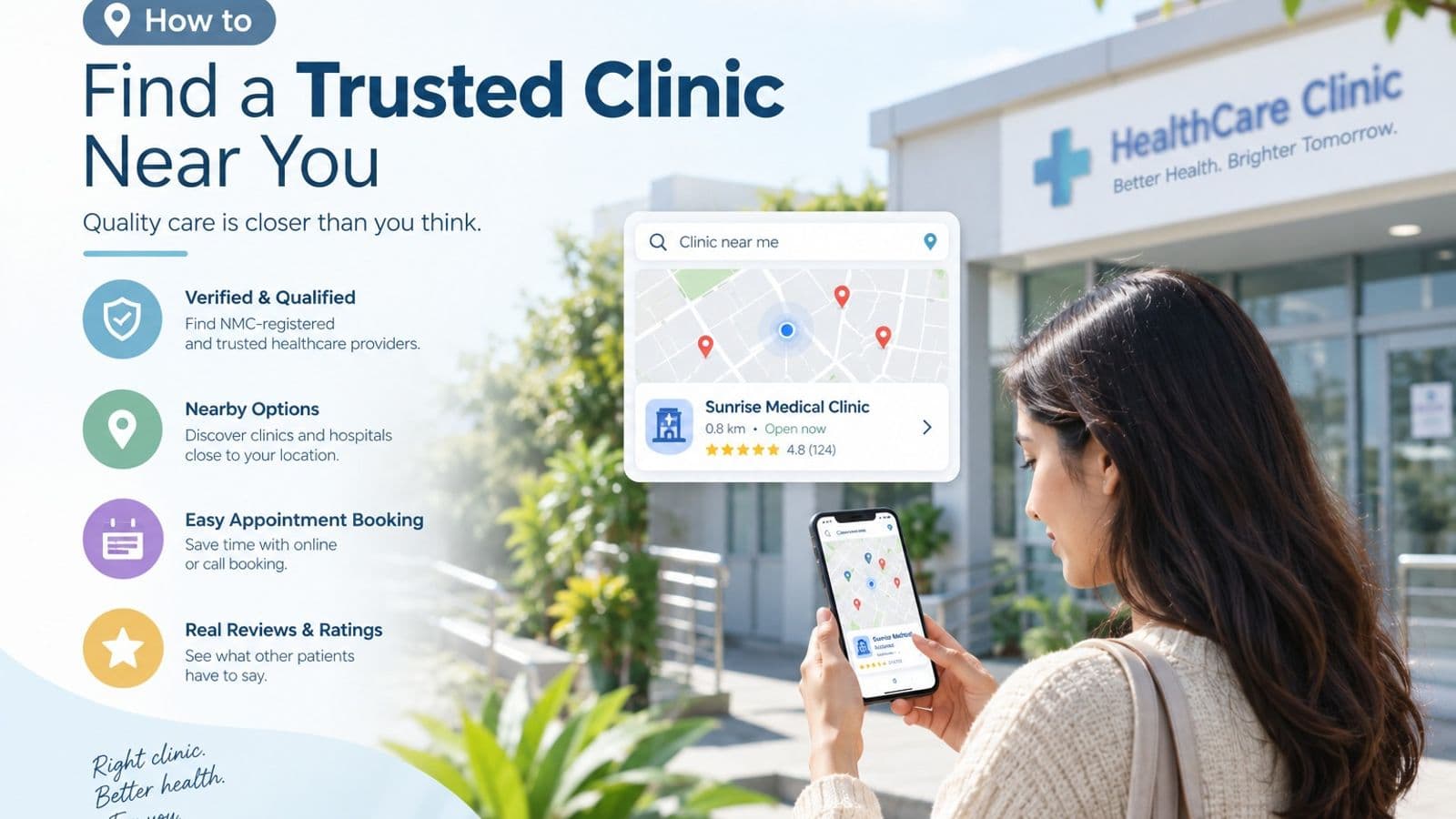
Finding a trusted clinic near you can help provide you with a better medical experience. Whether you are going for a general examination, treatment for a specific disease, consulting with a specialist, or receiving post-treatment care, finding the right clinic is important. A near-by clinic may be convenient for you, however, proximity alone may not be sufficient to answer your medical needs.
A good clinic should have trained professionals, good infrastructure, effective communication channels, accessibility, and prioritize patient safety. According to the World Health Organization (WHO), there are specific criteria for defining good quality healthcare. They include; health care that is effective, safe, people-centered, timely, equitable, integrated, and efficient.
For the people living in Nepal, it is important to ensure that the doctors and other medical personnel are well trained and certified. The Nepal Medical Council has an online search engine where you can verify the authenticity of a doctor by searching with their name or NMC number.
Here we will inform you on how to locate a trusted clinic near you and the essential criteria when choosing a medical clinic.
Why Choosing the Right Clinic Matters?
A clinic is the first point of contact for many individuals seeking health care services. Primary care providers offer first-contact, comprehensive, and continuous services to individuals needing treatment, prevention, and support for various health conditions. WHO emphasizes the significance of primary care as a basis of accessible and coordinated health care.
Selecting an appropriate clinic is essential for getting treated by an appropriate specialist and promoting continuous treatment if follow-up care is necessary.
In addition, a suitable clinic can provide the following services:
- Routine screenings and assessments
- Mild conditions and common diseases treatment
- Preventive services
- Follow-up treatment
- Appropriate consultation
- Referrals to specialists
- Diagnostic services, if available
However, note that some clinics specialize in specific areas of healthcare while others offer a broad spectrum of services. For example, some clinics specialize in women’s, children’s, or dental care, while others offer a wide range of services.
Find Out What Healthcare You Need
Before looking for a clinic, define your healthcare needs. This will help you reduce the number of options and find the best value for your money. A general medical examination, a procedure for a common issue, or a visit to a specialist you need for regular checkups – whatever it is, make sure to understand what type of medical service you are looking for.
For General Health Concerns
For common health concerns or for a routine checkup, you may want to look for a clinic that provides general medical or primary care services.
A general clinic could be a good option when you are unsure about what kind of healthcare professional you need to see. The healthcare professional can help determine your needs and refer you to a specialist, if necessary.
For a Specific Health Concern
If you know that you need a specific type of specialist, look for clinics that offer that service.
For example, someone seeking dental treatment would want to look for a dental clinic while someone needing an eye examination would look for an eye-care clinic.
For Regular Checkups
If you are looking to have a preventive healthcare examination or a routine checkup, you can look for a clinic that offers the examinations and services you need.
You will want to ask what is included in a checkup before making an appointment. Different clinics may offer different health assessments.
Search for Trusted Clinic Near You
Once you know what healthcare service you need, you may start looking for clinics that provide this service. You can search on websites or in maps, use online platforms, or ask your friends and family for recommendations. Then, compile a shortlist of places you may consider and compare them according to your needs.
You can use Google or other search engines and search terms such as:
- Clinic near me
- General clinic near me
- Health clinic in Kathmandu
- Dental clinic near me
- Family clinic near me
- Specialist clinic in Nepal
Maps, healthcare directories, clinic websites, and other healthcare portals can also help you make a shortlist of clinics near you.
Check the Clinic's Services
After narrowing down the list to a few options, it's a good idea to visit the clinic's website or give them a call to learn more about the services they offer.
Check Available Departments
Some clinics offer multiple departments and healthcare professionals, while others may only provide a limited range of services.
Make sure that the clinic you're considering offers the service related to your healthcare needs.
Check Diagnostic Services
If there is a possibility that you may need to request lab tests or other diagnostic services, it's important to make sure that these are available at the clinic or one of its nearby partners.
Knowing in advance can help you prepare for the possibility of needing to visit another facility for testing.
Check Referral Options
A clinic doesn't necessarily need to provide every type of medical service in-house. The hallmark specialty of a good clinic is its ability to facilitate the patient's journey to the most appropriate next step if their case requires further care from a specialist or at a hospital.
Verify the Healthcare Professional's Qualifications
Double-checking the qualifications and professional registration of the doctor who will be providing you with treatment is a good idea when choosing a clinic. Review their education, training, experience, and any relevant professional registration to ensure that they are qualified to deliver the healthcare services that you need.
You should obtain information such as the doctors:
- Full name
- Medical degree
- Specialty
- Registration details
- And any relevant experience
The Nepal Medical Council provides a Find Registered Doctor search facility, where you can search by name or NMC reference number and see information about their registration.
Search the Nepal Medical Council's registered doctor database.
Professional registration plays an important role in verifying that the health professional works for an appropriate regulatory agency.
While searching for a clinic, avoid trusting the claims made by organizations in their social media or commercials. Always seek reliable sources of information about a professional when possible.
Consider The Clinic's Reputation Carefully
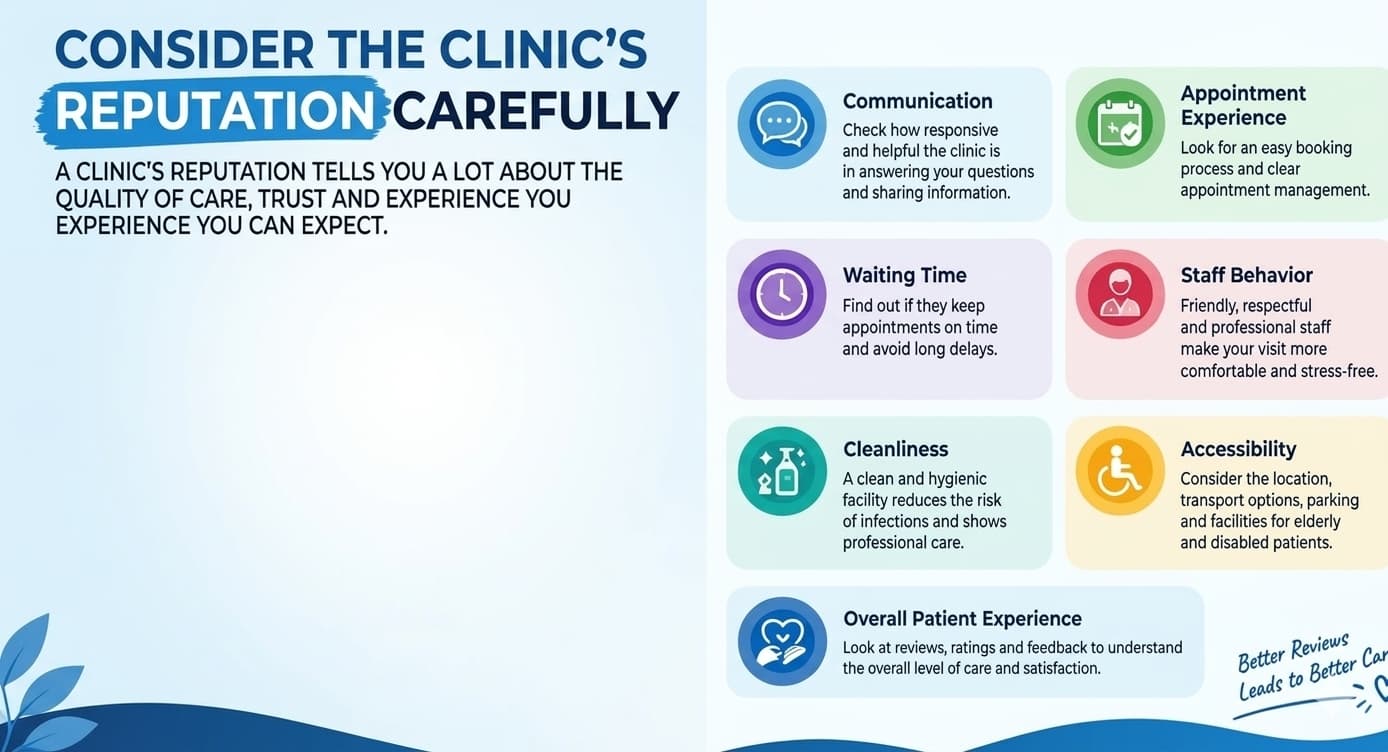
Though reviews can give you an insight into other people’s experience, you shouldn’t rely solely on them when choosing a clinic. Make sure to read a few reviews and take note of frequently mentioned aspects and compare them with the clinic’s services, doctors’ credentials, general cleanness, communication level, and overall accessibility.
Read multiple reviews that highlight different aspects, rather than a single extremely positive or negative one.
Look for recurring commentary on themes such as:
- Communication
- Appointment experience
- Waiting time
- Staff behavior
- Cleanliness
- Accessibility
- And overall patient experience
Check the Clinic’s Location and Accessibility
A clinic may be staffed with qualified professionals and provide the care you need. It is important, however, that you can easily access and reach these services. You should consider the location, distance, transportation means, and hours of operation of a clinic before choosing and scheduling an appointment. This can make receiving checkups, treatment, and aftercare simple and convenient. Check the following:
- Distance from your residence
- Means of transportation
- Parking or places to wait
- Overall opening hours
- Accessibility for people with special needs
- Appointment availability
- The travel time to the clinic
Check the Clinic's Opening Hours and Appointment Availability
Before visiting a clinic, it is necessary to study the opening hours and the opportunity to schedule an appointment. Some clinics are open 24 hours a day, 7 days a week. Many are open only in the morning or evening. In any case, it is essential to clarify this information in advance to avoid wasting time and come when the doors are open. It is also important to find out whether it is necessary to schedule an appointment or whether patients are accepted without one. You can call and ask the following questions:
- Do I need to schedule an appointment?
- What time does the doctor open for patients?
- Can I come without an appointment?
- How long do I have to wait in line?
- What papers should I bring with me?
- What payment options are available?
Understand the Cost of Services
The cost of health services may vary depending on the clinic, department, and medical professional. Prior to scheduling an appointment, it is advisable to clarify the cost of consultation, as well as the billing policy regarding tests, medications, treatments, and follow-up visits. The above information will enable you to organize your healthcare expenses more efficiently.
Ask About Consultation Fees
Ask about the consultation fee before visiting the clinic.
If you need multiple visits, ask whether follow-up consultations have different charges.
Ask About Additional Tests
If the doctor may recommend laboratory tests, imaging, or other services, ask where these services are provided and whether they have charges.
Ask About Payment Options
Ask about cash, cards, digital payments, or other payment options.
Understanding costs beforehand can help you determine your healthcare expenses beforehand.
Pay Attention to Cleanliness and Safety
A clinic should strive to provide an environment which is conducive to the safety and cleanliness of patients.
As a patient, it is important to look out for indicators which show that the place is safe and free from illness.
Some of these may include:
- Clean waiting rooms
- Clean consultation rooms
- Proper disposal of waste
- Hand washing stations
- Clean equipment
- Privacy during consultations
WHO considers safety to be a key component of quality healthcare. It states that quality service providers should be able to prevent avoidable adverse events and provide care based on proven evidence.
Consider How the Staff Communicates
Effective communication can make all the difference in a healthcare setting.
A healthcare professional should be able to provide you with an opportunity to explain your concerns and should be able to communicate information to you in a manner that you can understand.
You should also feel comfortable asking them reasonable questions, such as:
- The details about your symptoms
- Any tests that may be recommended
- Available treatment options
- Your medications
- Your follow-up care
- When to seek further medical attention
People-centered care involves taking patients' needs, preferences, and values into account during the healthcare process.
Check whether the clinic protects your privacy
Healthcare facilities deal with a significant amount of patients’ personal data. Any medical facility worth its salt would handle and protect the information with due care and provide each patient with the required level of privacy and comfort during their visits.
Therefore, consider the following criteria when choosing a clinic:
- Whether consultations are held in a private setting
- Whether the staff is polite and professional
- Whether your personal information is held in confidence
Courtesy and privacy are essential elements of a competent medical facility.
Consider Whether the Clinic Can Refer You When Needed
A clinic may be appropriate for your current concern but may not have every service you could potentially need.
For instance, a general healthcare professional may identify a condition that requires specialist assessment.
A suitable clinic should be able to guide patients toward the appropriate level of care when necessary. WHO describes coordination as an important function of primary care.
Do Not Choose a Clinic Only Because It Is Nearby
The closest clinic is not necessarily the best one. Although proximity is significant, especially if the appointments are frequent, other factors must be taken into account. Below is a list of questions that may help in making the choice:
- Is the staff of the clinic appropriately qualified?
- Is the clinic authorized?
- Does it offer the required range of services?
- Are the working hours convenient?
- Is billing clear?
- Is the interior clean and organized?
- Can the patient reach the staff easily?
- Is there a possibility of follow-up treatment?
Ask About Follow-Up Care
Before selecting a clinic, ask about the follow up care you may need after your consultation, diagnosis, or treatment. Some health conditions may require regular monitoring, additional tests and medication reviews or follow up appointments to see how you are progressing. Ask whether the same doctor will be available for follow up visits and how you can schedule another appointment if necessary. It is also important to ask about the cost of follow up consultations, additional tests and other services that may be required. A clinic that clearly explains the follow up process can make it easier for patients to understand what the next steps in their care will be and to keep regular communication with their healthcare provider.
Common Mistakes to Avoid When Choosing a Clinic
Sometimes choosing which clinic to attend based on a friend’s advice or online reviews can be a mistake. To avoid such errors, it is essential to examine the qualification of the healthcare providers, available services, fees, general cleanliness, location, and aftercare treatment before scheduling an appointment. Considering these factors will help in finding the best clinic that suits one’s preferences and needs treatment.
Choosing Only Based on Location
It is important to consider the clinic’s location, especially for convenience and regular visits; nevertheless, the location cannot be the sole criterion for choosing the clinic. The healthcare professionals, range of services, cost of services, cleanliness, and quality of care should also be taken into account when choosing a clinic.
Relying on Only One Review
One patient's review cannot represent an entire clinic. Every patient is different, thus, it is best to read multiple reviews and follow the majority. Reviews should not be the only aspect that matters when choosing a clinic, other aspects such as services, professionals, cleanliness, and communication should also be taken into consideration.
Not Researching the Professionalism of The Doctors
It is essential to check if the doctors in a specific clinic are appropriately trained, qualified, and certified to offer their services before scheduling an appointment. One should time to enquire about their experience, field of expertise, and accreditation to make the right choice.
Not Inquiring About After Care
If your condition requires any form of aftercare, ensure that the clinic offers any follow-up services that you might need. Ask them about the kind of follow-up treatment, including tests, check-ups, and monitoring, that you might require. It is good to know this information beforehand to avoid surprises.
Believing Claims Made by Clinics
Every person is unique, as are the results of his/her healthcare. Pay attention to those clinics, which do not promise you results, which seem to be too good to be true. Consider their services, doctors’ qualifications, and other factors rather than being tempted by empty marketing promises.
How UpcharSewa Can Help You Find Healthcare
Finding healthcare information can be challenging given the number of options for clinics and healthcare professionals. Healthcare platforms can help make the process more convenient by consolidating healthcare information.
Depending on the services offered, patients can use an online healthcare platform to review healthcare professionals, clinic information, appointment options, and other relevant information. It is not enough to simply find the nearest facility, but rather to find the appropriate healthcare option and gain access to relevant professional services.
Conclusion
Finding a reliable clinic near you should not be a challenge. Establish what kind of medical service you need and locate clinics that offer the desired help. Check the doctor’s qualifications, experience, and registration, inquire about the range of services and payment for treatment, and pay attention to such details as accessibility, hygiene, communication with medical workers, privacy, and post-visit support.
To Nepalese citizens, it might be helpful to use the online search system of the Nepal Medical Council to double-check the doctor’s credentials. Before an appointment, check your doctor’s qualifications, experience, and register with your local professional regulatory body. You might also want to know more about finding an NMC Verified Doctor in Nepal for a registered medical practitioner. Most importantly, remember that a good location is not the only criterion when choosing a clinic. To receive proper treatment, consider other factors related to the quality of care and services provided.
By spending a little extra time finding a clinic that suits your needs, you will be able to receive high-quality care and support from medical workers.
Frequently Asked Questions
How can I find a trusted clinic near me?
By searching online healthcare directories, maps, clinic websites or healthcare platforms. By checking the services, healthcare professionals, location, opening hours, costs and patient reviews of the clinic before booking an appointment.
How do I check whether a doctor is registered in Nepal?
The Nepal Medical Council provides a registered-doctor search facility where you can search by doctor names or NMC numbers.
What should I check before visiting a clinic?
The healthcare professional, services offered, opening hours, appointment costs, location, appointment procedure and available follow-up services.
Is the nearest clinic always the best choice?
Not necessarily. While a clinic located near me would be convenient, I should choose the one that offers the best services to address my healthcare needs.
Should I trust online clinic reviews?
While online reviews can be helpful in understanding patient experiences, I should consider a range of factors when choosing a clinic.
What makes a clinic trustworthy?
Appropriate healthcare services delivered by qualified healthcare professionals, commitment to patient safety and privacy, effective communication and follow up or referral when needed.
Can a general clinic refer me to a specialist?
Yes. In the case of a suspected need for a specialist opinion, the primary care or general healthcare practitioner can refer to an appropriate specialist or higher-level facility. Coordinating referrals is an important component of primary healthcare.
What should I do if I have a medical emergency?
Do not wait for a routine appointment at a clinic. Seek urgent medical attention.
Should I check the clinics opening hours before coming?
Yes. Check the opening hours of the clinic and appointments before coming to save time. This will ensure the Doctor or service you require is available.
How much does a clinic visit typically cost?
The cost varies depending on the chosen clinic, type of consultation and accompanying procedures. It is advisable to inquire about the consultation and additional fees in advance.