Imagine being able to share your blood pressure, heart rate, or blood sugar levels with your doctor from the comfort of your home. No more waiting in long queues at hospitals or wasting work time for routine checkups. Remote Patient Monitoring, or RPM, makes this possible.
Using digital devices and wearable technology to check on your health from home and convey the information to your healthcare provider, RPM is like having a health assistant twenty-four seven making sure everything is running smoothly and alerting your doctor of anything that needs his attention. Especially prevalent in Nepal due to the geographical barriers for ordinary citizens to access healthcare outside Kathmandu, RPM is playing an increasingly vital role in both chronic disease monitoring and general well-being.
The Definition of Remote Patient Monitoring (RPM)
Remote Patient Monitoring, or RPM, is a form of telehealth involving the use of digital devices to gather health information outside of the traditional clinical setting. With RPM, patients can share their health information with their doctors on a continuing basis as opposed to informing them verbally of concerns at the time of a clinic or hospital visit.
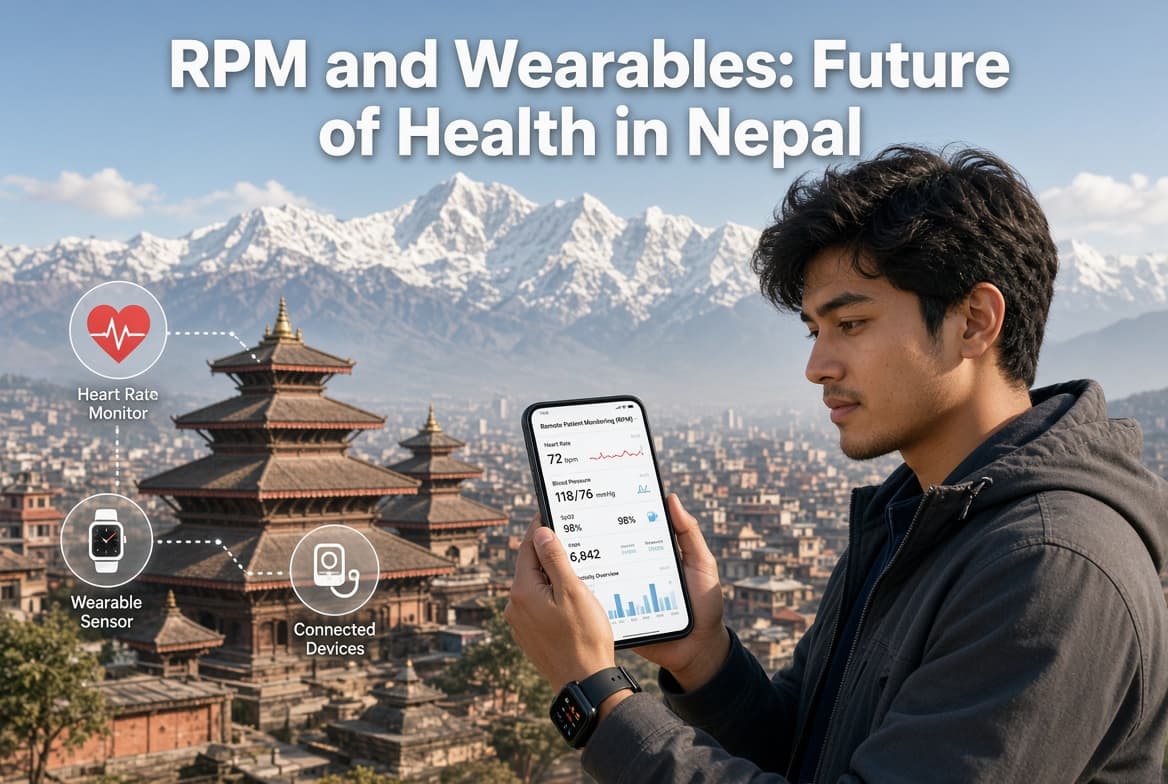
Like an extension of the arm and leg, RPM lives in your everyday life. Digital devices ranging from blood pressure monitors, scales, pulse oximeters, blood glucose meters, and smart-watches collect your personal health data and convey it to your healthcare provider for analysis. The beauty of it all is that RPM is extremely user-friendly. You carry on with your normal daily routine and these devices work in the background to monitor your health. Your healthcare team analyzes the data for any concerning trends and reaches out to you if they have any health concerns.
How Does Remote Patient Monitoring Work?
An RPM system consists of three different components. Monitoring devices, transmission of data, and analysis of data by healthcare professionals.
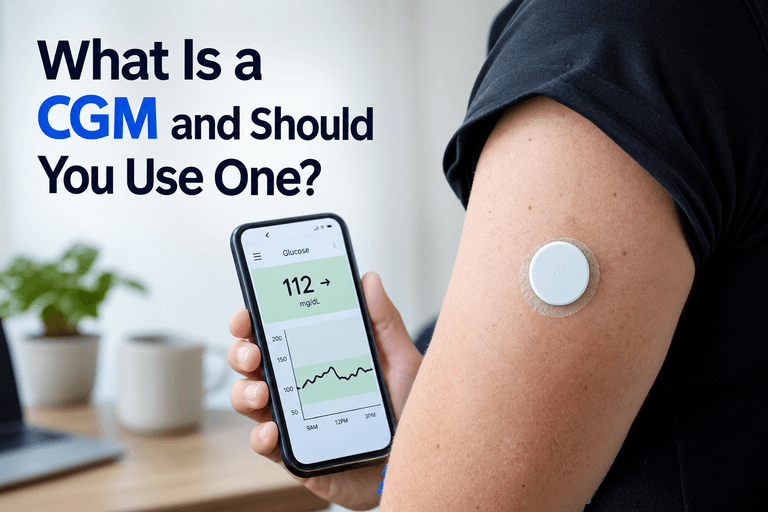
Firstly, monitoring devices. Devices range from the simple Bluetooth-enabled blood pressure cuff to more complex and innovative wearables. These devices can be as simple as your at-home scale or as complex as a CGM (continuous glucose monitor) for people living with diabetes. Some devices are more passive such as a scale, while others are always on like a smart-watch continuously monitoring your heart rate and activity levels throughout the day.
Secondly, transmission of data. Most devices have an application you download onto your cellphone which relays the information to your healthcare professional either in the background or when prompted by you.
Finally, analyzing the data is done by your healthcare provider. Your nurse or doctor reviews this data to look for patterns or irregularities. They are concerned with values that are abnormal for you or out-of-range for your target values. If they have any concerns, they will get in contact with you to make any adjustments to your treatment plan or ask for any clarifying questions
For instance, if you are being treated for high blood pressure and your RPM device is showing concerning trends in your blood pressure, your doctor may reach out to you to adjust your medication dosage or schedule you for a hospital visit to better control your blood pressure. In contrast to the traditional healthcare model, where you may see your doctor only once every six months or a year, RPM is always-on and has a quicker response time to any abnormal trends.
Different Types of Remote Patient Monitoring Devices
Wearable health devices have evolved exponentially over the last decade.
Smart-watches are the most ubiquitous wearable health devices on the market. With features ranging from heart-rate monitoring to stand-alone ECGs (electrocardiograms), these devices are a one-stop-shop for general well-being. More medically-advanced wearables are also available such as CGMs (continuous glucose monitors) for people living with diabetes. These devices are worn on the arm or stomach and continually monitor blood sugar levels and transmit this information to your phone and healthcare provider. Other devices are also available specifically for cardiac patients such as cardiac monitors or smart insulin pens for diabetic patients. Cardiac monitors can be as simple as a patch worn on your chest or as complex as an implanted device that continually monitors your heart rhythms. Similarly, blood pressure monitors with Bluetooth connectivity allow your doctor to keep track of your blood pressure. Pulse-oximeters have gained popularity and are being utilized more and more due to the COVID-19 pandemic. These devices measure your blood oxygen level and heart rate and are especially helpful in patients with respiratory conditions such as asthma or COPD (chronic obstructive pulmonary disease). Smart scales are another excellent tool in RPM as they not only weigh you but can calculate your body composition (i.e. body fat and muscle percentage).
Who Can Benefit From Remote Patient Monitoring?
Remote Patient Monitoring has a plethora of use-cases
but primarily revolves around chronic disease management.
Hypertension, or high blood pressure, is one of the most common diagnoses in primary care physicians. Studies have shown that RPM can reduce average systolic blood pressure by 4-9 mmHg. This decrease in blood pressure significantly reduces the risk of heart-attack and stroke in patients with high blood pressure. Instead of checking your blood pressure occasionally at the clinic or a pharmacy, RPM allows your doctor to observe a trend in your blood pressure which allows for a more individualized and specific treatment plan.
Another very common diagnosis is diabetes. RPM is extremely useful in diabetic patients as it allows for better glycemic control. This is essential as poorly-controlled diabetes can lead to a myriad of complications such as blindness, kidney damage, and limb amputation. Devices such as CGMs (continuous glucose monitors) or RPM-enabled blood glucose meters allow your doctor to observe trends in your blood sugar levels. Studies show that RPM can reduce A1C levels (average blood sugar levels over 3 months) by 0.3-1.2%. This is crucial information that your doctor can use to tailor a specific treatment plan for you. With better glycemic control comes a reduction in many of the aforementioned complications.
Heart-failure patients are also significant beneficiaries of RPM. Smart scales allow these patients to monitor their weight. Any significant increase in weight is concerning as it may indicate fluid retention which puts a strain on the heart. RPM devices also allow the doctor to monitor your blood pressure and heart rate. This reduces the need for hospital visits and the chance at hospital-acquired infections. Similar to heart failure patients, COPD and asthma patients can monitor their blood oxygen levels at home with pulse-oximeters and receive timely interventions from their doctor if their levels fall below a certain threshold. Post-surgical and post-hospitalization patients are major beneficiaries of RPM as these patients are at highest risk of complications and require frequent surveillance. Finally, elderly patients living alone or in remote areas benefit tremendously from RPM as it provides peace of mind for both the patient and possibly family members in distant locations.
The Real Benefits of Remote Patient Monitoring for the Patient
Convenience is the most prominent theme when discussing RPM.
Instead of going to the clinic or hospital for routine procedures just to get your vitals checked, you can perform these checks at home. Especially for the rural Nepali citizen, this can mean the difference between life or death. How many times have you taken a long bus-ride to Kathmandu for an outpatient procedure and had to spend a night in the city? With RPM, you can check your vitals at the comfort of your home. As you continue with your daily routine, RPM devices work in the background to monitor your health. This not only provides convenience but empowers you as a patient.
Better health outcomes are a natural byproduct of increased surveillance. Doctors are seeing more data as opposed to snapshots of data at the time of a clinic visit. This allows for more accurate interventions and quicker responses to concerning trends. Studies have shown that RPM reduces hospital-admissions and is overall more cost-effective for the patient and healthcare system.
Healthier habits can also be developed through RPM. Especially as the data is seen on a daily basis as opposed to a yearly physical, doctors can work with you to come up with attainable targets for your health indicators.
Finally, peace of mind comes standard with RPM as it takes many of the worries of chronic disease management off your plate. This is especially useful for elderly patients living alone or patients with debilitating diseases living in remote areas.
The Drawbacks and Limitations to Remote Patient Monitoring
Cost is definitely a limitation to RPM in Nepal. Digital devices range in price from an affordable Rs. 2000-5000 for a Bluetooth-enabled blood pressure monitor to a CGM device which can cost upwards of Rs. 20000. This may seem like a high price to pay for a single monthly subscription for a device but can be justified when factoring in reduced hospitalizations and complications for diseases such as heart-failure or diabetes. A thorough cost-benefit analysis with your doctor will help guide you in deciding if RPM is right for you.
Technology literacy is another limitation in regards to RPM. Especially in the rural Nepali population, the use of cell-phones and the internet is not as pervasive. This can be a barrier to entry for RPM. Setting up devices, troubleshooting connectivity problems, and general confusion with the RPM application can frustrate the average user and result in discontinuation of RPM. This has to be weighed against the tangible benefits of RPM.
Finally, RPM does not take the place of a doctor-patient relationship. Technology will always be a tool, not a replacement, for human interaction. Discussing your concerns with your doctor is always the best route of action. Especially in diseases such as hypertension which is primarily controlled by medication, RPM can work hand-in-hand with your doctor to optimize your treatment. Similarly, constant reminders of abnormal values could lead to increased anxiety in patients. Constant reassurance from your doctor is the best antidote for anxiety in patients utilizing RPM.
The Role of Remote Patient Monitoring in Nepal
Nepal is a unique geographical location and presents its own set of challenges in regards to healthcare. The main difficulties are the distances between healthcare facilities and the patients living in remote locations. RPM helps bridge this gap between remote Nepalese citizens and the oftentimes inaccessible primary healthcare centers or specialty clinics. Chronic disease management particularly benefits from RPM as it requires regular follow-ups which is difficult to achieve in a country like Nepal.
On a global scale, the prevalence of chronic diseases is on the rise. This trend is also reflected in Nepal as increasing rates of diabetes and hypertension are noted. The healthcare system is not equipped to handle this burden of disease with the current infrastructure. RPM is one solution to this impending crisis.
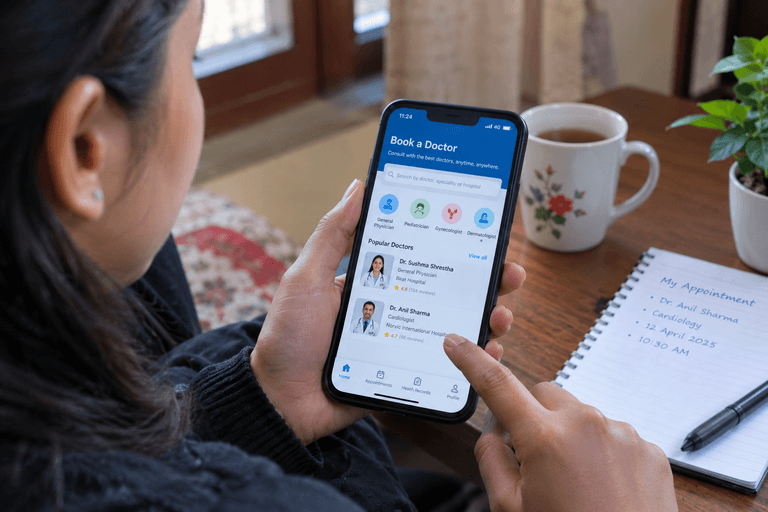
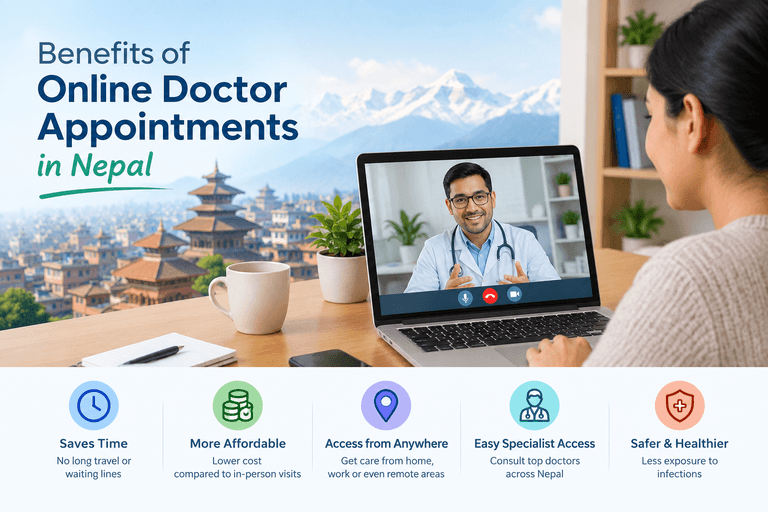
Smart-cell phones have increased drastically both in Nepal and the world over the last decade. This has allowed RPM to take off and begin to change healthcare for the better. Telemedicine in general has seen a significant increase both in Nepal and the world due to the convenience it provides. Platforms such as Upachar Sewa are capitalizing on this trend and are looking to incorporate RPM services into teleconsultations. Patients are able to connect with NMC verified doctors and provide them with RPM data for more efficient healthcare delivery.
How to Get Started
If you would like to try RPM, speak to your doctor. Many chronic disease patients will greatly benefit from RPM. If RPM is not indicated for you, your doctor will let you know. Your doctor will also help you in selecting the RPM devices that are right for you. Many doctors have already adopted RPM into their practice and will recommend RPM devices that they have experience with. You may also research RPM devices on your own or have a recommendation from a family member or friend.
Once you have selected the RPM devices, make sure you know how to operate them. Incorrect operation of RPM devices can lead to erroneous values which may cause undue alarm and incorrect treatment adjustments. You may speak to your doctor or pharmacist about correct operation of the devices or do your own research. For blood pressure devices this would entail sitting down quietly for 5 minutes before measuring blood pressure, not lying down when measuring blood pressure, and measuring blood pressure at the same time everyday. Set up your applications and make sure you are receiving the correct data on both ends. Set up a regular routine for RPM data gathering. This could entail measuring your weight daily in the morning or checking blood pressure every day at the same time. Having a regular routine makes RPM easier to adhere to.
Speak to your doctor or nurse about your RPM data. RPM is a tool to facilitate better doctor-patient care. Speaking to your doctor or nurse about your concerns is the most important thing you can do. Your doctor can guide you in interpreting the RPM data and can explain any abnormal values. RPM should complement your healthcare, not replace it.
The Future of RPM and Wearable Technologies
The future of RPM looks extremely bright as technology advances and becomes more affordable to the general consumer. We are entering an era of passive RPM devices. This entails RPM devices which require little to no input from the user. Imagine RPM devices embedded in your clothing which constantly monitor your heart rate, breathing, and oxygen levels. Artificial intelligence will further facilitate RPM by analyzing large sets of data and identifying trends that may not be apparent at first glance.
Integration of different RPM devices will further augment the RPM experience. Having a single RPM dashboard which consolidates all relevant data will become more prevalent. This data will be integrated into your electronic health-record which can then be easily accessed by any doctor involved with your care.
In Nepal, the future looks very promising for RPM and telemedicine in general. As more and more citizens gain access to cell-phones and affordable internet, the healthcare landscape is set to change. RPM can address many of the current healthcare challenges that Nepal is currently facing. In conjunction with telehealth services such as Upachar Sewa, RPM can provide high quality specialized care to even the most remote regions of Nepal.
The Decision – What to Do Next?
Consider RPM if you have chronic disease which requires regular surveillance, you live in a remote area which makes accessing healthcare difficult, you find it hard to keep regular appointments with your doctor, you find it empowering to participate more in your healthcare, or you have had poor outcomes with un-monitored chronic disease.
Consider not using RPM if you are not technologically savvy, you have limited access to the internet, find RPM to be too costly, prefer more traditional healthcare delivery methods, or have diseases which don't require regular surveillance.
In summary, RPM and wearable health technologies are a revolutionary way to manage your health. Especially in chronic disease states, RPM provides convenience and better health outcomes. There are costs and limitations which must be balanced with the benefits, but RPM is definitely the future of healthcare. In Nepal, RPM is set to be a game-changer both in chronic disease management and general healthcare
If you would like to know more about whether RPM is right for you consider reaching out to an NMC-verified doctor on Upachar Sewa. Many chronic disease patients will find RPM to be a great addition in their treatment. Doctors on Upachar Sewa can guide you in your RPM journey.