Imagine if you had a tiny assistant that could keep track of your blood sugar even when you're sleeping. This is what a CGM (Continuous Glucose Monitor) is - a small device that helps people who are diabetic in keeping track of their blood sugar.
With the increasing rates of diabetes in Nepal, there are many people asking "What is a CGM, and should I use one?". Well, I am going to walk you through everything you need to know about this device in a simple, easy-to-read and understand format for you to decide whether a CGM is right for you.
What is a CGM (Continuous Glucose Monitor)?
Well, let's first understand what a CGM is. As the name suggests, CGM stands for Continuous Glucose Monitor. Breaking it down, "Continuous" means constantly, "Glucose" refers to the glucose (sugar) in your blood, and "Monitor" means to watch and keep track of. Hence, a CGM is a device that helps keep track of the amount of glucose in your blood.
Most of us who have diabetes are familiar with the term "finger prick test". It involves pricking your finger with a small needle and placing a drop of blood on a testing strip. This test then shows you one value of your blood sugar at that point in time. You have to do this test 4-10 times a day.
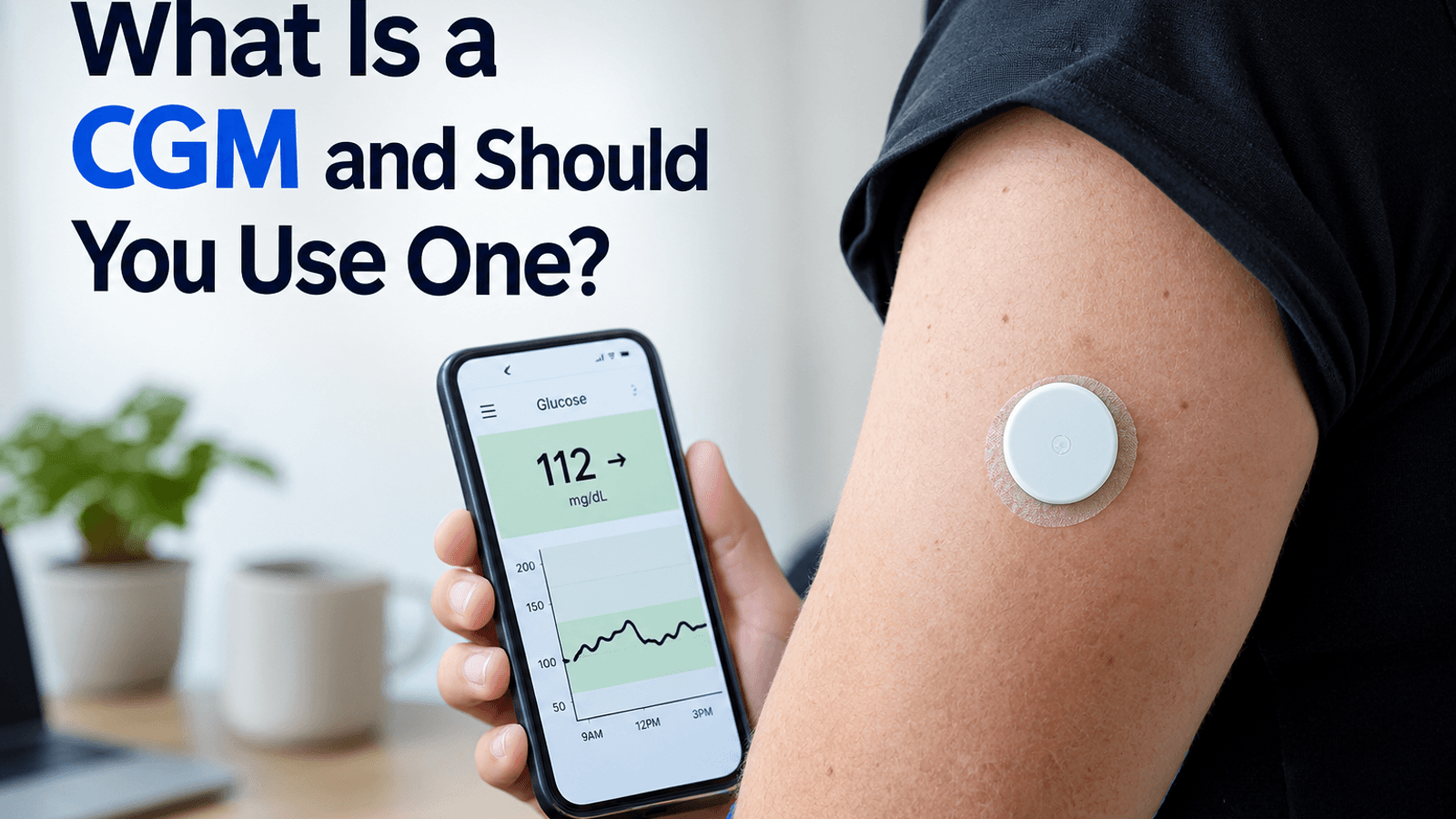
A CGM, on the other hand, is a small sensor that is kept on your body for 10-15 days and keeps track of your blood sugar every 1-5 minutes. It removes the hassle of finger prick tests, keeps you updated on whether sugar levels are rising or dropping, and can sometimes even send you alerts when your sugar level reaches a certain threshold. Essentially, while a finger prick test gives you one snap shot of your sugar level, a CGM is like a video camera that records your levels throughout the day and night!
How does a CGM work?
There are three main components to a CGM. First is the sensor - a tiny wire that is inserted under your skin (usually the back of your upper arm, your belly, or your thigh). This accesses the interstitial fluid (fluid between your cells) and tracks your blood sugar levels - the levels of interstitial fluid are almost the same as your blood sugar levels.
The second part is the transmitter, a small device that is attached to the sensor and sends out the data (your blood sugar levels) to your phone or another receiver every few minutes. The last component is the receiver - an application on your phone or a separate device that displays your current blood sugar levels, graphs showing trends in your levels, arrows showing if your levels are rising or falling, and alerts when your levels go above or below a certain threshold.
The sensor is placed on your body using a special applicator and the whole process takes just a few seconds. You then have to wait 30 minutes to 2 hours for the sensor to warm up and start sending out data to your phone. You get alerted when your blood sugar is too low or too high, and you change the sensor every 10-15 days when it expires.
Who should use a CGM?
A lot of people with diabetes are not right for a CGM, and it's important that you understand who is and isn't suitable for a CGM. A CGM especially helps people with Type 1 diabetes, especially children and adolescents. It can also help people on an insulin pump or multiple daily injections, people with recurrent sugar imbalances (low or high blood sugar), people who do not notice their low blood sugar, people with type 2 diabetes on insulin and people with unstable blood sugar levels, pregnant women with gestational diabetes, and very physically active people.
On the flip side, a CGM may not be required for people with Type 2 diabetes that are relatively stable, only require occasional finger prick tests (say, once or twice weekly), would be unable to afford or use a CGM, or do not think that a CGM would be beneficial to them.
The benefits of a CGM
The most obvious benefit to a CGM is that you wouldn't have to do numerous finger prick tests during the day - you'd potentially only have to do one or two calibrations (tests) per day, and sometimes not even that, depending on the CGM. This would especially be beneficial to children, who are often quite apprehensive about finger prick tests.
However, the biggest benefit of a CGM is that you can see patterns in your blood sugar levels. You can see what effect different foods, types of exercise, and levels of stress have on your blood sugar. For example, you may notice that eating rice for dinner causes spikes in your blood sugar levels overnight that you never noticed before. You can also see trends in your low blood sugar levels, like if your blood sugar level drops at night while you're asleep - something you may not have been aware of before. With real time alerts, your CGM can also alert you when your blood sugar levels fall or rise too fast or too steeply.
Studies also show that CGM users have better overall control of their blood sugar levels. They can potentially have lower HbA1c values (this is a measure of your average blood sugar levels over 3 months), spend less time in the unhealthy ranges of blood sugar (high and low), have fewer diabetes-related complications, and report an improvement in their overall quality of life.
Another benefit is that with modern CGMs, you can often send your blood sugar data to your doctor, helping them understand patterns in your blood sugar levels and helping them to make better treatment choices. If you and your doctor are using a telemedicine platform (more on that later), you can see patterns in your CGM data and adjust your treatment accordingly. Many apps also have the option to generate reports which can be shared with the doctor to further help them understand your condition.
The downsides to a CGM
The most obvious downside to a CGM for most people is likely going to be the price. In Nepal, CGMs are substantially more expensive than regular test strips and finger prick tests. A CGM sensor costs anywhere between Rs. 9,000 - 27,000 per sensor (with sensors lasting 10-15 days). This means you'd be looking at approximately Rs. 18,000 - 54,000 or more per month for a CGM, whereas test strips (required for finger prick tests) are only between Rs. 15 - 25 per strip. If you conducted four tests per day, this would mean Rs. 1,800 - 3,000 per month for test strips, as opposed to the Rs. 18,000 - 54,000 for a CGM.
With that being said, a CGM can actually be cost-effective for some people - especially if it prevents hospital visits or complications due to extreme blood sugar levels. It's best to ask your doctor if a CGM would be beneficial for you and your condition.
Other common concerns about CGMs include the accuracy of the readings, skin irritation due to the adhesive patch of the CGM, and an initial learning curve with the technology involved.
CGMs technically aren't as accurate as finger prick tests, since they're measuring interstitial fluid and not directly measuring blood. This means that a CGM can be 5-15 minutes behind actual blood sugar levels. It can also struggle to accurately track rapidly rising or falling levels of blood sugar. Additionally, finger prick tests are still required occasionally to calibrate the CGM, in order to ensure accuracy.
Some people also find that the adhesive patch on the CGM can irritate their skin or cause a rash, so it's important to rotate sites (where you place the CGM) and not keep the CGM in the same spot for longer than recommended. There is also a slight learning curve with the technology involved in a CGM. You'd have to set up the app on your smartphone, learn to interpret the data presented, troubleshoot any issues you may face, and so on. This may be difficult for some people, especially older individuals who are unfamiliar with smartphone apps.
Lastly, a CGM only tracks your blood sugar levels - it does not treat or cure diabetes. You still have to take all medications as prescribed, as well as a healthy diet and exercise regime as recommended by your doctor.
CGM devices available in Nepal
Currently, there are several CGMs available in Nepal through various online vendors and medical shops. Some of the most common CGMs available are the Sinocare iCan i6 CGM (Rs. 15,000 - 18,000 for a sensor that lasts for 15 days) and Oxymed Aidex CGM Kit (Rs. 25,000 - 27,000 for a sensor that lasts for 14-15 days).
While the Sinocare i6 is cheaper and lasts for a few more days, the Oxymed is slightly more accurate. For people on a budget, the LinX CGM Sensor is also available for Rs. 9,000 - 10,000 and lasts for 14 days. For people willing to spend more for greater accuracy, Dexcom is available through import at a price of approximately Rs. 40,000 or more. It lasts for 10 days and is the most accurate CGM with advanced alert features. You can find these devices on Daraz Nepal, Medcare Surgical, Healme Nepal, Fine Surgical Nepal, pharmacies in Kathmandu, and other similar stores.
Getting started with a CGM
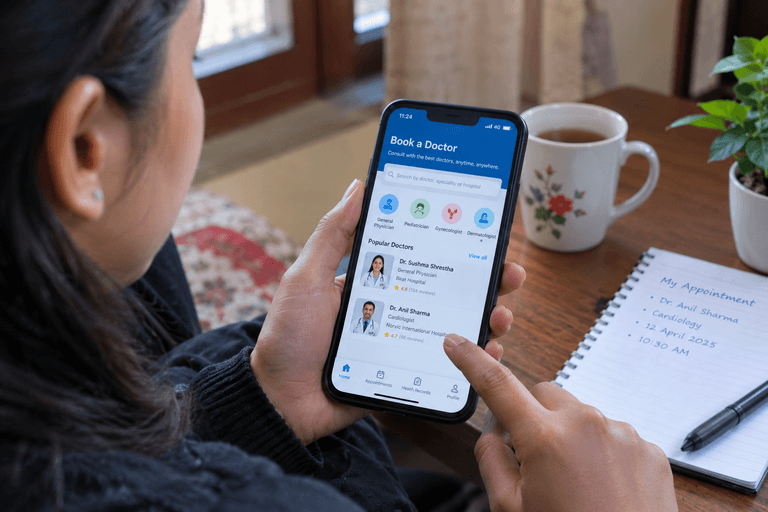
The most important step before getting a CGM is to speak to your doctor. Consult with an endocrinologist or diabetes specialist to see if a CGM would be beneficial to you and discuss which CGM you may be interested in. It's very important to understand what target ranges your CGM should aim for. You can consult an NMC verified diabetes specialist with Upachar Sewa without having to leave your home to discuss CGMs and your diabetes management in general.
Once you've decided that a CGM is a good choice, you can look into which CGM you're interested in based on your budget, the length of time the sensor lasts, compatibility with your smartphone (if one is required), and what additional features you may or may not need. You can learn how to set up your CGM by watching videos online and reading the manual that comes with your CGM. While setting up your CGM for the first time may be intimidating, it shouldn't take very long at all.
In your first few weeks, I encourage you to look at the patterns of your blood sugar levels with your CGM. You can note what effect various foods, levels of physical activity, and levels of stress have on your levels. You should also look at the reports (on the app) of your CGM and discuss it with your doctor. You and your doctor can then make treatment adjustments depending on the patterns observed. Many diabetes specialists on Upachar Sewa can even look at video consultations or phone calls to discuss reports and adjust your treatment.
Should you get a CGM?
Here's a list of reasons why you should consider a CGM and why you shouldn't. I encourage you to go through this list and ask yourself if I relate to the points in "Should I get a CGM?" more than "Should I not get a CGM?".
Reasons to get a CGM:
- Have type 1 Diabetes
- Are on multiple daily injections of insulin
- Often have sugar imbalances (low or high blood sugar levels)
- Are pregnant or have gestational diabetes
- Do not notice low blood sugar levels
- Want better control of blood sugar levels but do not want to do multiple finger prick tests per day
- Can afford a CGM (roughly Rs. 15,000 - 30,000 per month)
- Am comfortable and familiar with smartphones
Reasons not to get a CGM:
- Have well controlled type 2 diabetes on oral medications and only check my blood sugar levels once or twice a week
- Would be unable to afford a CGM
- Am not comfortable with technology
- Expect a CGM to replace a healthy diet, regular exercise, and a consistent medication schedule
- Will not be able to utilise the data provided by a CGM to improve my health
If you decide to get a CGM, I encourage you to look at the patterns observed by it, rather than just the numbers. For example, is my blood sugar level rising after eating certain foods? Does exercise decrease my blood sugar levels for several hours? Do I have low blood sugar levels at night, even when I feel well during the day? You should discuss these patterns and your treatment with your doctor and make changes to your treatment (what and when you eat, when you take your medications, what type and amount of physical activity you do) accordingly. You should also not set your CGM to alert you of every little change, lest you start ignoring the alerts.
It is important to remember that a CGM only collects data - it will not change your treatment or make recommendations. You and your doctor need to utilise the data collected by your CGM and make decisions on your treatment. You should also continue to visit your doctor on a regular basis to discuss your CGM data, review your medications, and discuss any concerns you may have. If you can afford it and it would be beneficial to you, I encourage you to try a CGM for 2-3 months and decide for yourself whether it would be beneficial to you in the long run.
Last Thought
A CGM can be a fantastic tool for the right person, helping them maintain better control of their blood sugar levels. It can reduce the risk of emergency hospital visits or other diabetes related complications. It helps decrease the stress and anxiety of diabetes management due to constant fear of low blood sugar levels, and gives the user more freedom and flexibility with their diet and exercise. However, it may not be ideal for everyone due to cost, level of technology required, need for doctor visits, and is not a substitute for a healthy lifestyle and a good diet and exercise regime.
Ask yourself the following questions to decide whether a CGM is right for you in your diabetes management: Will a CGM help me have better control over my blood sugar levels? Can I afford it financially, especially considering long term usage? Will I be able to utilise the data obtained by the CGM to improve my health? Do I have the support of my doctor in interpreting the data? If you answered "Yes" to most of these questions, you may find a CGM to be beneficial in your diabetes management. If you are unsure or answered most of the above questions with "No", you may want consider alternate methods of diabetes management such as regular finger prick tests.
Diabetes management is a complex task, and a CGM is only one of the many tools available to help manage it. It is important to utilise all tools at your disposal to maintain good health. In a country where diabetes is becoming more prevalent alongside an ever increasing busy lifestyle, tools such as a CGM along with telemedicine services such as Upachar Sewa can help in maintaining good health.
Remember, the best way to manage diabetes is to stay consistent with your monitoring, medications, diet and exercise, and doctor visits. It doesn't matter whether you use a CGM or regular finger prick tests - what matters is that you take all steps necessary to keep yourself healthy. If you are still unsure whether a CGM is right for you, you can book a consultation with an NMC verified diabetes specialist on Upachar Sewa and discuss your diabetes management and treatment. They can help you decide whether a CGM would be beneficial for you and help you with setting up your CGM (if you decide to get one). Your health is very important and I encourage you to seek whatever help you need to get your diabetes under control!