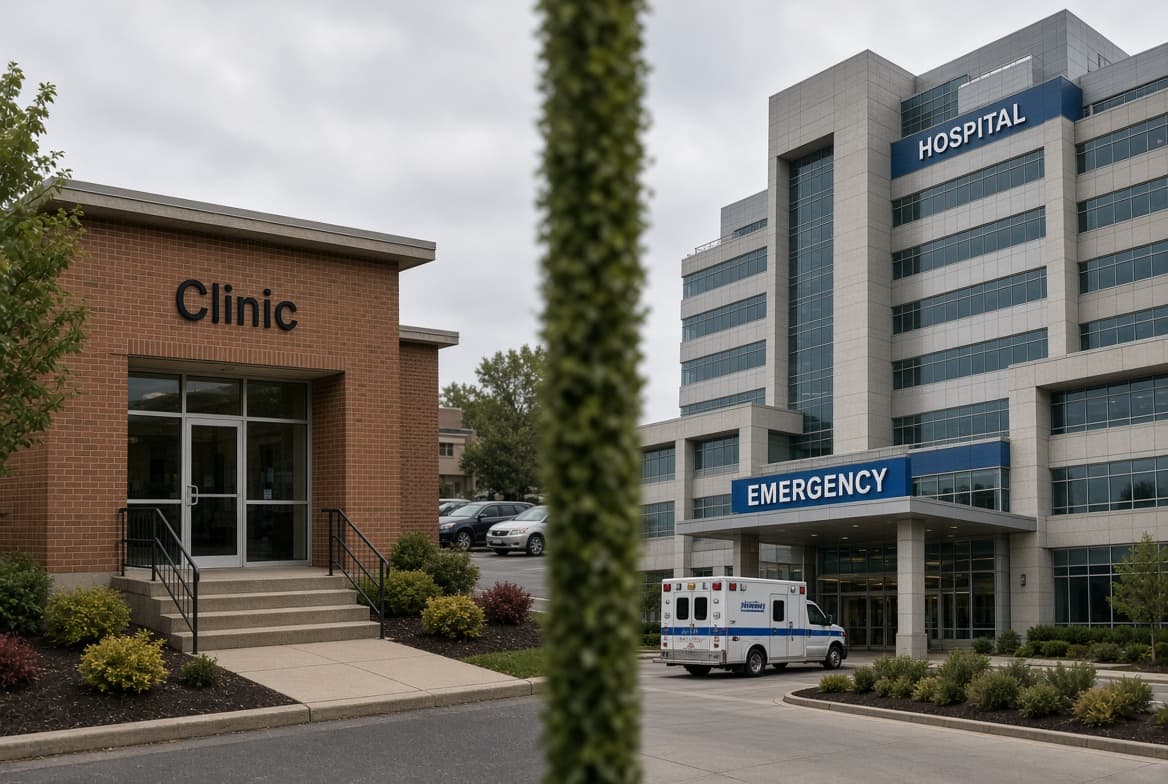
When you need medical attention, understanding the clinic vs hospital difference can help you decide where to go for the right medical care. It is essential to understand the difference between these two terms.
Although they both provide health services, hospitals and clinics differ and serve separate purposes. A clinic is more appropriate for day-to-day examinations, check-ups, consultations, and other minor procedures. Both clinics and hospitals provide general healthcare, but a hospital offers a more extensive range of services: surgery, medical tests, emergency services, and other specialties.
Therefore, understanding the difference between a clinic and a hospital is critical to receiving the adequate treatment. A hospital is usually the best option if you have an injury and need emergency assistance.
On the other hand, if circumstances allow, you may want to avoid going to a hospital for less critical conditions: It may be more time-consuming and stressful than visiting a local clinic. In the following text, we will review what distinguishes a clinic from a hospital, when you need to use these facilities, and give some practical recommendations.
What is a Clinic?
A clinic is a healthcare institution where patients can receive consultations, examinations, basic treatments, and other forms of medical care. Clinics can be smaller and more limited than hospitals and can provide more general services or be specialized in a particular field of medicine.
Many people prefer to visit a clinic rather than a hospital for relatively simple procedures that do not require complex interventions.
For example, one may visit a clinic for:
- A routine medical examination
- Consultation about an illness
- Follow-up appointment after treatment
- Treatment of some minor conditions
- Consultation with a specialist
- Diagnostic procedures
- Preventive medical services
A clinic can be private, run by a doctor or a collective of doctors, or belong to a healthcare organization. Clinics often specialize in a particular branch of medicine, for example, dentistry, dermatology, gynecology, pediatrics, or other fields. However, some clinics provide more general forms of medical care.
Common Services Available at Clinics
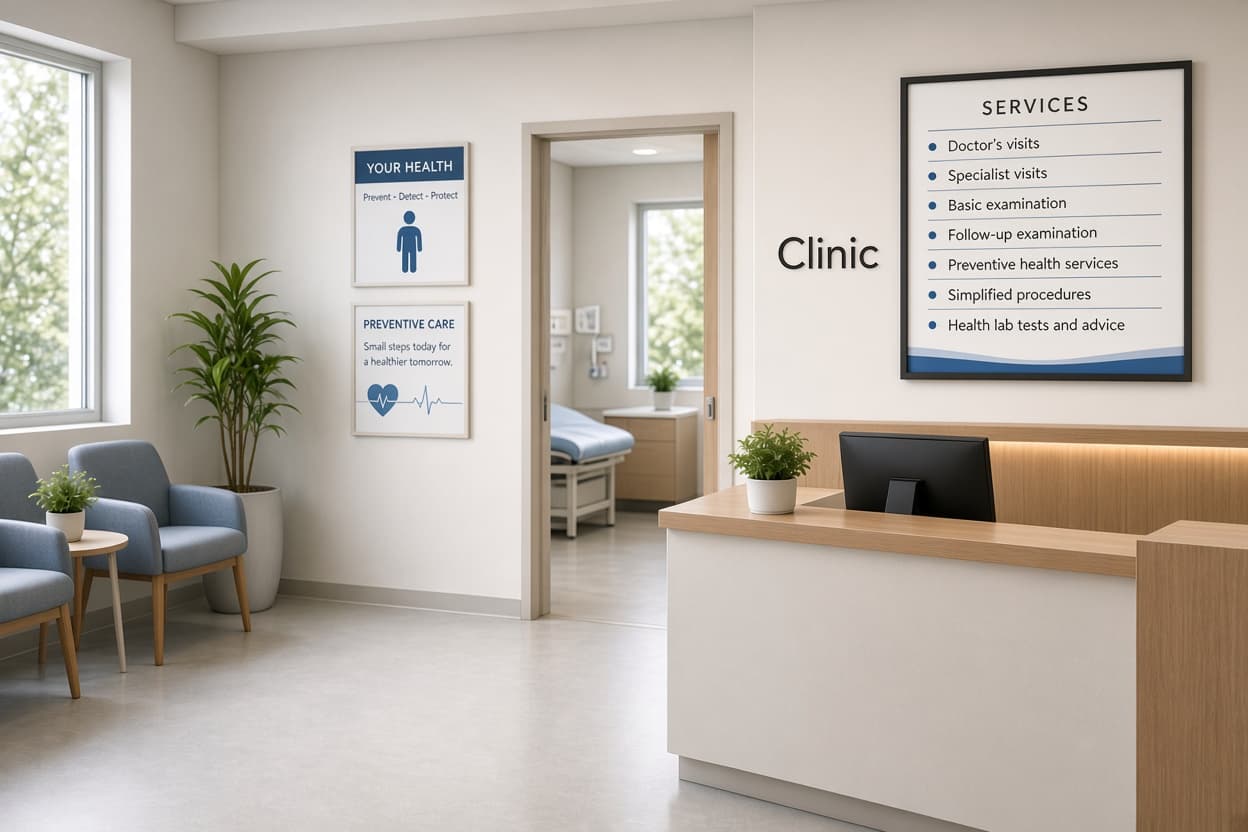
The services provided are determined by the clinic. A general clinic may offer doctor’s visits and basic examinations, while a specialized one can provide services that relate to a specific field of medicine.
Some of the services that a clinic can provide are:
- Doctor’s visits,
- Specialist visits,
- Basic examination,
- Follow-up examination,
- Preventive health services,
- Simplified procedures,
- Health lab tests and advice.
Before visiting the clinic, it is advisable to look into the services they offer and if the doctor you need is available.
What is a Hospital?
A hospital is a larger health care institution that provides a broader scope of medical services. Unlike clinics, hospitals offer treatment for both common illnesses and serious conditions requiring a higher level of care.
Hospitals usually consist of many departments and medical professionals. Depending on the hospital’s size and scope, there may be emergency care units, surgical units, diagnostic sectors, wards for inpatient treatment, intensive care units, and other divisions.
Some hospitals have wards and intensive care units for people who require overnight stays or several days of observation and treatment.
Common Services Available at Hospitals
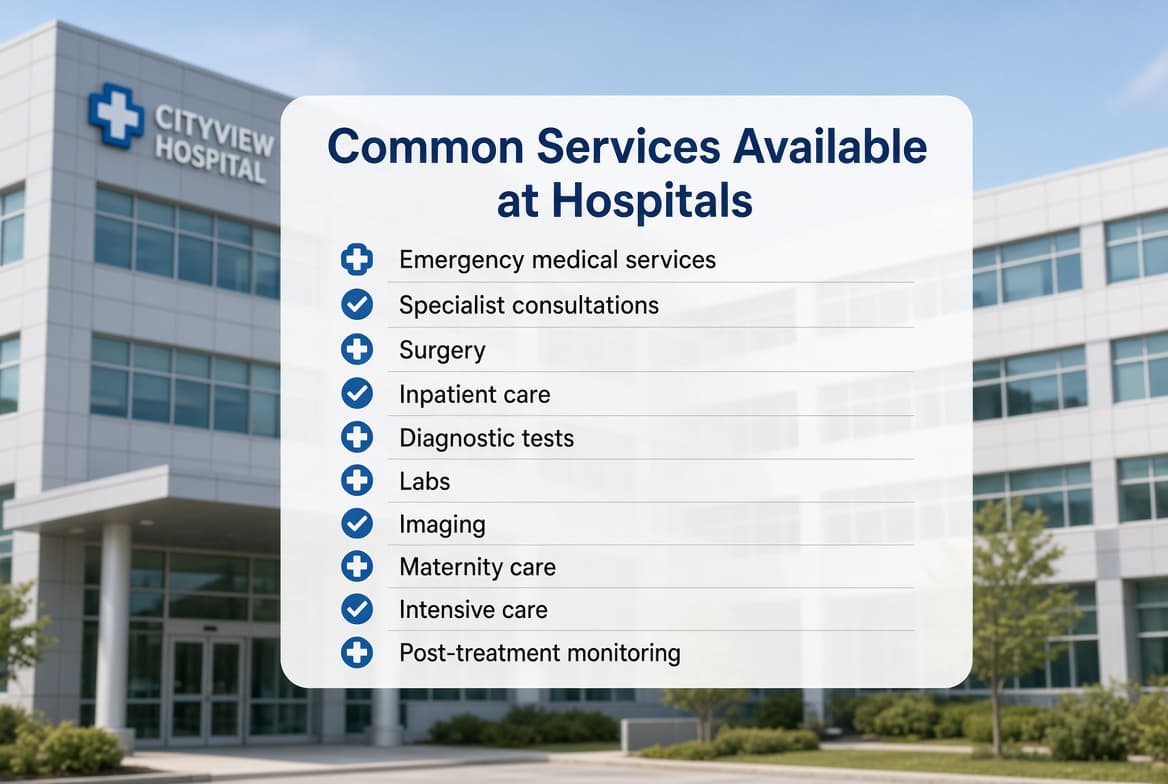
Most hospitals offer a broader spectrum of services, such as emergency care, surgery, and inpatient care. [World Health Organization (WHO)]. These services can include:
- Emergency medical services,
- Specialist consultations,
- Surgery,
- Inpatient care,
- Diagnostic tests,
- Labs
- Imaging,
- Maternity care,
- Intensive care,
- Post-treatment monitoring.
The services that are available can vary from hospital to hospital, so it is important to verify that the hospital you choose offers the services you need.
Clinic vs Hospital: What is the Difference?
The primary difference between a clinic and a hospital is that level and scope of healthcare services are provided.
A clinic is generally designed for consultations, routine treatment, minor health concerns, and outpatient services, while a hospital usually provides more comprehensive care which can handle any emergency, complex medical conditions, surgery, and inpatient treatment.
Listed below are some of the major differences.
1. Size and Facilities
Clinics are generally smaller than hospitals. They could have consultation rooms and basic medical equipment.
Hospitals are generally larger facilities and have a variety of departments, operating rooms, laboratories, diagnostic units, emergency rooms, and patient wards.
However, the size of the facility is not an indicator of the quality of care. The choice between a hospital and a clinic primarily depends on the individual’s medical needs.
2. Type of Care
Clinics typically offer outpatient services. These are services that do not require admission. A person visits the facility, consults with a medical professional, gets examined and treated, and leaves the same day.
Hospitals can cater to inpatient and outpatient services. Inpatient services require a person to be admitted to the hospital.
3. Emergency Services
A clinic cannot provide emergency services. Some clinics might not even have an emergency room.
Hospitals have emergency rooms that are equipped and staffed to provide emergency medical services. When a medical emergency occurs, emergency medical services should be called. It is unsafe to try to drive to a clinic or hospital.
4. Specialist Services
Some clinics employ specialists such as dermatologists, gynecologists, pediatricians, and more.
Hospitals tend to have more specialties under one roof, meaning one building. If a person needs multiple services performed, a hospital setting might be more convenient.
5. Diagnostic Services
A clinic could offer some diagnostic tests and services. Most of them only provide basic testing and might send a patient to another facility for more extensive tests.
A hospital has more diagnostic equipment and services, but it ultimately depends on the hospital and its specialization.
When Should You Visit a Clinic?
A clinic is an appropriate place to visit when one needs to consult or receive treatment, but the situation does not require immediate or inpatient care.
One might decide to visit a clinic for:
- Treatment of non-critical conditions
- Consultation on a regular basis
- After treatment follow-up
- Checkups
- Skin condition
- Children's consultations
- Women's health orientation
- Medical advice
- Specialist consultation
- Mild health condition
For instance, if one has been having a condition for a while and wants to get some advice from a doctor, scheduling an appointment at an appropriate clinic would be a good idea.
When Should You Go to a Hospital?
A hospital is more appropriate when you need emergency care, surgery, inpatient treatment, or services not available at a clinic.
One might decide to visit a hospital for:
- Serious injuries
- Severe symptoms that need urgent assessment
- Major accidents
- Conditions that require surgery
- Problems that require hospital admission
- Serious medical emergencies
- Conditions that require intensive monitoring
If you think someone is having a medical emergency, get them urgent care instead of waiting for a regular appointment.
Clinic vs Hospital for a Routine Doctor Appointment
For many routine healthcare issues, a clinic can be a convenient stop.
For example, say you want to see a general physician about a health concern that's not an emergency.
You may be able to schedule an appointment at a local clinic and come in for a checkup.
But sometimes, a doctor will recommend that you either go to a hospital or that you see a specialist if they feel that you need more care than they can provide.
The key is not to base your decision on where to seek medical care strictly on the scale of the healthcare facility, but on what kind of medical care you need.
Clinic vs Hospital for Specialist Care
Both clinics and hospitals are capable of providing specialized forms of care. A specialized clinic could be devoted to a particular facet of medicine, such as dermatology, dentistry, women’s health, or pediatric care. Hospitals, however, could offer multiple specialties under one roof.
Seeking specialists is a good idea when the patient already has an idea of which medical professional is needed for their case. It is necessary to do research on the desired doctor, including their credentials, specialty, availability, and range of services.
It is important to research the doctors and the facilities before making an appointment.
Clinic vs Hospital for Children
Children may have different requirements for health care and treatment depending on their ages and symptoms.
For day-to-day examination, vaccination, checkups, or treatment that is not of an emergency, a pediatric clinic or the hospital’s pediatric department is a good option.
However, if the child has a serious or an emergency condition, the situation may require immediate attention rather than focusing on the location.
As such, parents and caregivers should prioritize the child’s health problems and speak with medical professionals.
Clinic vs Hospital for Older Adults
Older adults may require regular medical check-ups and follow-up treatments for chronic conditions.
For routine check-ups and post-treatment follow-up visits, an older adult may prefer a clinic that offers the required doctor’s services
However, a hospital may be required in a situation that requires specialized treatment, inpatient care, surgery, emergency services, or multiple services.
An older adult should seek emergency medical services if a sudden symptom occurs.
How to Choose Between a Clinic and Hospital?
Choosing between a clinic and hospital becomes easy if one considers a few factors.
1. Check what kind of healthcare one needs
For instance, one should check if what one needs is only the consultation, follow-up visits, or treatment of a non-critical condition. On the other hand, if the services needed are a short-term hospital stay, surgery, or emergency services, then one should choose a hospital.
2. Check the Doctor's Specialty
The right doctor can be a great priority too, as an appropriate healthcare facility.
If you need a dermatologist, pediatrician, gynecologist, orthopedic doctor, or any other particular specialization, find out if the facility has the appropriate doctor for you.
3. Check Whether the Doctor Is Verified
When it comes to choosing the right doctor, the verification of professionalization and registration should also be a great priority.
In Nepal, patients can find out the list of the verified doctors by the medical board known as Nepal Medical Council (NMC).
By using the online platform of the NMC, patients can not only find the right healthcare professional but also make the best choice while making an appointment.
4. Consider Location
If you need a regular healthcare check-up or maintenance, considering the healthcare facility in your neighborhood is a wise decision.
On the other hand, for an emergency case, do not waste your time looking for the right healthcare facility, instead, go to the nearest one.
5. Check Available Services
Make sure to check whether your desired healthcare facility provides the services you are looking for.
6. Check Appointment Availability
Some healthcare facilities require appointments while others do not. If your preferred facility requires an appointment, you can make it online.
How Online Doctor Appointment Booking Can Help?
Technology has helped make it easier for people to find healthcare information and manage appointments.
Rather than going to multiple clinics or calling different facilities, online healthcare platforms can allow people to search for doctors and available healthcare facilities in one place.
Through a platform such as UpcharSewa, patients can explore available doctors, find trusted clinics, and book appointments more conveniently.
Online appointment booking can help patients:
- Save time
- Find doctors based on specialty
- Check available appointment information
- Discover clinics
- Plan healthcare visits
- Keep appointment information organized
However, online appointment booking is generally for planned healthcare visits. Should people have an emergency, online booking should not cause them to delay emergency medical care.
Common Mistakes to Avoid When Choosing Healthcare
Choosing a healthcare facility on the basis of convenience may sometimes result in unnecessary delays.
Following are the various mistakes that must be avoided when choosing healthcare facilities.
Choosing a Clinic for an Emergency
A clinic is not always equipped to handle certain medical needs, such as emergency care. When an emergency event occurs, seeking emergency medical service is the best option.
Choosing a Hospital for Every Minor Concern
A hospital is the best place for receiving medical care. However, when it comes to minor and routine scans and check-ups, looking for another facility that provides comprehensive care is an ideal option.
Choosing a Doctor without Checking their Specialty
A doctor can be a specialist in a certain field of medicine. Hence, making sure that the doctor's specialty matches the healthcare needs is essential.
Ignoring Professional Verification
When looking for a doctor, one should consider professional registration and qualifications. Patients in Nepal can check whether a doctor is registered with the Nepal Medical Council.
Delaying Medical Care
Searching for the best possible clinic or hospital should not become a reason for delaying necessary medical care. If one is concerned about one's symptoms, one should seek the advice of an appropriate medical professional.
How UpcharSewa Can Make Healthcare More Convenient?
Finding the best doctor or clinic can often turn out to be a challenging task, especially if you are unfamiliar with healthcare facilities in your area.
UpcharSewa aims to make the process easier by bringing essential healthcare services together in an accessible platform.
Using the portal, you can:
Find NMC-Verified Doctors
You can find NMC-verified doctors and make better-informed decisions while searching for medical professionals.
Discover Trusted Clinics
Upachar Sewa helps you discover clinics and healthcare facilities that fit your healthcare needs and location.
Book Appointments
Say goodbye to the tedious search for appointments and make the process of booking them much easier with this tool.
Carry Your Care in Your Pocket
Having access to virtual healthcare services and appointment bookings can make managing your healthcare much easier, right at the tap of your fingertips. With healthcare in your pocket, you can access to virtual healthcare services and appointment bookings make it easier to manage your healthcare right at your fingertips.
Conclusion
By knowing the difference between a hospital and a clinic, you can navigate the healthcare system more effectively and avoid unnecessary and costly hospital visits.
Some services may be available at clinics, including general practitioner consultations, screening and pathology, vaccinations, chronic disease management, and specialist services. Hospitals tend to offer a wider scope of services, including in-patient admissions, surgery, emergencies, diagnosis, and more complex health care.
Ultimately, the best choice is determined by your healthcare needs. For a general healthcare visit, visit a clinic and meet with the proper physician. For urgent healthcare or hospital-grade healthcare, go to the emergency room.
Searching for a doctor and clinic in not a hassle anymore. Search for NMC verified doctors, choose the best clinics, and book appointments with UpcharSewa - one portal for everything.
Your health journey begins with the right care, when you need it.
Frequently Asked Questions
What is the difference between a clinic and a hospital?
A clinic is typically a place where a patient receives outpatient services such as consultation with a doctor, checkups, visits, and treatment for the ordinary illnesses. At the same time, a hospital is an establishment that provides a greater scope of services such as emergency assistance, surgery, diagnostic services, and inpatient treatment.
Should I visit a clinic or a hospital?
It depends on what you need help with health-wise. A clinic could work for minor and major health issues, but a hospital is best for severe health problems, emergency care, surgery, or when a patient needs to be hospitalized.
When should I visit a clinic?
You might think of visiting a clinic for routine check-ups, medical advice, follow-up visits, minor treatments, preventive care, and specialist consultations.
When should I go to a hospital?
Going to a hospital may be needed in cases of emergencies, surgeries, inpatient care, and for receiving services that a clinic cannot provide.
Can I see a specialist at a clinic?
Yes. In many clinics, there are specialist doctors. Depending on the individual clinic and services offered, the available specialists may vary.
Can I book a doctor appointment online in Nepal?
Yes. Online healthcare portals can provide an easy way to search, view details, and book appointments with the doctor of your choice. UpcharSewa can help you find doctors and clinics and allows you to conveniently book appointments.
How can I find a trusted clinic near me?
You can search for the clinic depending on their location, services provided, doctor's specialties, and professional information. UpcharSewa brings you an easy way to explore clinics and doctors through their online platform.
What is an NMC-verified doctor?
An NMC-verified doctor is a doctor whose professional registration can be verified with the Nepal Medical Council. Verifying Doctor's registration is essential while searching for a trusted healthcare service provider.
Can a clinic handle emergency cases?
A clinic cannot always handle emergency cases as some clinics are not equipped with the necessary tools and machines to handle such cases. In case of a severe emergency, it is best to visit the nearest emergency hospital.
Can I rely on UpcharSewa to locate doctors and clinics?
Yes, you can rely on us to help you locate NMC certified doctors and book appointments with them.