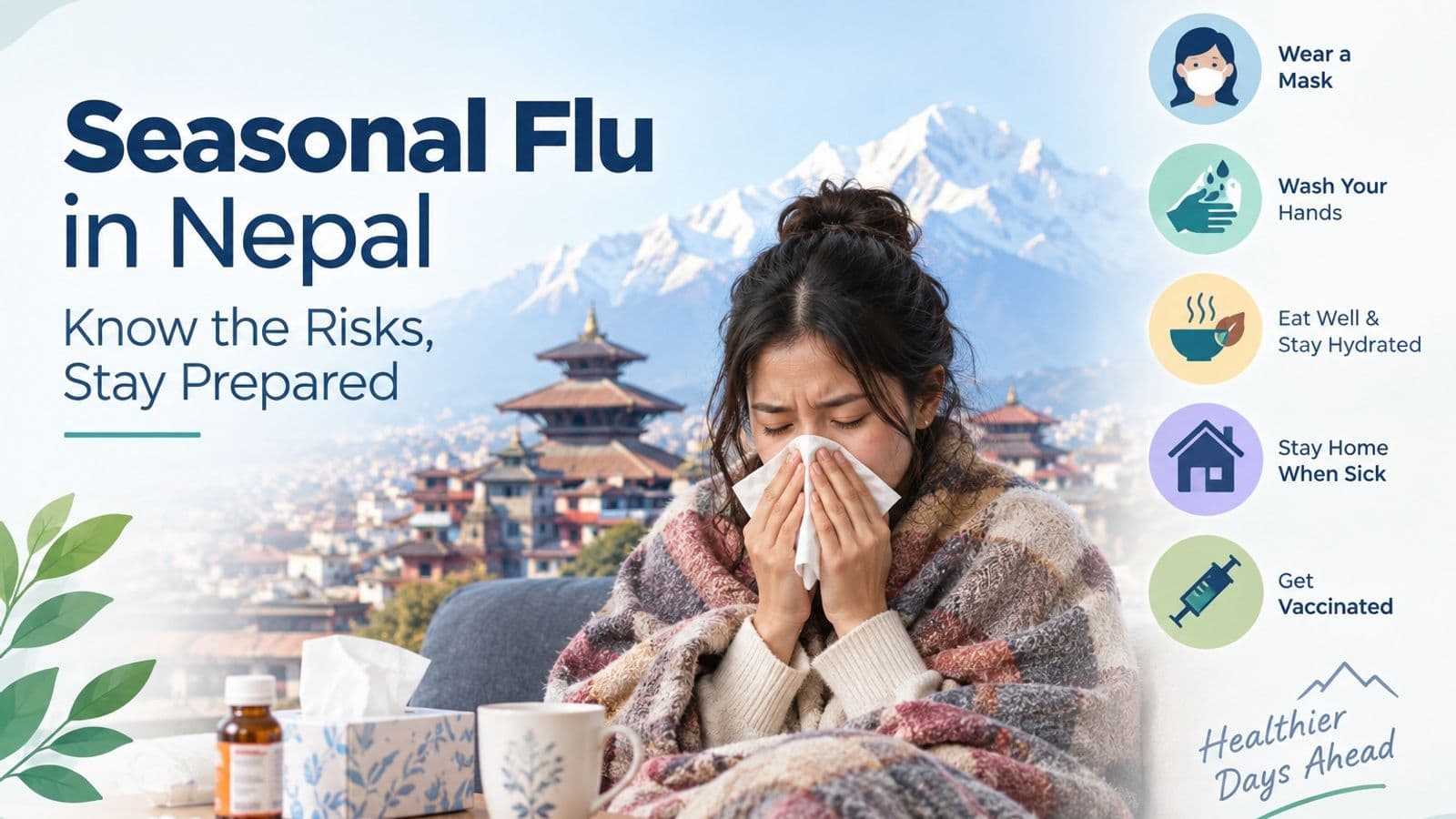
Seasonal Flu in Nepal is a common respiratory illness among people of all ages caused by influenza viruses that is easily transmitted especially in crowded places and poorly ventilated environments. Influenza presents with fever, cough, sore throat, runny nose, headache, fatigue, and body aches. However, most people will recover from the infection within a week with symptoms such as cough and fatigue persisting for a few weeks. Being able to recognize the symptoms of seasonal flu and taking the necessary precautions can help keep you, your family, and the wider community safe.
It is common for the citizens of Nepal to get infected with the seasonal flu virus throughout the year due to environmental conditions that favor the illness’s transmission and aggravation. Moreover, the infection can spread through travel, social gatherings, and schools and workplaces where individuals are in close contact with each other. However, the presence of flu-like symptoms does not necessarily indicate influenza since other respiratory infections possess similar signs and symptoms.
Preventive measures and awareness of the illness’s symptoms may reduce the number of affected people and the severity of the condition. This health guide will discuss the main aspects of seasonal flu, including its symptoms, prevention and treatment strategies, transmission modes, risk factors, and when to seek medical help.
What Is Seasonal Flu?
Seasonal flu is an acute respiratory disease characterized mainly by influenza A and influenza B viruses. Unlike some upper respiratory tract infections, influenza develops suddenly and may be more severe. The patient feels healthy but then suddenly experiences symptoms such as fever, cough, body aches, headaches, and fatigue.
Influenza viruses are seasonal and circulate mainly in temperate climates throughout the year. However, influenza occurs in tropical and subtropical regions, but its seasonality varies depending on the region. Consequently, a given month can be considered influenza season in some temperate regions but not in others. Therefore, instead of focusing on the flu season, understanding symptoms, and local health alerts should be prioritized.
Is Seasonal Flu the Same as a Common Cold?
Seasonal flu and common cold are both upper respiratory tract infections, but they are caused by different viruses. Sometimes the symptoms of these infections are similar, so that it can be difficult to tell the difference between the two illnesses.
Flu tends to come on more suddenly and can be accompanied by more severe fever, body aches, headache, and fatigue. Colds, on the other hand, are often milder and less severe. They frequently have a runny or stuffy nose and sore throat as prominent symptoms.
However, symptoms alone are not always enough to decide between the two options. If someone’s symptoms are severe, strange, or persistent, seeking medical advice is a good option.
How Does Seasonal Flu Spread?
Influenza is highly contagious. When an infected person coughs, sneezes, talks, or even breathes, virus-containing droplets are expelled, possibly infecting anyone nearby. This is especially true in confined spaces where there is close contact with other people. It can also be contracted by touching a contaminated surface and then touching the eyes, nose, or mouth.
This means that in places like schools, offices, on public transport, or in waiting rooms, it can spread very easily and quickly.
Infected people should avoid places where crowds gather, stay home if they feel unwell, cover their mouths when coughing or sneezing, and sanitize their hands frequently.
Why Can Flu Spread Quickly?
Respiratory viruses can spread quickly because people often spend time close together. People can also spread influenza before realizing that they are sick.
Crowded indoor areas with limited ventilation can increase chances for respiratory virus to be transmitted. Ventilation should be improved by opening windows in appropriate times and avoid crowded enclosed places to get rid of the virus.
Common Symptoms of Seasonal Flu
The symptoms of seasonal flu may vary in severity from mild to severe cases. Some people may exhibit several symptoms of flu while others may present with only a few signs.
The common symptoms of seasonal flu may include:
- Fever
- Cough
- Sore throat
- Runny or stuffy nose
- Headache
- Muscle or body aches
- Fatigue or weakness
- Chills in some people
According to WHO, influenza typically presents with a sudden onset of fever, cough, headache, muscle and joint pain, sore throat and runny nose. The cough may persist for two weeks or more, even when other symptoms have resolved.
Fever and Chills
Fever is a typical symptom of influenza. However, a person may also experience chills or feeling cold. Not everyone presents with fever when they have influenza, thus absence of fever does not rule out the possibility of respiratory infections.
Cough and Sore Throat
A cough is among the most common signs of flu. It often accompanies other symptoms and may persist even after they have gone away. A sore throat may also develop and be present with cough and other respiratory symptoms. Drinking plenty of fluids and getting enough rest will help you feel better while you are sick.
Body Aches and Headache
Flu may cause muscle and body pains, headache, and general malaise. These symptoms may interfere with daily activities for a short while.
Tiredness
Strong fatigue is a typical sign of flu. You may still feel tired even if your fever has gone away. It is important to get enough rest to help your body recover.
How Long Does Seasonal Flu Last?
Many people with uncomplicated influenza get better after about a week. However, recovery can be different for each individual, and some symptoms, such as coughing and tiredness, can persist for a longer period of time. People should refrain from engaging in rigorous activities if they continue to feel ill as allowing the body to heal properly can expedite the return to previous activity levels.
Seeking medical attention should be done if symptoms worsen rather than get better, or if the person is at a higher risk of complications.
Who Is at Higher Risk From Seasonal Flu?
Influenza may infect everyone, but there are groups of people who are more likely to experience complications and severe forms of the disease.
These vulnerable populations are:
- Pregnant women
- Children under the age of 5
- Individuals 65 years of age and older
- Individuals with chronic conditions
- Individuals with compromised immune systems
- Healthcare professionals at higher risk of exposure
Individuals with asthma, heart disease, lung disease, or diabetes, among others, may need closer monitoring if they have influenza-like symptoms.
Why Do High-Risk People Need Extra Care?
The status of the patient’s immune system and overall health may influence the course of the disease. In some cases, influenza causes serious complications, making the sickness severe.
Therefore, if the patient’s risk group status and symptoms match, it is advisable to reach out to the medical service to schedule a treatment course instead of waiting for the symptoms to become severe.
Seasonal Flu in Nepal: What Should People Know?
Nepal is a climatically and ecologically diverse country ranging from the lowland areas to higher altitudes. Hence, respiratory illnesses can prevail in a given locality and at different times.
Instead of assuming that flu only runs in specific seasons, it is better to keep track of respiratory illnesses in the local area and follow the guidance of health authorities and professionals.
In communities where people interact closely with each other in places such as schools, colleges, offices, buses, and other gatherings, the above-mentioned measures are of significant importance.
Cold or warm weather per se does not cause influenza, which is caused by influenza viruses.
Nevertheless, weather can influence our behavior, for example, keeping in enclosed places or interacting more closely with each other, which facilitates the spread of respiratory viruses.
Prevention Tips for Seasonal Flu
Preventing seasonal flu can involve several simple measures. Of course, no single measure will completely prevent the spread of flu, but together they can provide significant protection.
1. Think about getting the seasonal flu vaccine
For many people, vaccination is an important way to significantly reduce the risk of influenza and its serious consequences. WHO recommends seasonal influenza vaccination for people at high risk of serious complications: pregnant women, young children, older people, people with chronic health problems, and healthcare workers.
Influenza viruses constantly change their surface proteins, so that the vaccines used can be as effective as possible.
If you are thinking about getting a flu vaccine, be sure to consult a trusted healthcare professional about the most beneficial time for you.
2 Wash Your Hands Regularly
Hand hygiene is a simple and effective way of reducing the risk of many infections.
Wash your hands regularly with soap and water, especially after coughing or sneezing, and after being in public places, as well as before eating. If soap and water are not available, an appropriate alcohol-based hand sanitizer may be used.
3 Avoid Touching Your Face With Unwashed Hands
The eyes, nose, and mouth can provide entry points for germs.
Try not to touch your face, especially the eyes, nose, and mouth, with unwashed hands, especially after touching things that others have touched or after being in a crowd.
4. Cover Coughs and Sneezes
When coughing or sneezing, cover your mouth and nose with a tissue or use your elbow if a tissue is not available.
Used tissues should be thrown away appropriately, followed by hand cleaning.
This simple habit can reduce the spread of respiratory particles to people nearby.
5. Stay Home When You Are Sick
If you have flu-like symptoms, staying home when possible can help reduce the chance of passing the infection to others.
This is particularly important when living with or spending time around people who may be at higher risk of severe influenza.
If you need to go into a crowded setting while experiencing respiratory symptoms, wearing a suitable mask can provide an additional layer of protection.
6. Improvement of Indoor Ventilation
The introduction of fresh air and the removal of contaminated air from the room will reduce the concentration of respiratory droplets containing virus particles.
It is recommended to ventilate the room when possible by opening the windows or doors. It is advisable not to stay in a closed, warm, and crowded place with a group of people where the proliferation of flu viruses is facilitated.
7. Avoid Close Contact With Sick People
Keeping away from those who are sick with the flu and coughing is another effective way of preventing the illness.
It is not advisable to avoid close contact with sick people; however, it is possible to help sick relatives and friends by leaving the window open and using hand sanitizers.
8. Maintain Clean Surfaces Frequently Exposed
Some respiratory viruses can survive on a contaminated surface for some time. Frequently cleaning surfaces likely to be touched can be part of a good infection-control protocol.
Examples would include surfaces commonly touched in the home or at work.
What Should You Do If You Get Seasonal Flu?
Drink plenty of fluids and get enough rest. If you have any medicine, follow the advice of a healthcare professional or the instructions that came with your medicine.
Most people with uncomplicated influenza illness do not require medical care or influenza-specific antiviral treatment. However, those who are sick and have risk factors for influenza complications should be considered for antiviral treatment. The WHO recommends antiviral treatment for influenza within 48 hours of the start of symptoms.
Do Antibiotics Treat Flu?
No, Because influenza is a viral infection, and antibiotics only work against bacteria.
So, No, influenza cannot be treated with antibiotics. In addition, misuse of antibiotics leads to antibiotic resistance. A healthcare professional may prescribe antibiotics if they believe the person has a bacterial infection or if the person has a bacterial infection.
However, antibiotics are not used to treat viral infections like colds or flu.
When Should You Seek Medical Advice?
While many people will get better on their own if they have the flu, calling the doctor is the right thing to do if symptoms become severe or persist.
You should call the doctor if:
- symptoms are becoming worse instead of better,
- you have trouble breathing,
- you have severe symptoms that persist,
- you are pregnant and have significant flu symptoms,
- a young child is sick,
- an older person becomes sick,
- you have a chronic illness and get sick,
- you have a low immune system,
People who are at high risk for influenza should get medical advice if they start having influenza-like symptoms since drugs that help lessen the severity of the illness are most effective if given early in the illness.
Seasonal Flu and Children
Children can both contract and spread influenza. School and other congregate settings can facilitate the spread of respiratory viruses.
Parents and caregivers can remind children to wash their hands frequently, cover coughs and sneezes, and avoid close contact with sick people or sharing toys and other items when they’re contagious. They should also ensure their children stay home when they are sick.
Children under 5 years of age are especially vulnerable to serious complications from the flu, so parents and caregivers should be especially wary of any unusual or severe symptoms.
Seasonal Flu and Older Adults
People ages 65 and older are at the highest risk of serious illness from the flu.
Family members and caregivers can ensure these individuals get vaccinated, practice good handwashing and hygiene, and avoid exposing them to sick people when possible. Older adults who have preexisting conditions often need additional care when they contract the flu. Caregivers and family members should ensure they get the medical attention they need.
Common Myths About Seasonal Flu
Myth 1: Flu Is Just a Mild Cold Essay
Flu is a severe form of the common cold since many people may recover from influenza without complications, but it may lead to serious issues.
Myth 2: Cold Weather Causes Flu
The low environment temperature is not a reason for influenza, but the virus transmission occurs. The influenza virus is highly contagious, and seasonal factors, along with the population’s behavioral patterns, are associated with the increased spread of the disease.
Myth 3: Antibiotics Cure Flu
Influenza is caused by a virus, and antibiotics are prescribed only when the flu is complicated by a bacterial infection.
Myth 4: You Only Need to Think About Flu in Winter
The World Health Organization observes that influenza is a year-round disease in tropical areas, meaning that it is present throughout the year. Therefore, it is essential to take proper precautions all the time.
Conclusion
Seasonal flu refers to a contagious respiratory infection that is commonly experienced by people of all ages. Although most people recover from the illness within a week, influenza can sometimes be severe, especially for young children, older people, pregnant women, individuals with chronic diseases, and those with compromised immunity.
Several preventive measures are effective in reducing the spread of seasonal flu. These include frequently washing hands, coughing and sneezing into tissues, avoiding touching the face, ventilating enclosed spaces, avoiding close contact with sick persons, and staying home when ill. Furthermore, seasonal influenza vaccination is an important intervention in the control of the illness, especially for those at risk. As such, people should seek the advice of a professional healthcare provider if they experience flu-like symptoms and for proper management.
Individuals presenting with flu-like symptoms seeking advice should consult a qualified healthcare provider for the best intervention. Consulting a healthcare provider will enable them to gain vital information and properly manage the illness, reducing the risk of complications and spreading the disease to others.
UpcharSewa can help people get connected with healthcare services, receive appropriate medical treatment and support when they need it. If you have persistent or worrying flu-like symptoms, speaking to a qualified healthcare professional can help you understand what's going on and what support you might need. If your flu symptoms are concerning or you need medical advice, you can learn how to book a doctor appointment online in Nepal and connect with a healthcare professional conveniently.”
Frequently Asked Questions
What is seasonal flu?
Seasonal flu is a respiratory infection caused by influenza viruses, primarily influenza A and B viruses. Typical symptoms include fever, cough, sore throat, headache, body aches, and fatigue.
How does seasonal flu spread?
Influenza can be transmitted by respiratory droplets from coughs and sneezes of an infected person, or on touching the person who has contaminated objects.
What are the most common symptoms of seasonal flu?
The most common symptoms are sudden fever, cough, sore throat, runny nose, headache, muscle or body ache, and fatigue.
How long does flu usually last?
Many people recover from the main symptoms after about a week, but cough and fatigue may persist for a longer time.
Can flu be prevented?
There are ways to reduce the risk of getting the infection, for example, vaccination and some everyday measures such as handwashing, cough etiquette, improving the air, avoiding sick people, and staying home when you are sick.
Who is more likely to develop severe flu?
Pregnant women, young children, older people, those with certain underlying health conditions, people with weakened immunity, and health care workers are among those at higher risk
Should I take antibiotics for flu?
No, because antibiotic do not kill viruses and influenza is a viral infection. Do not take antibiotics, unless they have been prescribed for an unrelated bacterial infection.
When should I contact a doctor?
Contact a doctor if your symptoms are severe, getting worse, or worrying you. If you are in a group with higher risk, contact a doctor immediately if you have symptoms of influenza.