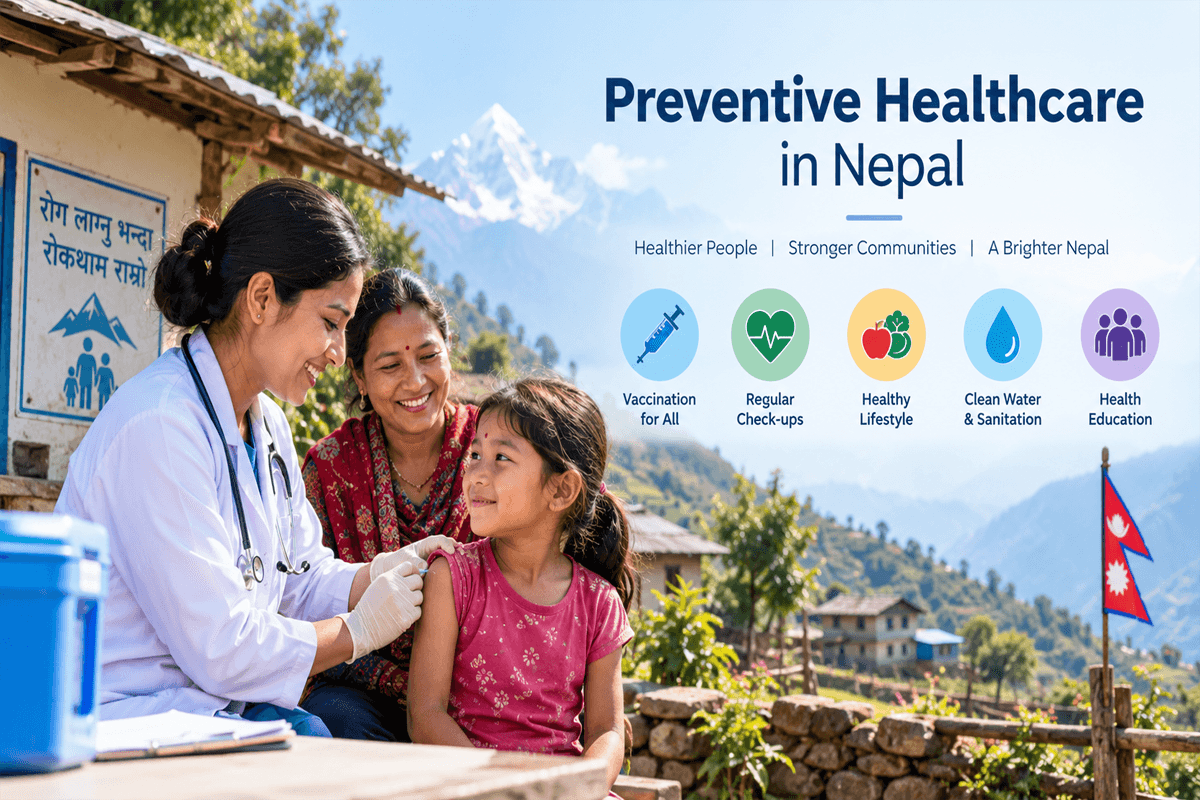
Preventive Healthcare in Nepal means taking simple and effective steps to maintain your health and avoid health issues. These steps include regular medical check-ups, necessary vaccinations, health screening, balanced eating, exercising, good hygiene practices, and getting timely treatment or advice. The idea is to ensure that a person takes responsibility for their health and its maintenance on a daily basis rather than waiting for an illness to occur.
Preventive healthcare may involve health check-ups, immunization, screening, healthy lifestyle, physical activity, balanced diet, hygienic practices, and seeking appropriate advice when experiencing any abnormality. Primary healthcare includes health promotion, disease prevention, treatment, rehabilitation, and other supportive measures throughout life.
Preventive healthcare schemes appear to be of particular relevance in Nepal; where there are wide variations in environmental conditions and accessibility to health services. For instance, urban dwellers have better access to healthcare than the people of rural and remote areas. Likewise, the country has made remarkable progress towards providing primary health care.
This note provides information on the concept and the importance of preventive healthcare, preventive measures, and how citizens of Nepal could incorporate it into their daily lives.
What Is Preventive Healthcare?
Preventive healthcare is a concept of maintaining health and preventing diseases and health conditions from developing.
Instead of treating severe health problems, preventive care focuses on the maintenance of health and quality of life through such measures as appropriate schooling and encouraging vaccination, regular health screenings, and making sure people get proper medical services and advice.
According to The World Health Organization, primary healthcare is a concept that contains the theme of health promotion and disease prevention as well as other elements of healthcare, such as treatment, and is concerned with the health of individuals and communities with a lifespan approach.
The idea of disease prevention does not mean that all diseases can be prevented. Even though preventive healthcare and control measures are essential, people can still develop illnesses despite measures taken to avoid them. However, prevention and early diagnosis can help individuals cope with specific health conditions and make choices that affect their health.
Why Is Preventive Healthcare Important?
Many people go to the doctor only when they have significant symptoms. While health care is necessary when people are sick, health care should not be limited to only when a person is ill.
Preventative healthcare focuses on encouraging people to take care of themselves and help prevent illnesses from occurring or becoming worse.
Can Help Detect Health Problems Early On
Sometimes health issues do not have obvious symptoms until they become severe. The right screening or tests can sometimes detect a problem or risk of a problem.
However, the type of screening needed varies from person to person and depends on many factors such as age, sex, family history, symptoms, and other risk factors. Consulting a professional can help decide what screening is suitable for a person.
Encourages Healthy Habits
Preventive healthcare is also focused on encouraging people to be responsible for their own health. The examples of such measures may include proper nutrition, regular physical activity, adequate sleep, practicing good hygiene, and avoiding harmful habits.
Health promotion plays a significant role in helping people acquire and maintain healthy habits.
Supports Long-Term Health
Healthcare extends beyond sick people – it is essential for everyone to be healthy and have knowledge about their health status. This is important in order to be able to make the right choices about health and get the most out of life. Having a reliable expert on the road to wellness makes it easier to navigate through life and find answers to questions.
Can Support Better Use of Healthcare Services
Preventive healthcare is a vital part of a wider primary healthcare strategy. The latter refers to organizing health services in a way that makes them accessible to everyone and available in close vicinity. It encompasses a wide range of activities from health promotion and prevention to treatment and referral to more specialized healthcare providers.
Types of Preventive Healthcare
Preventive health care can take many forms, including those that are part of your daily routine and those that require interacting with a health care professional.
Regular Health Checkups
Having regular health checkups allows an individual to go over medical concerns with a professional and detect any possible issues.
A checkup may involve discussing your medical history, lifestyle, medications, symptoms, and family history. Depending on your particular case, the professional may perform a number of examinations or tests.
A checkup is not necessarily a full work up, and healthcare professionals can advise people on what screenings they may need.
Health Screening
The concept of health screening is to identify the possible risks and signs of certain diseases or health conditions. Every screening procedure has unique criteria based on which the results are interpreted.
These criteria may vary depending on age, sex, risk factors, and existing conditions, so people should not rely on the same screening tests regardless of their health situation and consult healthcare professionals.
Vaccination
Vaccination is often necessary to ensure the wellbeing of individuals as they can help prevent many diseases.
The specific vaccines to be administered can be different for each person depending on various individual factors.
It is recommended that parents adhere to the vaccination schedule provided by their healthcare providers and ask for advice on additional vaccines if some doses were missed.
Healthy Eating
Eating is essential for the wellbeing of every person as food is the source of energy and nutrients needed for the body to function properly.
It is important to maintain a balanced diet that provides the body with all the nutrients it requires to grow, develop, and stay healthy.
People may have different nutritional needs depending on their individual circumstances, so it is better to consult a healthcare professional rather than try to adjust the diet on their own.
Physical Activity
In addition to the previously discussed measures, it is essential to engage in physical activity regularly. An individual can pick any form of activity that suits their age, fitness level, and peculiarities. For instance, people can walk, play recreational sports, do domestic chores, and engage in other types of activities.
Those with health issues should consult their primary care physician and discuss the details of their physical activity regimen. Moreover, individuals with chronic conditions should not undertake physically demanding tasks unsuitable for them.
Good Hygiene and Food Safety
Practicing basic hygiene and safety measures can prevent infectious diseases and promote health. For example, washing hands frequently, preparing food in a hygienic manner, consuming clean water, and following other measures can considerably reduce the risk of infections.
In addition, the provision of food, water, sanitation, and overall environmental health is considered an integral part of broader health-care and public health activities. According to the World Health Organization, water, sanitation, environmental health, food safety, and disease prevention are key elements of sanitary and anti-epidemic work in health-care.
Preventive Healthcare in Nepal
Preventive healthcare in Nepal encompasses a range of actions and measures that focus on maintaining health and reducing risks and dangers to health and well-being. It includes regular health screenings and check-ups, recommended vaccines, health screenings, a healthy diet, regular physical activity, proper hygiene, sufficient sleep, and access to quality medical care and advice. Preventive healthcare seeks to encourage regular check-ups and involve people in their health maintenance and management by helping them recognize symptoms and recommend the right tests or screenings if necessary.
Preventive healthcare is essential in a country such as Nepal, where the availability and accessibility of healthcare services may vary depending on the region and the population groups. Urban communities may have better access to healthcare facilities, diagnostic labs, and trusted and experienced doctors compared to the availability in rural and remote areas.
The country focuses on providing primary healthcare services and basic health care services to everyone, including health promotion and disease prevention. Physical activity, a healthy balanced diet, sufficient sleep, and good personal hygiene are essential elements of a health-promoting lifestyle in addition to professional medical support.
Preventive Healthcare for Different Age Groups
Preventive healthcare is not exactly the same for everyone. Health needs change throughout life
Preventive Healthcare for Children
Children need healthcare that supports healthy growth and development. Parents and caregivers should follow recommended vaccination schedules, attend appropriate health visits, monitor development, and seek medical advice when they notice concerning changes.
Nutrition, hygiene, safety, and healthy physical activity are also important parts of children's overall wellbeing.
Preventive Healthcare for Teenagers
Teenagers experience many physical, emotional, and social changes. Preventive healthcare for teenagers can include healthy eating, physical activity, adequate sleep, personal hygiene, mental wellbeing, safety, and appropriate medical care.
Teenagers should have a safe environment where they can discuss health concerns with a trusted adult or qualified healthcare professional.
Preventive Healthcare for Adults
Adults may wish to consider their lifestyle and risk factors.
ased on individual circumstances, an adult may benefit from a routine examination, recommended screening tests and immunizations, and seeking professional advice relating to diet, exercise, stress, sleep or any other issue.
Where appropriate, a person should ask a healthcare professional about the implications of any family history of disease.
Preventive Healthcare for Older Adults
As they age, the healthcare needs of older people often change.In later life, people may require an increased level of preventative care, for example in relation to blood pressure, diabetes, eyesight, hearing, mobility and other conditions.
The particular healthcare needs of an individual will depend on their personal circumstances and should be determined by a healthcare professional. In particular, older people should be especially aware of any change in their health and should seek advice without delay.
How Lifestyle Choices Support Preventive Healthcare?
Preventive healthcare is not only about the medical institutions. There are some measures that people take in their daily lives to maintain their wellbeing.
Nutritious Diet
It is essential to choose a proper and balanced diet that would include vitamins and other nutrients. The diet varies from person to person because everybody has individual characteristics and different nutritional needs. It is vital to make dietary changes if a person has a medical condition or nutritional issue.
Physical Activity
It is essential to engage in physical activity to keep the body healthy. Every person should select an activity that they genuinely enjoy and that would suit their age and personal state.
Getting Enough Sleep
Many people neglect the amount of sleep they get even though it is vital for the body. Having a sound sleeping regime is critical for physical wellbeing as well as mental wellbeing. If a person has issues with insomnia or chronic tiredness, they should consult their primary care physician.
Managing Stress
Stress is a vital part of a person’s wellbeing. The most crucial aspect of stress management is developing a set of effective personal rituals that will help mitigate the impact of stress. Some of the vital rituals include physical activity, relaxing hobbies, maintaining a healthy sleep schedule, socialization, and emotional support from family and friends. Individuals with diagnosed mental illnesses or a history of mental illnesses should seek professional help if they feel their condition deteriorates.
Good Hygiene Practices
Developing good hygiene practices is one of the most vital aspects of disease prevention and personal wellbeing. A person should wash their hands frequently, maintain a certain level of cleanliness, brush and floss their teeth, and take care of their living space.
When should you consult a doctor?
Preventive healthcare does not mean waiting to talk to a doctor at your next regular checkup. You should contact a healthcare professional when the condition they are helping you with changes.
Some examples of this are:
- Symptoms that are not going away
- Unexplained symptoms or changes
- Persistent pain
- Continuing fatigue
- Changes in eating or weight
- Frequent infections
- Problems sleeping
- Concerns about mental wellbeing
- Questions about medicines or vaccination
- Concerns about family history of diseases
The examples listed above are not necessarily signs of one specific disease. A healthcare professional can help you evaluate your condition and determine what if any further tests are needed. Please seek emergency care if you are experiencing severe symptoms or think you may be having an emergency.
The Role of Doctors in Preventive Healthcare
Doctors and other qualified healthcare professionals are essential elements of the preventive healthcare system.
They can discuss your risk factors, suggest examinations, tests, and medical guidance, and determine whether further action is needed. Therefore, preventive healthcare is not a self-diagnosed or self-treated process, although researching on health-related sites can be a helpful tool for learning about the conditions and illnesses.
However, consulting a medical professional is required when medical advice, treatment, or services are needed. To ensure healthcare services are chosen wisely, it is essential to know how to distinguish qualified and unqualified medical staff.
Therefore, read our post entitled Reasons for Selecting an NMC-Verified Doctor in Nepal.
Preventive Healthcare and Digital Health in Nepal
Technology is becoming increasingly essential in healthcare. Digital healthcare services can improve people’s access to information, resources, and appointments with medical professionals.
For those who cannot visit a healthcare facility right away, online healthcare services could be a valuable alternative to booking an in-clinic appointment at the nearest available time.
That being said, digital healthcare services are not a replacement for all medical treatments and procedures that require direct care from a medical professional, such as diagnostic tests, operations, and emergency care.
As such, people should use online healthcare services wisely and take medical professionals’ advice about what kind of care they need.
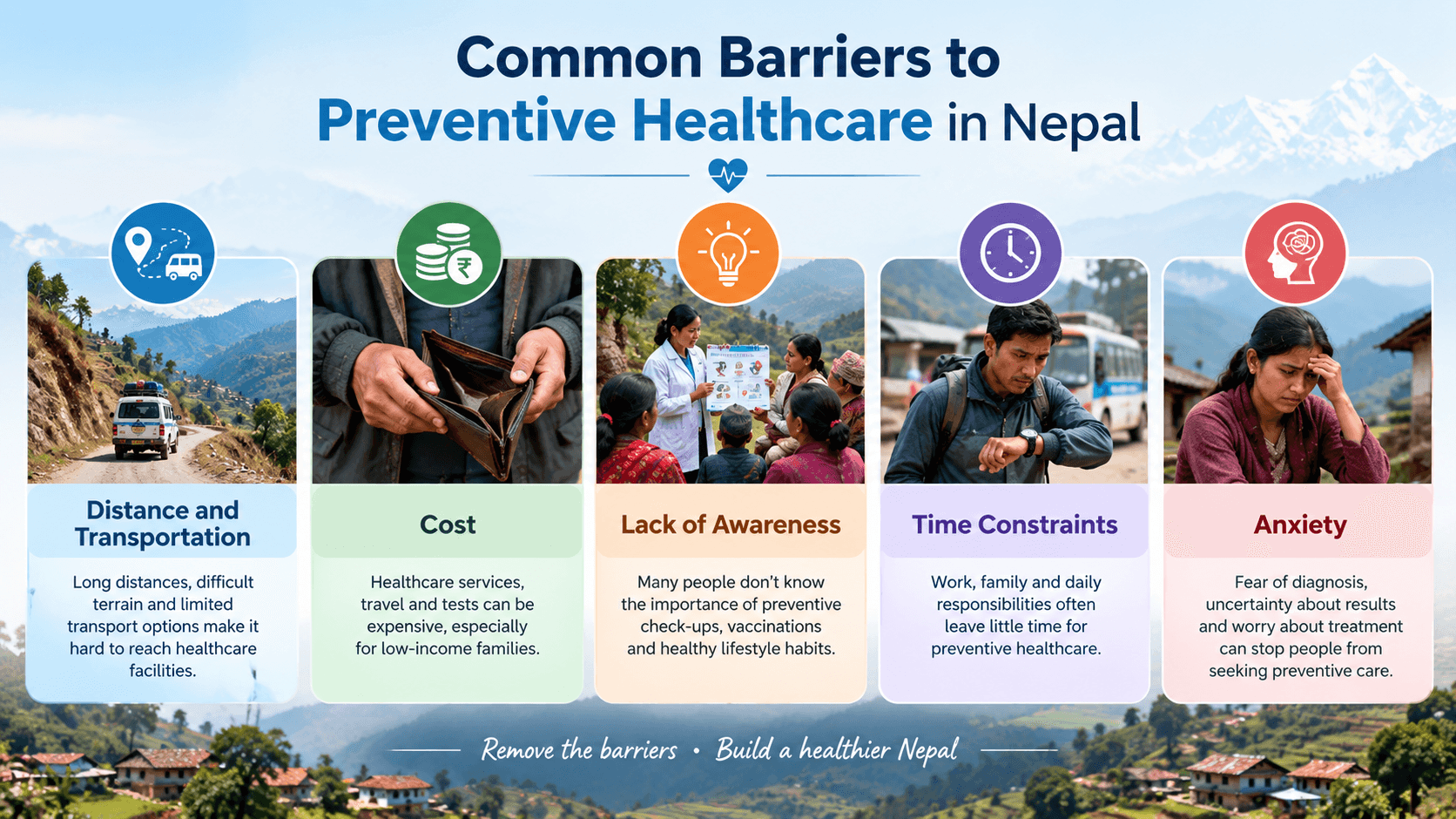
Common Barriers to Preventive Healthcare in Nepal
Although preventive healthcare is crucial, individuals may encounter distinct challenges while receiving it.
Distance and Transportation
In rural and distant places, persons may have to cover more substantial distances to receive specific forms of healthcare service.
Cost
The expenditures for healthcare may limit persons’ ability to seek and prolong medical treatment services.
Lack of Awareness
Some people may be ignorant of the precise form of preventive healthcare services that may be appropriate for their age or physical condition.
Time constraints
Individuals may experience a scarcity of free time as a consequence of domestic, academic, and professional obligations.
Anxiety
Persons may refrain from receiving healthcare services as a result of apprehension regarding medical examination outcomes or procedures.
Understanding factors that prevent individuals from receiving preventive healthcare services can help families, society, and the healthcare system in general develop effective strategies of eliminating them.
Preventive Healthcare Is a Long-Term Approach
Preventive healthcare is not a one-time event. It is a continuous process of maintaining health and preventing disease through healthy lifestyle choices, medical care, health education, vaccination, screening, and regular communication with health professionals.
The World Health Organization (WHO) has defined primary healthcare as an approach to achieving the highest attainable standard of health and a process of bringing health and social services closer to people.
For people living in Nepal, this could be done by cultivating a positive attitude toward their health, staying informed about health needs, and seeking appropriate services when necessary.
Conclusion
Preventive Healthcare in Nepal is a concept of maintaining health and avoiding illness. It includes maintaining a healthy lifestyle, receiving appropriate checkups, vaccination, appropriate screening for diseases, practicing good hygiene, and getting medical advice when necessary.
Preventive healthcare does not ensure that an individual will never be ill. Instead, it focuses on the active role of individuals in maintaining their health and making the right choices for their healthcare needs.
The healthcare system in Nepal is continuously working towards improving primary and basic healthcare. Digital mediums are supplementing the existing ways of seeking healthcare by offering new channels to explore.
Whether you are in Kathmandu or in a remote village, there are measures you can take towards a preventive healthcare lifestyle to make it a regular part of your life.
When it comes to finding the right healthcare professionals and services, online platforms like UpcharSewa can help you navigate them with more ease and convenience. The most important thing is to understand your healthcare needs and the necessary precautions. Having the right information will help you know when to seek medical advice and consult with a professional.
Frequently Asked Questions
What is preventive healthcare?
Preventive healthcare refers to measures taken to maintain health, prevent diseases and regularly check an individual's health status. This includes promoting healthy living, methods such as vaccination and screening, diagnostic and professional health checks, and appropriate treatment.
Why preventive healthcare is important in Nepal?
Preventive healthcare raises awareness and ensures early intervention and management of health problems. Moreover, it is a key element of the comprehensive primary health care strategy in Nepal.
What do I check during a preventive health checkup?
Depends on the individual's preference and needs. The doctor may go through the patient's medical records, lifestyle, current symptoms, drugs and risk factors and recommend the necessary screening or tests.
How often should one get a general health checkup?
It depends on the individual's current health status and risk factors. There is no fixed schedule for everyone as it may vary from person to person, so it is better to consult your doctor for a proper health checkup schedule.
Is preventive healthcare applicable only to older people?
Preventive healthcare is important for everyone at every stage of life. The health needs of children, adolescents, adults, and elderly differ and change over time.
How online healthcare services can support preventive care?
We can support and promote preventive care by providing the essential health information and making it easier to communicate with doctors and patients. Some tests, procedures, or treatments might need face-to-face interaction and traditional healthcare services.
How can UpcharSewa promote preventive healthcare?
UpcharSewa can help people find doctors and hospitals and promote overall wellbeing. We make the task easier for you by helping you find the most suitable healthcare services available.
When should one consult a doctor?
One should consult a doctor when there is a persistent or recurrent problem, a new health concern, or if one has questions or worries about a health condition or a specific test. Moreover, one should seek professional help and advice when a serious or sudden condition needs to be addressed.