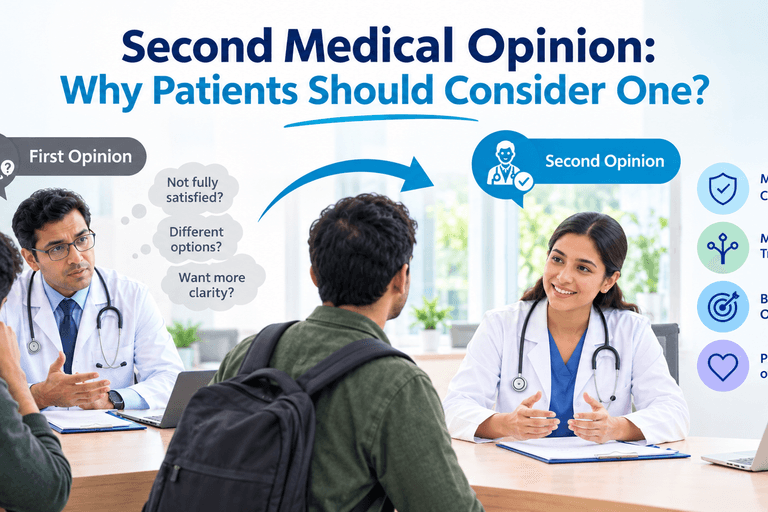
The world of healthcare is evolving at a fast pace. In the olden days, accessing healthcare used to mean a visit to a hospital or clinic, waiting in line, filling up forms, and traveling long distances. Today, digital health is making healthcare services much more accessible through technology.
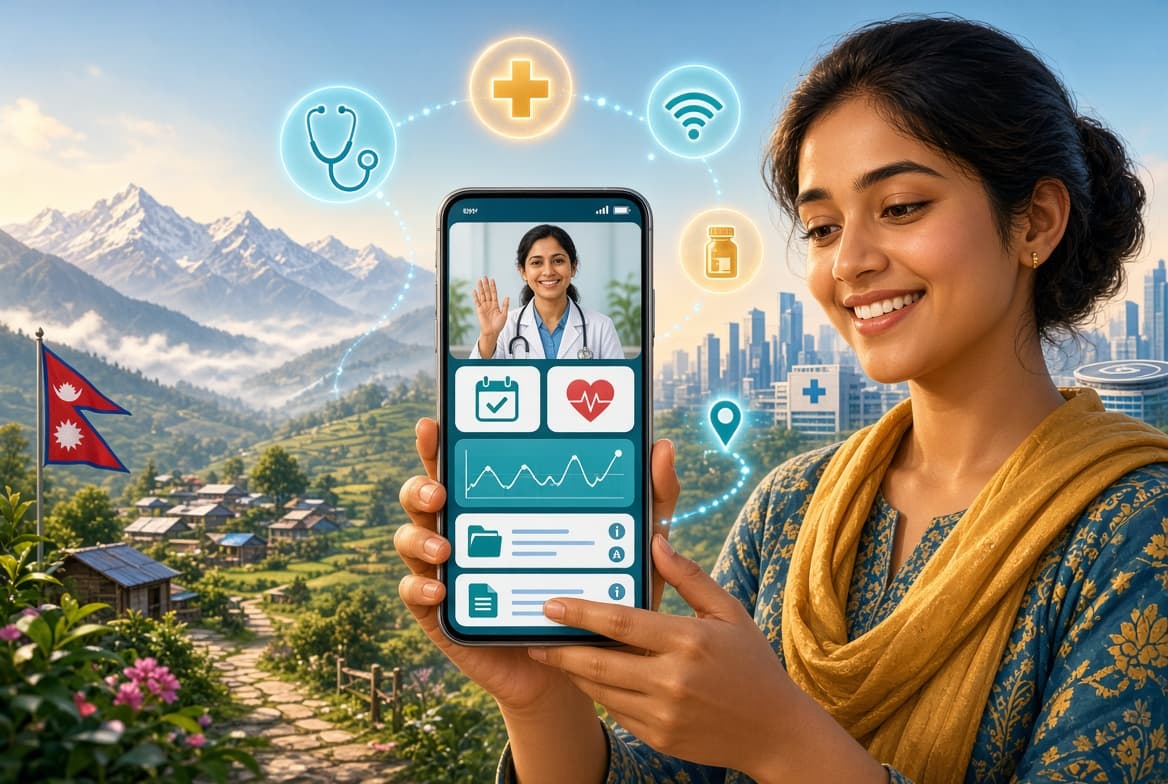
Patients now have the ability to access healthcare services using smartphones, computers, or any other digital medium available to them. Starting from scheduling an appointment to receiving health-related information, technology is enabling patients to access certain aspects of their healthcare through the use of digital mediums.
Such an advancement is particularly important in developing countries such as Nepal, where there could be geographical or infrastructural issues when it comes to accessing specialists and hospitals.
What Are Digital Health Systems?
A digital health system makes use of technology in providing, managing, or supporting healthcare services.
A digital health system can be any number of tools and services including the following:
- Online doctor visits
- Appointment scheduling online
- Electronic health records
- Prescription online
- Apps on health and wellness
- Online payments
- Telemedicine services
- Access to medical reports online
- Remote monitors
- Health education platforms
In summary, digital health means making use of technology throughout the process of healthcare provision.
Why Are Digital Health Systems Gaining Popularity?
One key factor behind the increasing popularity of digital healthcare is its convenience.
These days, people use their phones for banking, shopping, education, communication, and numerous other tasks. Similarly, digital health is becoming part of people’s lives.
A patient might need a health service that is:
- Accessible
- Convenient to use
- Outside regular business hours
- Easy to schedule
- Time-saving
- Easier to manage
Digital health systems can meet many of these needs.
In Nepal, they are especially helpful for patients outside big cities, allowing them to consult doctors online and avoid the time and cost of traveling to places like Kathmandu.
Advantages of Using Digital Health Systems
There are various advantages that digital healthcare can provide for patients, healthcare practitioners, and healthcare institutions as well.
Let's look at some of the most important advantages.
1. Healthcare Can Be More Convenient
The convenience of digital healthcare systems is their main benefit.
Think about the situation when you need to consult a physician, but have a lot of other things to do at work, study, household duties, etc. Going to a clinic and waiting until it’s your turn can take you a lot of time.
Using an appropriate online healthcare service, you will be able to schedule consultations through your mobile device or personal computer.
Some of the tasks that can become more convenient because of digital systems include the following:
- Booking appointments
- Checking appointment details
- Receiving reminders
- Accessing medical information
- Communicating with healthcare providers
- Managing follow-up appointments
However, convenience should never replace medical safety. If you have a serious or emergency condition, you should seek appropriate urgent medical care rather than relying on an online service.
2. Saves Time
Healthcare may be much broader than the time spent with the physician.
Typically, a regular appointment consists of such stages as traveling to the clinic, registration, waiting, visiting the doctor, collecting paperwork or medications, and traveling back home.
Digital healthcare can cut down the number of these actions.
Thus, the patient will be able to schedule an appointment using online services and choose an available time prior to visiting the healthcare facility.
This will help to avoid extra waiting.
3. Makes Appointment Booking Easier
Calling a clinic to find an available appointment can sometimes be difficult, especially during busy hours.
An online appointment system can provide a simpler way to book a consultation.
Depending on the platform, patients may be able to:
- Search for a doctor
- View available appointment times
- Select a preferred date
- Book an appointment
- Receive confirmation
- Get reminders
- Reschedule when available
This gives patients more control over their appointment planning.
For healthcare providers, digital scheduling can also help organize patient appointments and reduce administrative work.
4. Better Access to Health Information
The digital healthcare system provides an opportunity for individuals to get their hands on valuable medical information.
For instance, depending on the healthcare system, an individual is likely to have access to:
- Medical records
- Medication details
- Appointment records
- Test results
- Medical records
However, one must use caution while using online health information since not all websites and even posts on social media are sources of reliable medical information.
Information must always come from reputable healthcare professionals and sources.
5. Helps With Follow-Up Care
Follow-up is an essential part of treatment. Following treatment with a doctor, there could be a necessity for additional visits to talk about progress, medications, test results, and other relevant information.
Some times, the follow-up visit might not even require an actual physical visit from the patient's side. There can be digital means to facilitate the process of follow-up care.
For instance, one can easily schedule a follow-up visit on the internet and even correspond with his healthcare provider
6. Reduces Paperwork
The traditional healthcare system requires paper forms, reports, prescriptions, and other types of documents. A digital system can minimize the use of such paper-based procedures.Electronic records can assist health care organizations in the storage and organization of patients' data in digital form.
This way, health care practitioners will be able to access the necessary information easily.Also, electronic records minimize the chances of losing a piece of paper.
On the other hand, electronic records need to be well-protected. Therefore, there is a necessity to have proper security and privacy measures in place.
Digital Healthcare in Nepal
Digital healthcare has a special place in Nepal.
Nepal is a country of varied geography, which includes cities, rural areas, mountains, hills, and remote locations. For certain individuals, access to healthcare facilities could prove challenging due to distance, transport, cost, and presence of specialists.
Digital health solutions can offer yet another avenue for patients to communicate with healthcare professionals. In this regard, a person residing in an area other than Kathmandu can have a virtual consultation for his/her health issue instead of going straight to the capital city.
For digital healthcare to be truly useful, technology must be supported by trained healthcare professionals, reliable systems, patient education, and appropriate privacy protections. Nevertheless, there are obstacles faced by Nepal in implementing digital healthcare.
Is Digital Healthcare Safe?
There are many benefits of digital healthcare; however, patients should approach it cautiously.
While considering to use an online healthcare platform, consider the following:
Identify the healthcare provider
Verify that you have identified the provider of the medical services. Research information about the qualifications and professional registration of the doctor.
Guard your personal information
Healthcare data can be very personal and sensitive. Never provide your medical records, identification documents, or any personal information on random websites and unknown online healthcare platforms.
Choose the trustworthy platforms
Select the reputable online healthcare providers or platforms with information on their services and healthcare professionals.
Understand when online consultation is not sufficient
In some cases, an online consultation may not be sufficient and requires an in-person examination and immediate assistance. Never postpone medical attention because of your convenience.
Do not believe every health-related claim from the Internet
There is plenty of misleading information available on social media pages and websites.
Digital Health Against Traditional Healthcare
In some instances, the two concepts of digital healthcare and traditional healthcare must not be seen as rivals.
Rather, they could complement each other in certain cases.
For example:
Digital healthcare can help with:
- Appointment scheduling
- First contact
- Consultation services
- Follow-up treatments
- Record keeping
- Healthcare education
While traditional healthcare is crucial for:
- Physical check-ups
- Emergency care
- Surgeries
- Laboratory tests
- Imaging
- Clinical procedures
- Diseases that necessitate physical care
The right choice depends on the patient's health needs.
The Future of Digital Healthcare
The development of digital healthcare is set to continue as technology improves. Artificial intelligence, wearable devices, electronic health records, telemedicine, and mobile health apps could increasingly become integrated.
In the future, patients might benefit from even more opportunities for scheduling appointments, obtaining health information, communicating with healthcare professionals, and monitoring their health measurements.
The future of digital healthcare will also rely on the following:
- Internet availability
- Training of healthcare professionals
- Effective data protection
- Affordable technology
- Digital literacy
- Patient trust
- Healthcare policies
The aim must not only be to make healthcare more digital. It needs to be more accessible, safer, effective, and patient-oriented.
Frequently Asked Questions About Digital Health Systems
What is a digital health system?
A digital health system uses technology to provide or support healthcare services. Examples include telemedicine, online appointment booking, electronic health records, health apps, and digital medical reports.
What are the main advantages of digital healthcare?
The main advantages can include greater convenience, easier appointment booking, reduced travel, improved access to certain healthcare services, easier communication, and better access to health information.
Can digital healthcare replace hospitals?
No. Digital healthcare cannot replace hospitals or all in-person medical services. Emergencies, surgeries, physical examinations, diagnostic procedures, and many other treatments require physical healthcare facilities.
Is online doctor consultation useful?
Online doctor consultations can be useful for certain health concerns, follow-up appointments, and situations where remote consultation is medically appropriate. A healthcare professional can determine whether an in-person visit is necessary.
Is digital healthcare available in Nepal?
Digital healthcare services are available in Nepal, including online consultations and digital appointment systems. Availability varies between providers and locations.
How can I protect my health information online?
Use trusted healthcare platforms, protect your account credentials, avoid sharing sensitive information on unknown websites, and review the platform's privacy and security practices.
Final Thoughts
Digital healthcare systems are transforming how people interact with healthcare. Online consultations, telemedicine, digitized medical records, and health apps make many services more convenient and accessible.
In Nepal, digital healthcare is especially useful when distance, travel time, or limited access to specialists creates barriers. Patients can connect with doctors without long journeys.
However, digital healthcare has limits—not every service can be delivered online, and technology should never delay emergency or necessary in-person care. The best approach is to use digital systems as part of the wider healthcare system, helping people stay connected, manage appointments, access information, and communicate with doctors more easily.
Technology is making healthcare more accessible, yet quality care still depends on qualified professionals and safe systems. As digital healthcare grows, the smartphone is becoming an increasingly valuable everyday health tool.