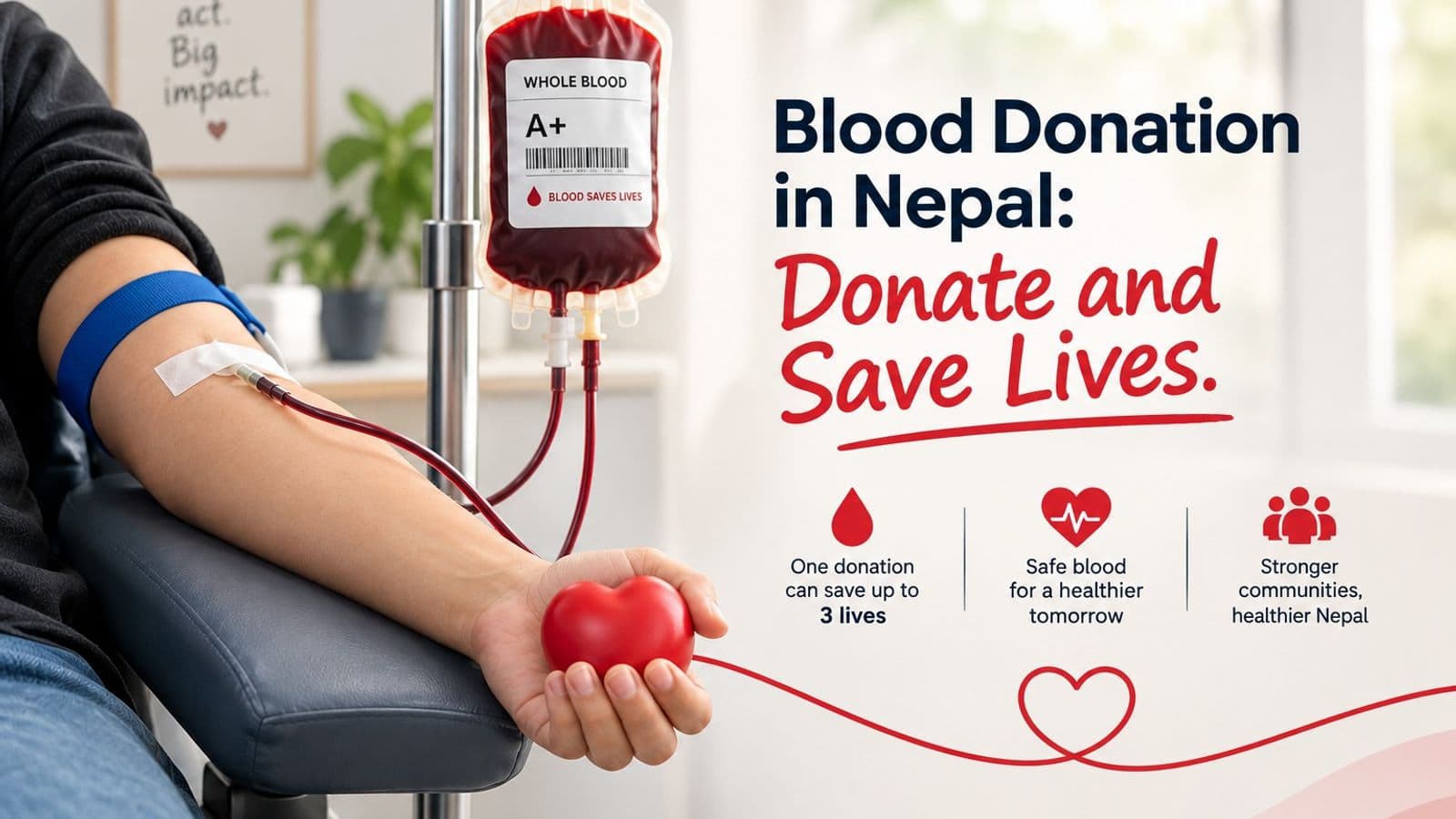
Blood is one of the most precious donations for humanity. In case of an emergency, surgery, severe labor during pregnancy, or another blood loss situation, blood transfusion may be lifesaving. That is why blood donation in Nepal is a responsible act to help accident victims, surgery patients, and mothers who lost a lot of blood during delivery.
Blood cannot be produced artificially; it can only be donated by healthy blood donors. According to the World Health Organization, regular unpaid voluntary blood donors are the cornerstone of a safe blood transfusion system.
In Nepal, blood donation is organized by blood banks, hospitals, blood transfusion centers, and blood donation camps. The Nepal Red Cross Society coordinates blood donation activities and maintains a list of blood centers in the Kathmandu Valley and other regions.
To donate blood, one needs to know the rules, prepare for donation, visit the chosen facility, and complete post-donation recommendations.
Why Is Blood Donation in Nepal Important??
Blood transfusion is required in a variety of different cases, depending on the patient’s condition. In particular, blood is needed in the occurrence of an accident, surgery, disease, serious anemia, or pregnancy and childbirth-related problems.
Not only emergency cases require blood transfusions. Organized blood donation allows meeting the needs of hospitals and patients with chronic diseases needing regular blood transfusions. According to WHO, blood transfusions are required for trauma, surgery, pregnancy and childbirth complications, severe anemia, cancer therapy, and several chronic blood diseases.
Blood Cannot Be Stored Forever
This is one of the reasons why whole blood or blood products are only stored temporarily. They require a constant supply as opposed to simply being available in the case of a blood emergency.
Regular voluntary blood donation ensures blood availability and helps to meet the demand. The World Health Organization promotes regular unpaid voluntary blood donation.
One Donation Could Save More Than One Life
The blood that is donated can be separated into its various components. Each of these components can be used to save a different patient's life. The World Health Organization's 2026 World Blood Donor Day theme indicates that one donation could save up to three lives if the blood is separated into its components and utilized appropriately.
Who Can Donate Blood?
Not everyone is eligible to give blood at any time. Blood donation centers ensure that both the person donating blood and the person receiving blood are safe.
There are several requirements for donating blood. These requirements may vary slightly from country to country and from blood service to blood service but most blood services have a standard set of requirements. The World Health Organization (WHO) has a few guidelines on blood donation. The guidelines suggest that a person should be in good health, should be aged between 18 and 65 years, and should weigh at least 50 kg. However, different countries have slightly different requirements.
A Potential Donor Should Be Healthy
A potential blood donor should be feeling well on the day of donation. They will also be asked a series of screening questions to determine whether they are eligible to donate. People suffering from any illness or infection may be asked to return on another day after they have recovered from their illness or infection. The screening process will also involve asking the potential donor whether they are taking any medication or have recently traveled abroad.
Age and Weight Requirements
Age and weight requirements are used to help protect the donor's health; therefore, check with the blood bank or donation centre to which you plan to donate blood.
Do not assume that you qualify by applying a single rule. In addition, the decision to accept or reject your donation rests with the blood service, so you should always follow their advice, even if you feel you should be able to donate.
Hemoglobin and General Health Checks
Blood donation services may take readings of hemoglobin and other basic health indicators before accepting a donation. This helps to establish whether donating blood is appropriate for you at that time.
If your hemoglobin is too low or you have any other health concerns, you may be asked to delay donating blood. This is a safety measure and not a failure.
Who Should Not Donate Blood?
There are particular cases when a person cannot or should not make blood donation. The list below is not exhaustive. The list may vary slightly depending on the blood donation service.
You may be asked to defer your donation if:
- You are not feeling well
- You have anemia, low hemoglobin
- You have certain infections or diseases
- You are taking certain medications
- You are pregnant or have recently given birth
- You have recently undergone some surgeries or cosmetic procedures
You have a health or travel history that requires temporary deferral.
According to WHO, this screening is in place to ensure the safety of both the blood donor and the recipient.
If you are unsure whether you can donate blood, it is best to contact the blood donation center.
What Happens During Blood Donation?
For many first-time donors, the uncertainty of what will happen can make donation a stressful experience. In fact, the donation process is simple.
Step 1: Registration
Upon arrival at a blood donation centre or blood donation camp, you will typically be asked to register and provide some basic personal information.
You may also be asked questions about your general health, any medications you are taking, any past medical conditions, recent travel, and other factors that could potentially affect your ability to donate blood.
Step 2: Health Screening
You will be evaluated by a trained health professional to determine whether you are eligible to donate.
Depending on the practices of the blood service, this may involve measuring your pulse rate, blood pressure, weight, and/or haemoglobin. According to WHO , these tests are carried out to ensure the safety of the blood donor.
Step 3: Blood Collection
If you are approved to donate, you will be asked to sit or lie down while a trained health professional withdraws blood using sterile equipment.
The blood collection process itself is typically fairly quick. According to WHO , whole-blood donation typically takes around 10 minutes, although the entire donation process will take longer due the time needed for registration, screening, and recovery.
Step 4: Rest and Refreshment
After donating, you will be asked to rest for a short time and eat refreshments.
Drinking fluids will help you replace the amount of fluid you have lost during donation. WHO recommends that you drink plenty of fluids during the next 24 hours after donating blood and avoid strenuous exercise for the remainder of the day.

How to Prepare for Blood Donation?
Good preparation can make the donation less stressful
Get enough rest
Avoid donating blood if you are tired or ill. Getting sufficient rest promotes good health.
Eat a healthy diet
Avoid donating blood on an empty stomach. Follow the directions received from the blood donation service regarding pre-donation meals and beverages.
Drink enough water
It is important to stay hydrated. Water is needed during donation to keep the body balanced.
Inform the health worker about your health condition
It is important to answer the questions honestly. This helps the blood donation service provide safe blood to the recipient.
You should always disclose to the health worker any of the following:
• Medical conditions
• Medications
• Recent illness
• Travels
• Other information the health worker asks
Note that blood donation is a safe procedure that requires donors to give healthy blood to those in need.
What Should You Do After Donating Blood?
After donation, take some time to rest. Avoid strenuous physical activity for the remainder of the day.
Drink Plenty of Fluids
Continue to drink fluids after donation; your body will naturally replenish the fluids you have donated.
Eat a Normal Meal
Have a normal meal and follow any advice provided by the donation center.
Take It Easy
You can usually return to normal, everyday activities after donation; however, you should avoid heavy exercise or strenuous physical activity for the rest of the day according to WHO guidance.
Tell the Staff If You Feel Unwell
If you feel dizzy, weak or unwell after donating, tell the blood donation staff. They will be able to help you and advise you of what to do.
Is Blood Donation Safe?
For eligible blood donors, blood donation is a safe procedure carried out by trained personnel using sterile equipment.
Blood donation centres carry out screening of eligible blood donors before collecting blood. The equipment used to collect blood from blood donors is designed to collect blood safely and only for one-time use.
Blood safety is also a concern for the blood recipient. According to the World Health Organization, blood banks should test donated blood for human immunodeficiency virus, hepatitis B, hepatitis C, and syphilis before use to prevent disease transmission.
Does Blood Donation Hurt?
Some people fear pain. In most cases, you feel only the brief sting of the needle as it goes into your arm.
If you're nervous, tell the health care professional. They will talk you through it and help you feel more relaxed.
Common Myths About Blood Donation
There are many urban myths about donating blood. Let’s debunk some of the most common misconceptions and set the record straight.
Myth1: Donating Blood Makes You Permanently Weak
In most cases, the liquid part of the blood is restored in the body of the donor almost immediately after donating. As for the formation of new blood cells, this process is gradual but definitely occurs.
Of course, if you started to feel tired right after donating, you should take it easy for a while and listen to your body. If you continue to experience any health issues after donating blood, consult a medical professional.
Myth2: You Cannot Donate Blood More Than Once
Actually, it is possible to donate blood more than once in a lifetime. However, one should follow the recommendations of their local blood donation services and allow their bodies enough time to recover between donations.
The World Health Organization (WHO) reports that the frequency of blood donation depends on the country and the local blood services.
Myth3: Blood Donation Is Only Necessary During Disasters
Donating blood is important throughout the year. Patients may need blood transfusions during pregnancy, after an accident, or surgery. They may have severe anemia or cancer and need blood or its components to recover.
Myth4: Every Person Can Donate Blood Anytime
It is a common misconception because there are contraindications for blood donation. Anyone who wants to donate blood must meet certain criteria. The requirements exist to ensure the safety of donors and recipients.
Where Can You Donate Blood in Nepal?
Blood donation opportunities are available via blood banks, hospitals, blood transfusion centers and organized donation camps.
Nepal Red Cross Society (NRCS) has information about blood donation in Nepal. Their website states that the Central Blood Bank in Soalteemod, Kathmandu provides emergency blood service 24/7. It further lists the regional blood transfusion centers and blood banks in different parts of Nepal.
If you do not live in the Kathmandu Valley, then you may want to contact the nearest blood bank, hospital blood unit or regional blood transfusion center to find out about donation arrangements.
Why Voluntary Blood Donation Matters in Nepal?
A reliable blood supply needs consistent donors. Waiting for relatives or friends to need blood can be taxing on an individual.
Voluntary blood donation can create a culture of availability if blood is required by any individual.
WHO considers regular voluntary unpaid blood donations to be a vital pillar in the global safe blood supply.
Young People Can Help Achieve a Culture of Voluntary Donation
Younger adults who fit their local area's blood donation criteria can help create a culture of voluntary blood donation.
Schools, colleges, places of work, community groups, and organizations can help create awareness of blood donation and ensure those that can give blood get involved with organized donation events.
It is not enough to just organize blood donation days, creating awareness about voluntary blood donation is essential to ensuring a ready supply of blood.
Blood Donation and Community Building
Blood donation is not only an act of charity but a chance to show solidarity with others.
The person who receives the donation may never know the donor. They can be anyone; a child, an elderly person, a traveler, an injured person, a mother, or a father. This is why regular voluntary blood donation is essential to a country's healthcare.
If more people that are eligible to give blood are educated about donating blood and its effects, communities will be better equipped regarding blood transfusion services.
Families Can Promote Blood Donation
Families can help achieve blood donation by creating awareness on the topic. Family members can learn together about blood donation.
Parents and older family members can remind their children and other close family members who are eligible to give blood to learn about their local requirements and to take into consideration that not everyone is eligible to give blood at all times.
Parents can encourage children and other close family members not to pressure eligible blood donors but remind them to contact staff at the relevant blood donation agencies and facilities to check if they are eligible to donate blood. Individuals considering blood donation must understand the importance of blood donation, as well as the consequences of their eligibility.
Organizations Can Promote Blood Donation
Schools, colleges, places of work, community groups, and organizations can promote and support blood donation in multiple ways.
They can spread the word about upcoming blood donation camps, educate their members about blood donation, and ensure that when these organizations are involved with blood donation, the relevant blood transfusion services are used.
These groups and organizations must ensure that blood donation events held follow the guidelines of the relevant blood transfusion service.
What If You Cannot Donate Blood?
Not everyone can make a blood donation, and that is totally fine.
There are many factors that contribute to why someone might not be able to give blood at some point in their life, whether it be illness, taking medications, being pregnant, having an insufficient amount of hemoglobin, having recently been on a medical procedure, or other various reasons.
While you may not be able to give blood, you can help spread awareness about blood donation and encourage those who are able to give blood to do so.
It is important to remember to prioritize your health above all else, and to listen to the advice of trained medical professionals.
Conclusion
Blood donation is a humanitarian act that allows healthy and eligible blood donors to help those who have accidents, undergo surgery or pregnancy, have serious anemia or conditions such as cancer, and require blood transfusions at any given moment.
Ensuring the constant supply of high-quality blood in Nepal requires free and regular donations and the maintenance of well-organized systems by authorized blood transfusion services, which the World Health Organization strongly supports.
When you decide to donate blood in Nepal, it is necessary to check all requirements imposed by your local blood transfusion service, honestly answer the questions asked, and listen closely to the recommendations of medical workers.
So that you can help those who cannot do without a blood transfusion, you should donate blood when you are eligible. If you want to learn more about staying healthy, visit our guide on Preventive Healthcare in Nepal for practical health tips.
Frequently Asked Questions
How often can I donate blood?
Depending on the rules of the blood service and the person's health, there are varying intervals between donations at different blood donation services. Follow your local blood donation center's instructions.
Can I donate blood if I am sick?
If you are sick, you should not donate blood. Inform the staff at the blood donation center about your illness and wait until you have recovered.
Is blood donation safe?
For most eligible donors, blood donation is a safe procedure when performed by trained and competent staff using sterile, single-use equipment. Donors are screened to ensure their safety and the safety of the blood recipients.
Is donated blood tested?
Yes. WHO recommends testing all donated blood for transfusion-transmissible infections such as HIV, hepatitis B, hepatitis C, and syphilis.
Can I donate blood if I take medication?
The eligibility of a person taking medication for blood donation depends on the medication. However, some drugs may not affect a person's ability to donate blood. Therefore, it is necessary to inform the blood donation center staff about all medications. They will tell you if you can donate blood.
Where can I donate blood in Nepal?
You can donate blood in Nepal at a blood bank, hospital blood unit, blood transfusion center, or an authorized blood donation organization. The Nepal Red Cross Society provides a list of blood donation centers and organizations in the Kathmandu Valley and other areas.