Introduction
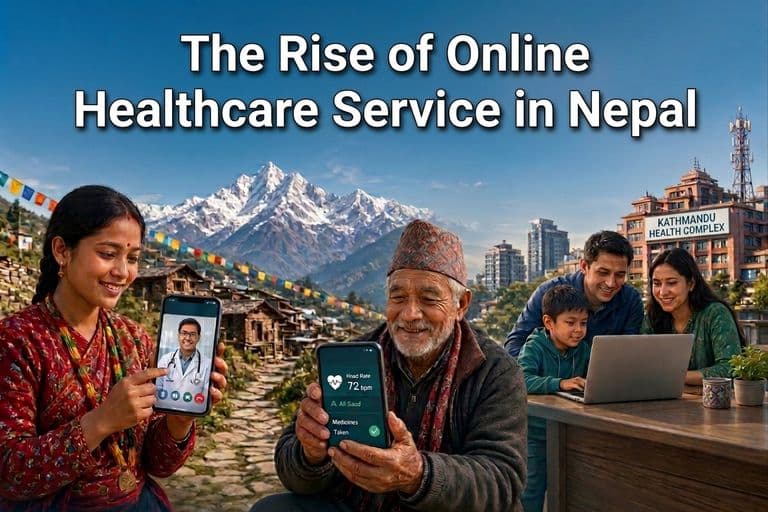
Technology in healthcare in Nepal is transforming the way patients discover doctors, seek medical advice, access information, manage their health needs, and more. In the past, a person in rural Nepal could not afford to take a bus, walk, or hike to a hospital or specialist several hours away. With smartphones, the Internet, telemedicine, digital health records, and other technologies, health services are becoming more accessible to people.
Nepal has a unique geography. Mountains, hills, and remote communities can make it difficult to build and reach healthcare facilities. Technology cannot solve every healthcare problem, but it can reduce distance, save time, and connect patients with healthcare professionals.
From online doctor consultation to digital health records, technology is changing the lives of people and bringing healthcare services to those who need them.
Why Technology in Healthcare Is a Challenge in Nepal
Access to healthcare means the ability to obtain the needed care for an individual or a population. A number of factors contribute to challenges in healthcare access in Nepal.
Some of the most common barriers to healthcare access in Nepal are:
Geography: Medical facilities, hospitals, and specialist doctors are far away for isolated communities and people living in mountainous regions of Nepal.
Inequalities: Healthcare resources, facilities, and professionals are unevenly distributed across the country, with a significant concentration in urban regions of Nepal.
Cost: A visit to a healthcare facility may include multiple costs for transportation, treatment, consultations, medications, and more.
Technology offers an alternative way to bridge the gap in healthcare access. Instead of requiring every patient to access their care, some medical services may be brought to the individual.
Improvements That Technology Has Made in Healthcare
As technology in healthcare in Nepal has been improving, there are several changes that has been made by the techonlogy and some of those changes are listed below:
1. Telemedicine Brings Doctors Closer to Patients
One of the most successful examples of technology in healthcare is telemedicine.
Telemedicine allows patients to communicate with their doctor outside the traditional hospital or clinic setting. Through telephone or video conferencing, patients may be able to consult doctors without having to wait for a physical examination or in-clinic diagnosis. For isolated communities and individuals, telemedicine may help to find healthcare solutions without having to travel.
Telemedicine may be beneficial in circumstances when the patient does not require advanced medical procedures. The technology may help the patient and the doctor to establish a diagnosis or determine whether a particular medical condition is present.
Although telemedicine may not be appropriate for all health concerns, the technology may still be beneficial in circumstances when the doctor needs to follow up with the patient after a physical examination. Through online consultation, the doctor may be able to determine whether the patient is recovering properly after a medical procedure.
2. Smartphones Are Improving Access to Health Information
Smartphones are a powerful tool in modern society that is enabling individuals to gain access to a large amount of information. Within the healthcare industry, smartphones are playing a major role in providing patients with the opportunity to obtain health information and connect with healthcare professionals and facilities.
Individuals may use search engines to look for health-related information. In addition, healthcare information may be spread over the Internet and social media.
Through online forums, blogs, and social media, patients may be able to learn about:
- Healthy nutrition
- Vaccines
- Hygiene
- Common illness
- Pregnancy and postpartum care
- First-aid
- Preventive healthcare
Access to health information may empower individuals to recognize symptoms of illnesses and seek professional medical help. However, it is important to keep in mind that not all medical information on the Internet is evidence-based. Reputable resources should be used when searching for health-related information, and medical advice should not replace advice from a healthcare professional.
3. Digital Health Records Can Improve Patient Care
Maintaining paper medical records can be a tedious task. Documents can get lost, misplaced, and require additional effort when transferred from one healthcare facility to another.
A digital health record is an electronic version of a patient’s paper health record.
By storing a patient’s health information digitally, doctors and medical staff can have better access to the patient’s health history. Electronic health records can be helpful in a number of situations, including:
If the patient has an emergency and requires urgent care.
The patient sees another doctor and needs to provide medical history for diagnostic reference.
The patient needs to keep track of medical history, medications, and other health information.
In addition to helping individual patients, electronic health records can be beneficial for hospital administrators. By digitizing medical records, hospital administrators can eliminate paper medical records and organize information easier.
It is also important to ensure that patient information is appropriately secured and confidential.
4. Technology Helps People in Rural Areas
Healthcare technology can be particularly beneficial for individuals and families living in rural areas of Nepal. Rural populations usually do not have the same access to specialists as the urban population.
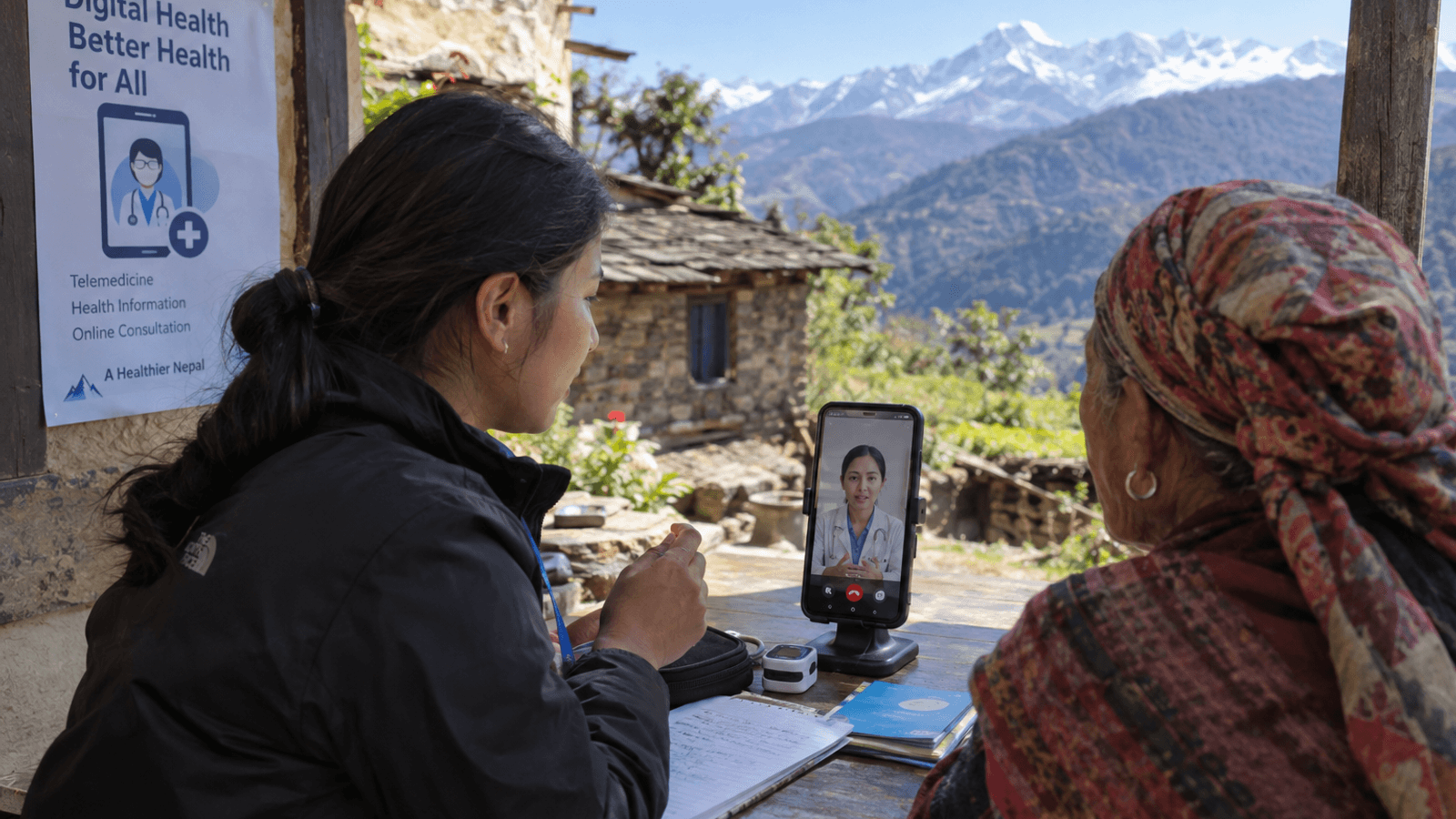
However, through technology, remote health services may be delivered to patients and their families. For instance, health workers and doctors in rural Nepal may be able to communicate with specialists in major cities. Doctors may be able to provide online consultation and recommendations for patient care.
Technology in healthcare can be helpful for rural communities, but it should be regarded as a complement to the existing healthcare system. It is not sufficient for rural health workers to rely solely on technology. Rather, the technology can provide an additional source of information for the doctor.
This way, the doctor can utilize expertise from a specialist in the capital city of Nepal.
5. Online Doctor Consultation Saves Time
Online doctor consultation is one of the most sought-after healthcare technologies in Nepal. Instead of spending hours in traffic to get to a healthcare facility, a simple online video call may be sufficient for some medical concerns.
Online doctor consultation is particularly beneficial for:
- Individuals living in remote areas
- Elderly patients
- Individuals with physical limitations
- Follow-up patient consultations that do not require in-depth diagnosis or laboratory tests
- Families that are unable to visit a healthcare facility due to time constraints
- Patients seeking general medical advice or recommendations
In addition to saving time, online doctor consultation may also be cost-effective for the patient. By eliminating the need to visit a healthcare facility, the patient saves on transportation and other associated costs.
With that being said, it is important for the patient to understand the limitations of online consultation. If the doctor suspects that the patient has a medical concern that requires physical examination, the patient should still schedule a visit to the healthcare facility.
6. Digital Payments Can Make Healthcare More Convenient
Digital payment systems are transforming the way individuals conduct financial transactions.
Instead of using cash to pay for a healthcare service, a patient may be able to use a mobile or digital wallet to make a payment. The advantage of a digital wallet is that it is more convenient than carrying cash and makes a financial transaction easier.
In addition to making it easier for patients to pay their bills, digital payments can also complement other healthcare technologies, including online doctor consultation.
7. Health Apps Can Support Everyday Health Management
Mobile health applications are useful tools for maintaining health records, making doctor appointments, tracking nutritional intake and physical activity, and more.
Depending on a health application, an individual may be able to:
- Set reminders for health needs, such as taking medication
- Track personal health indicators
- Organize medical information
- Make health-related transactions
For instance, an individual who regularly takes medication can set a daily reminder to ensure that the medication is taken on time. Similarly, a health app can be beneficial for tracking an individual’s health indicators, such as weight, blood pressure, and other vital signs.
Although health apps can be helpful for day-to-day health management, individuals should be careful not to use health apps as a substitute for professional medical advice.
8. Artificial Intelligence Could Support Healthcare
Artificial intelligence, or AI, refers to technology’s ability to mimic human intellectual functions, such as visual perception, speech recognition, and decision-making. AI is a field that is gaining more attention in the healthcare industry. In fact, AI can support doctors and other healthcare professionals in a number of ways, including analyzing radiological images, organizing medical information, and more.
In Nepal, AI could be utilized to support doctors, especially in the context of limited resources in rural Nepal. For instance, artificial intelligence could assist doctors in analyzing radiological images with greater accuracy. At the same time, it is important for AI to be used responsibly and ethically.
Doctors and other healthcare professionals should use AI as a tool to support patient care, not to replace their own skills and expertise. It should be noted that medical mistakes can be costly and detrimental to the patient’s health. In addition, ethical concerns regarding patient privacy should be taken into account before utilizing AI in healthcare.
9. Technology Can Improve Health Education
Health education is crucial for preventing health problems and maintaining health and wellness. Technology can help to spread health-related information and educate people on a number of health concerns.
Government organizations, hospital administrators, social workers, schools, and other entities can use the power of the Internet and smartphones to educate people on a number of health concerns.
For instance, health education can be widely accessible through websites and social media. Communities can be encouraged to learn about specific health concerns through digital campaigns. A number of health-related activities can be promoted, such as:
- Vaccination
- Drinking clean water
- Maintaining hand hygiene
- Healthy nutrition
- Mental health
- Maternal health
- Disease prevention
- Health emergency preparedness
By using technology to spread health education and awareness, a number of communities can be informed and empowered to prevent health concerns.
Healthcare information should be easy to understand, relevant to the audience, and available in different languages.
Challenges of Using Technology in Healthcare System in Nepal
There are numerous benefits associated with utilizing technology in healthcare. However, there are also a number of limitations that should be taken into consideration.
Internet Access
Internet access is not easily available everywhere.
Digital Literacy
Not everyone has the same level of digital literacy.
Cost of Devices
Smartphones and other technologies can be costly.
Data Privacy
Medical information should be kept confidential.
Quality of Online Information
The information on the Internet can vary in quality.
Because of these challenges, healthcare technology should be introduced in combination with better healthcare infrastructure, education, and access to the Internet and digital devices.
The Future of Digital Healthcare in Nepal
The future of healthcare in Nepal is bright with digital technologies.
Better healthcare access for isolated communities and better organization of patient health records can be achieved through telemedicine and digital health records, respectively. Healthcare services can be more available and convenient with mobile health technologies and online services. In the future, wearable devices may provide additional health insights. Artificial intelligence can also support healthcare professionals in making better clinical decisions.
Technology should enhance the healthcare experience and empower patients. But, it should not create additional barriers for people seeking healthcare services.
Conclusion
Technology is enabling healthcare services for more individuals in Nepal. Telemedicine can connect patients with doctors, smartphones can provide health information, digital records can organize medical data, and online services can bring a number of benefits.
These technologies are particularly beneficial for patients living far away from hospitals and specialists. At the same time, there are a number of limitations that need to be addressed, such as Internet access and quality of information on the Internet.
Nepal’s healthcare system still needs better healthcare facilities, increased availability of medicines and healthcare professionals, and improved public health programs. Technology cannot replace the basic needs of the healthcare system, but it can complement them. With responsible planning and equal access to digital tools, technology can help to bring healthcare services closer to more individuals in Nepal. The future of healthcare is not about advanced technology or artificial intelligence, but about technology that makes quality healthcare easier to access.