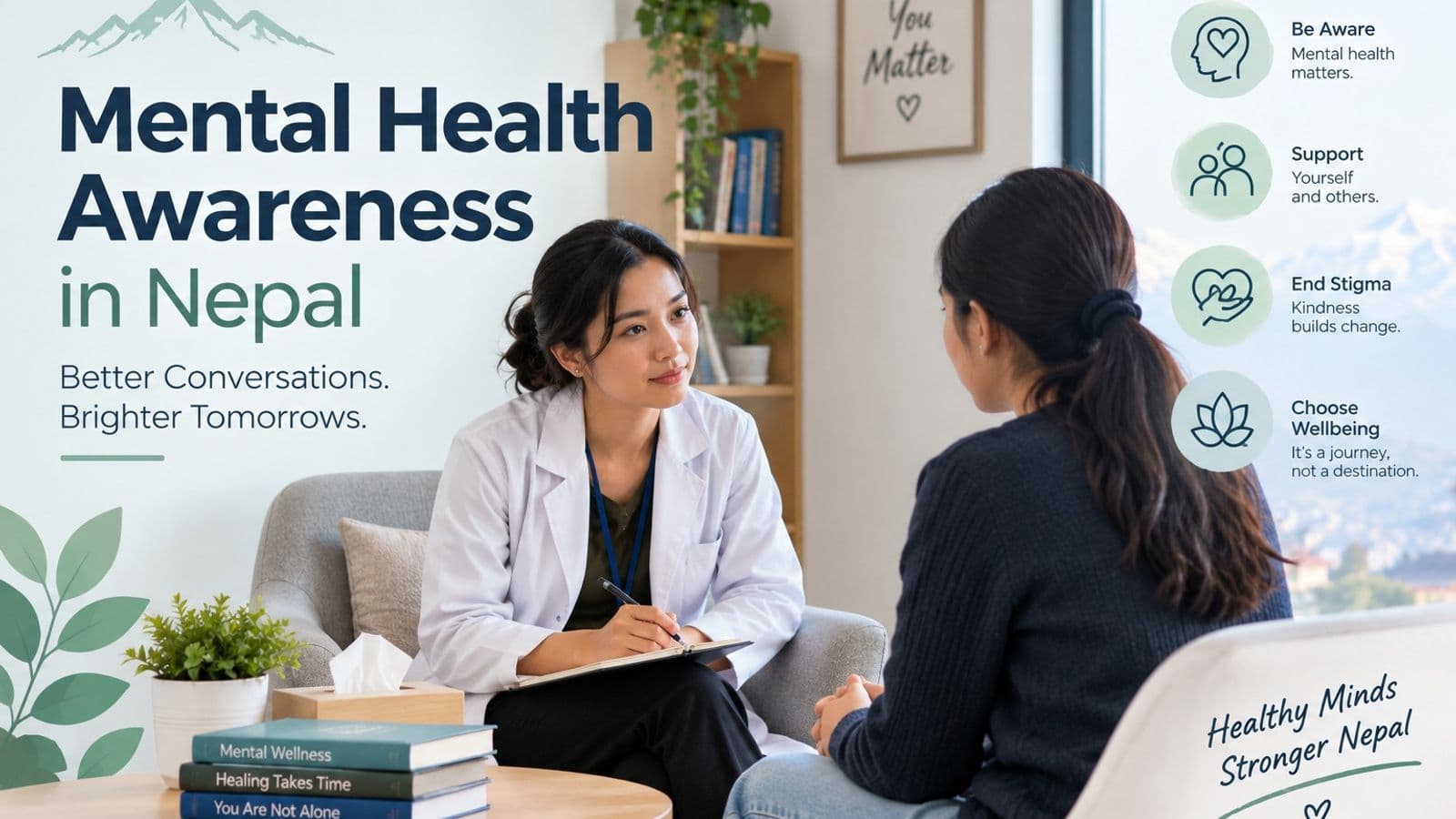
Mental health is a vital part of overall health, but it is not discussed openly enough in many communities. Mental Health Awareness in Nepal is important because people need to understand that emotional and psychological well-being deserves the attention as physical health. People think they are fine discussing fever, diabetes, or blood pressure, but when it comes to stress, anxiety, depression, loneliness, or some other emotional issues people have trouble having these talks. Discussing mental health can help dispel myths, get people the appropriate treatment, and help build a more caring and supportive community.
Mental health issues can occur at any age. Everyone can experience stress, anxiety, or depression in certain circumstances. So, students can struggle with academic life and exam fears, young people can have a hard time with career choices, parents might experience anxiety over their child’s health, or old people can become depressed and lonely due to various reasons. Hence mental health problems are not exclusive to a particular group of people.
The WHO reported that Nepal has made considerable progress in mainstreaming mental health within the health system and community development structures. Moreover, Nepal has launched a national mental health campaign in 2025. The purpose of the campaign is to break the stigma and make the citizens informed about where and how they can seek help.
In addition, normalizing the conversation around mental health can help a great deal. Although it certainly will not solve all the problems in one go, having someone to talk to a reliable source can help people deal with their issues. And trusting an expert medical advisor can help them take the right step.
What Is Mental Health?
Mental health means the state of mind of a person and conditions related to it, as well as the emotional and social aspects of individual well-being. It refers to a person’s thoughts, feelings, behaviors, response to everyday life challenges, interpersonal interactions, and decision-making.
It should be stressed that good mental health is not a permanent state; everyone has moments when they feel bad about themselves or experience negative emotions like anxiety, disappointment, or sadness. Thus, a minor depressive state before exams or grief after a loss is normal and expected.
However, if prolonged sadness, anxiety, or other negative feelings interfere with daily life, it is necessary to contact a specialist for help. In addition, it is vital not to ignore mental health issues since they are often strongly related to physical wellbeing. Lack of sleep, poor nutrition, and an unhealthy lifestyle, chronic diseases, social and work environment, educational and career problems, financial difficulties, and many other factors can trigger a mental health disorder.
Why Mental Health Awareness in Nepal Matters?
Mental health awareness helps individuals recognize the importance of their mental health in general. Plus, it can dispel myths and encourage people to get help at an early stage.
The WHO has identified stigma and myths about mental illness in Nepal as priorities and has promoted scaling up mental health services in Nepal through primary healthcare and community-based programs.
1. It Helps Reduce Stigma
The stigma surrounding mental illness is a colossal barrier to seeking and accepting help. Individuals struggling with a mental disorder are often concerned that other people will judge or treat them differently if they know about their condition.
People facing such stigma may conceal their struggles instead of getting help and support.
Mental health awareness can reduce such stigma by educating people that mental health and disorders are normal aspects of life that should not be a source of judgment or discrimination.
2. It Encourages People To Seek Help
Sometimes people will only seek professional help when their situation has gotten really bad. Better awareness encourages people to know when it may be beneficial to seek help from a doctor, counsellor, psychologist, professional etc.
Seeking help does not equal failure, in fact it's a part of taking care of your health.
3. Encourages families to understand mental illness
Sometimes it is the family of an individual that can have the biggest impact on their situation, having a basic understanding of mental illness may encourage those families to support their loved ones instead of look down upon them.
Having a supportive family is sometimes the best thing for a person.
4. It supports young people
A lot of young people struggle with school, exams, relationships, parents, work, or even their own lives.
Kids and teenagers have lots of issues too. The National Mental Health Campaign of Nepal has recognized children's and young people's mental health as a key priority.
Giving young people safe places to feel understood can help adults know if they require further help.
Why is talking about mental health important?
Talking is a great way to kick off conversations about mental health.
Talking Can Reduce Feelings of Isolation
When people are suffering emotionally, they feel like there isn't anyone who understands what they're going through. Talking to someone you trust can help them realize that you don't have to go through something alone.
The reason people should talk to someone is that it may not always be about finding a solution to a problem. Sometimes people just need to be listened to respectfully.
Talking Can Help Identify the Need for Support
Talking can help a person realize that his or her concerns are affecting their sleep, school, work, relationships, or daily activities.
Otherwise, a qualified healthcare professional can help evaluate the situation and talk through possible steps to take.
Talking Can Challenge Misconceptions
Often times misconceptions about mental health are due to lack of information or education. People may think that dealing with a mental health concern is just a matter of will power, or that seeking professional help is a form of weakness.
Talking can change that. It can provide better understanding and replace misconceptions with better educated information.
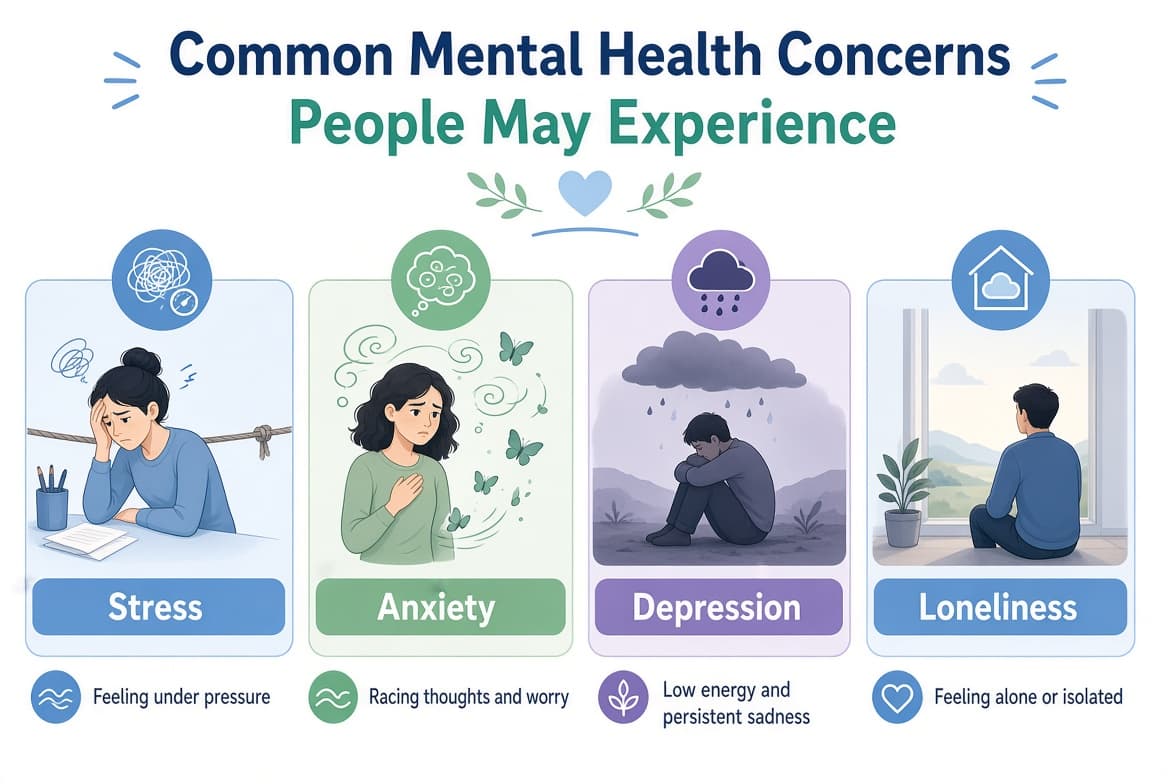
Common Mental Health Concerns People May Experience
Mental health is a broad umbrella term that covers a wide range of experiences and issues. Not every adverse situation or emotion is an indicator of a mental health disorder.
Common mental health problems include:
Stress
This phenomenon occurs when a person feels that the demands being placed upon them are greater than their ability to cope. School, work, family, finances, and major events can cause stress. Individuals may experience stress in short-term instances; however, chronic stress needs to be addressed.
Anxiety
Anxiety can show as too much worry, fear, nervousness, or even when you can’t seem to relax. Everyone gets worried or stressed out sometimes, but if your anxiety is affecting your day to day life, then it needs to be addressed.
Depression
Depression isn’t just feeling sad, it can affect the way you feel, think, and how you act, it can also make it hard to do everyday things. Only a mental health professional can diagnose depression, as well as any other mental health issues that you may have.
Loneliness
Sometimes it can be hard to feel connected to the people around you and even if you are with people, you can still feel lonely. There are many different factors that can play into this such as relationship status, living situation, social life and many more. Having open and honest communication with people that you trust and having good social connections can help.
Mental Health Challenges Among Students and Young People
Students can face a lot of different kinds of stressors. Exams, grades, the future, their peers, family, social media, and so much more can cause students to feel really overwhelmed.
Parents, teachers, and guardians play an important role in helping young people feel as though they can talk to them about whatever is bothering them.
How Parents Can Help Young People
Parents don't always have to have a solution right away, just have them listen and try not to be too dismissive.
Instead of saying something like "Everybody deals with these types of problems." have them first ask what's bothering you and really listen to what the student is telling them. If the student keeps having issues or it's really impacting their life, you can always seek outside help.
How Teachers Can Help
Since teachers see students on a day to day basis, they can sometimes recognize when a student isn't themselves, whether it be their grades, behavior, or overall appearance. But teachers shouldn't feel like they have to diagnose or treat any mental illnesses, instead send them to see an appropriate guardian, parent, counselor or health professional.
Mental Health and Family Relationships
Family support can be particularly crucial in a country like Nepal, where the ties between the members of a family are often exceptionally strong.
At the same time, families may confront multiple challenges stemming from their perceptions about mental health issues.
A family member may refrain from reaching out because they are afraid of being judged or misunderstood. In addition, other family members may blame a person struggling with their mental health or disorder for being lazy, rude, and disrespectful when, in fact, that is not the case.
Education about mental health may enable families to adopt a more understanding approach towards their child.
Listen Before Giving Advice Essay
Sometimes when people need advice, the last thing they want is more advice. Instead, they want someone to listen.
Listening to them, and then responding is often a better strategy.
Avoid Judgment
Statements that are meant to shame or blame a person are unproductive.
Mental health issues are not easily remedied by talks. Supportive communication should focus on helping the person understand their situation and find the resources they need to recover.
Mental Health Services in Nepal
Mental health services in Nepal are in an emerging stage, but their accessibility and availability may be limited.
According to the World Health Organization (WHO) reports, the mental health policy in Nepal has aimed to integrate mental health into the primary care system and provide essential mental health services at the community level.
Individuals seeking mental health services can request to speak with a variety of health professionals, including physicians, psychiatrists, psychologists, counselors, nurses, and other skilled mental health professionals. A person seeking care should not be expected to identify precisely what they need. Instead, a medical professional can assist them in determining which mental health service is appropriate for their condition.
Consider talking to a qualified healthcare professional if someone is struggling with emotional or psychological issues:
- If they persist for a long period
- They have an adverse impact on school, work, or other activities
- Have an adverse impact on relationships
- Cause difficulties sleeping or concentrating
- Are challenging to deal with on your own
- Cause significant distress
These are not necessarily indicators of a specific mental health condition, but they do suggest that consulting a professional could be beneficial.
The Role of Primary Healthcare
Mental health should not be separated completely from general healthcare.
A person might come to his or her primary healthcare provider to talk about mental health issues; the provider could listen to the person's concern, evaluate it in the context of his or her general health, and then refer the person to another provider.
In Nepal, the health system has been trying to integrate mental health into general and primary healthcare.
This has been helpful in providing mental health services and making mental health a part of general health and everyday life.
How Online Healthcare Can Support Mental Health Conversations?
Technology has revolutionized the way that people are able to access healthcare. Booking an online consultation can act as an additional channel for patients to interact with their healthcare providers, based on a certain level of availability and the type of issue that needs to be addressed.
For certain people, initiating contact with a medical professional through an online channel can offer a more accessible and less intimidating introduction to engaging with a healthcare facility.
UpcharSewa can assist you with finding healthcare services and interacting with medical professionals to discuss suitable consultation options. Residents seeking to engage in this type of medical practice can learn more about the process of booking an online doctor appointment in Nepal.
Moreover, it is important for patients to understand that such a method of interaction is not appropriate for all situations, and in cases of an emergency, urgent care should be sought after rather than relying on an online consultation.
How to Support Someone Who Talks About Their Mental Health?
Supporting someone does not mean being their therapist or trying to solve their problems.
Listening is often a good place to start.
Listen Without Judging
Give the person space to tell you what is going on in their life
Try not to compare their problems to others or make assumptions about what they are going through.
Take Their Concerns Seriously
Even if you do not think the way they see things is right, you can still take their concerns seriously. You could tell them you do not share their point of view, but that you care about how they feel and want to see them get the help they need.
Encourage Them to Get Professional Help If Necessary
If their troubles are long lasting or severely impacting their daily functioning, it is best to recommend they speak with a qualified medical professional. You could help them find someone who can help or even accompany them if you feel comfortable doing so.
Mental Health Myths in Nepal
The awareness is also about addressing common myths.
Myth1: Mental health problems are a sign of personal weakness
A lot of individuals from diverse groups of society can experience mental health issues, and this does not indicate their personal weakness.
Myth2: Talking makes the problem worse
Having a helpful conversation where one is able to voice concerns and what kind of support they need to cope, is healthy for everyone. Declining to talk or address an issue can make things harder on someone as it can make a person feel unable to get the help that they require
Myth3:Only people with severe problems need to seek help
It is normal and healthy to seek support at any time, and a person doesn't need to be in crisis before reaching out to a healthcare professional
Myth4:Mental and emotional health is separate from physical health
One's mental and emotional health is deeply tied to their physical health, and both are components of overall wellbeing.
When Immediate Help Is Needed?
Some mental health crises require immediate assistance from a qualified professional. If there is an immediate risk or concern for the well-being of yourself or a loved one, call for professional or emergency assistance and reach out to a trusted adult or medical professional.
Nepal has also established a national suicide prevention hotline, 1166, as a part of their suicide crisis service. WHO reported that the suicide hotline was created by the Ministry of Health and Population, and is available for crisis support.
If you are supporting someone who is going through a crisis, do not leave them to deal with the issue on their own. Call for any emergency services or professional assistance that may be required.
How Communities Can Improve Mental Health Awareness?
Mental health awareness isn’t just the job of doctors or hospitals. Communities can help by:
Making Safe Conversations
Community groups, schools, workplaces and families can provide opportunities for non-judgemental conversations about mental well-being.
Sharing Trusted Information
People should not rely on rumors or posts on social media for medical information, but should use reliable sources for their health.
Promoting early support
If the concerns are ongoing and impacting daily life, people should be encouraged to seek professional advice.
Reduced Discrimination
People with mental health conditions deserve to be treated with dignity and respect.
Conclusion
Mental health in Nepal is a critical condition as many people still consider this topic a taboo. There are various reasons for this, including lack of knowledge, fear, stigma, and many other factors.
The solution to this long-standing problem cannot be found immediately. It takes time to normalize a topic and make people more open-minded about discussing it. Everyone can contribute to the improvement of the situation by talking about mental health, asking questions, seeking help for loved ones, and caring for them.
A honest conversation will not automatically solve all problems, but it can help someone see the bigger picture.
When they feel heard, people are more receptive to solutions and advice. Recently, Nepal has made many steps toward improving mental health care, such as increasing awareness, spreading knowledge in communities, implementing mental health programs in primary health care, and much more.
Normalizing this topic will make it easier for people to discuss their problems openly and get the necessary help. In addition, mental health should be treated equally to physical health, and a conversation is sometimes the best way to deal with the situation.
Frequently Asked Questions
What is mental health awareness?
Mental health awareness is understanding of mental health and related problems, de-stigmatization and knowing when to seek help.
Why is talking about mental health important?
Talking about mental health can help de-stigmatize, better understand and empathize with people struggling, offer support, and help those in need seek the right professional care.
Is mental health only about mental illnesses?
No. Mental health is a state of well-being, similar to physical health. It encompasses emotional and psychological aspects as well. All people have mental health, just like they have physical health.
How can I best support someone who is struggling with a mental health issue?
Listen non-judgmentally, be supportive, take their concerns seriously and help them find the right care, if/when they decide to seek it. If the situation requires, get professional help for them immediately.
Can young people have mental health problems?
Yes, children can have emotional, behavioral and mental health concerns. As adults, we need to make sure we provide them with a safe space to talk and seek care.
Can I talk to a doctor about my mental health?
Yes. A qualified doctor can listen to your concerns, assess your needs and recommend further course of action or refer you to a specialist.